Automatic palletizing robot for pallet line
The multi-press labor problem is a layout problem
Automatic palletizing robot for pallet line planning starts with a familiar molded wood pallet problem: when a plant uses several hydraulic presses, assigning one operator to each press makes labor cost scale with every added machine. AutoG changes the press-side offloading logic with one arm serving two presses in alternation, helping manufacturers move from manual or semi-automatic unloading toward a fully automatic pallet production line.
Why AutoG fits a two-press production cell
AutoG is designed as an automatic take-out robot for molded wood pallet line applications, not as a replacement for the hydraulic press itself. The robot is installed at the press discharge side and works with the press and line control logic. During pressing, it waits for the completed cycle. After the mold opens, a vacuum suction gripper enters the mold area, lifts the formed pallet, transfers it away from the press, and places it at the stacking position. The same arm can then switch to the second press and repeat the sequence. This one arm two presses configuration matches a multi-press layout: one robot is assigned to two press-side take-out tasks instead of dedicating one take-out operator to each machine.
Structure and evidence behind the take-out sequence
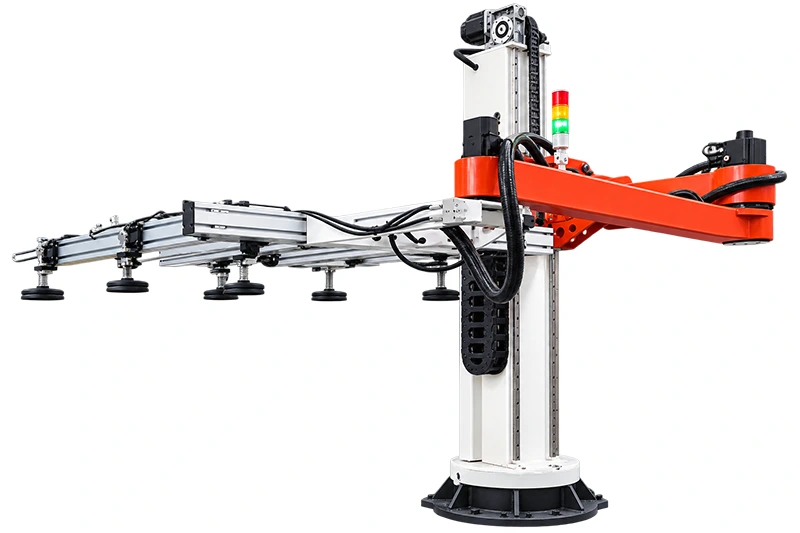
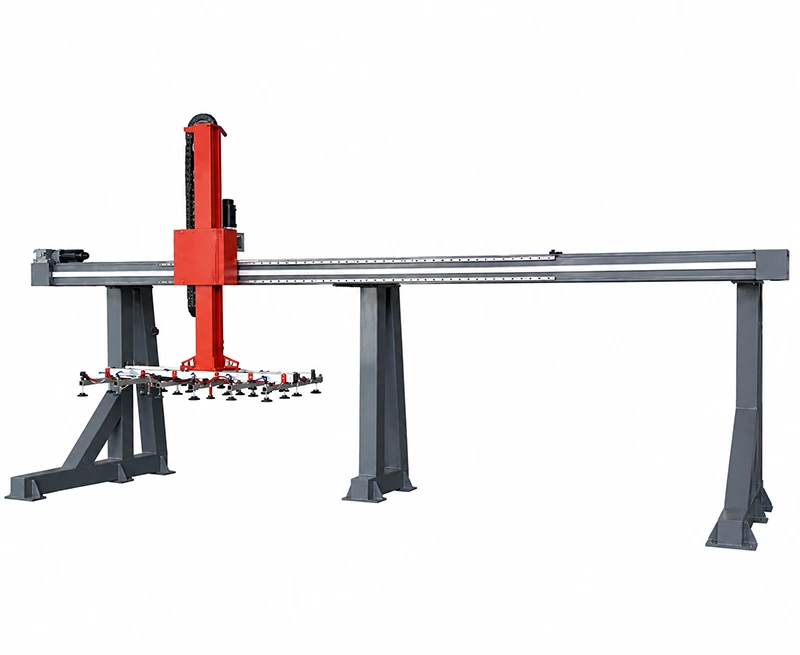
The available AutoG material identifies a six-axis articulated robot arm with a vacuum suction pallet transfer end effector. Six-axis movement supports the changes in height, reach, direction, and pallet orientation needed between press take-out and stacking. The indexed equipment image shows the industrial vacuum handling robot with a long articulated arm, multi-cup suction head, cable chain, and stack light. A second indexed rendering shows a long-span gantry vacuum lifter with a multi-cup gripper, linear travel structure, cable routing, and lifting slide. These images support the visible handling architecture only; load, reach, repeatability, suction specification, power, air supply, installation dimensions, and PLC details must be confirmed for the project. The equipment description also states safe handling of pallets at approximately 80°C. The related press cycle is described as about 4–5 minutes with MDI adhesive, but cycle matching and final capacity remain application-specific.
The practical result: two presses, one automated offloading resource
For a factory upgrading from manual or semi-automatic unloading, the result is a clearer automation boundary at the press exit: AutoG removes the molded pallet, transfers it, and completes automatic stacking before the downstream warehouse or dispatch steps. In the stated comparison, one robot serving two presses replaces the need for two press-side take-out operators. That is the capital-efficiency proposition: 1 robot = 2 presses = 2 operators replaced, subject to the confirmed layout, cycle timing, safety design, and operating conditions. AutoG can therefore support a fully automatic pallet production line while keeping the purchasing discussion focused on the actual interfaces—presses, vacuum gripper, stacking position, conveyors, guarding, and controls. For a project review, EMP should confirm the press models, pallet format, takt sequence, robot envelope, vacuum system, and safety interlocks before final quotation.
- One arm alternately serves two molded wood pallet hydraulic presses.
- Vacuum suction transfer handles pallets at approximately 80°C, based on the available equipment description.
- Six-axis articulated movement supports take-out, transfer, orientation, and stacking workflows.
- Final press, robot, vacuum, safety, and control interfaces require confirmation against the project specification.


