EMP BLOG | TRACEABLE RESIDUE RECOVERY
1. Start with qualified, traceable residue
For presswood pallet producers, residue recovery is not simply a matter of feeding waste into a press. It is a production and investment project that must connect qualified feedstock, controlled processing, pallet performance, plant conditions, and a realistic payback model.
AutoML is a modular system for converting sawdust, wood chips, shavings, straw, bamboo powder, bagasse, and other lignocellulosic residues into molded, nail-free pallets. The right result depends on traceable material accounting and process validation—not on assuming that every waste stream can produce the same pallet with the same settings.
2. Connect residue preparation to pallet quality
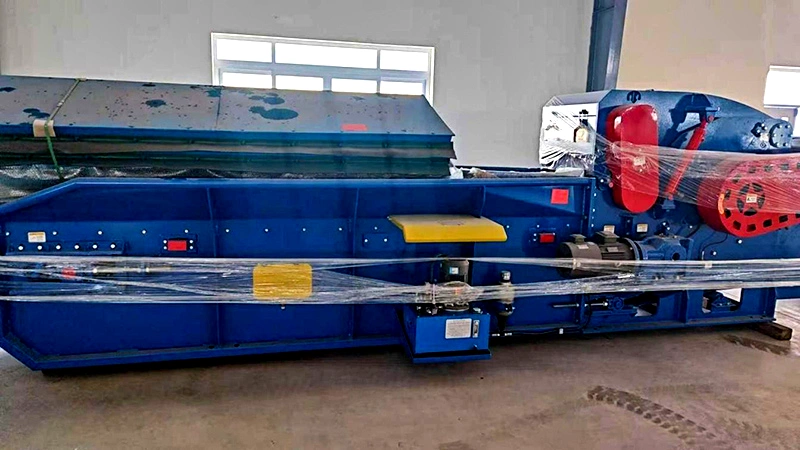
AutoML is designed as a closed process chain: crushing, iron separation, dust collection, drying, temporary storage, adhesive dosing and mixing, weighing and spreading, hot pressing, demolding, and stacking. A hammer mill with electromagnetic separation can prepare the material, while a rotary dryer and dust-control equipment support the required process conditions. The prepared fiber then moves through enclosed conveying and buffering equipment before controlled adhesive mixing.
In the forming stage, automatic weighing and spreading address a common weakness of manual production: uneven material distribution inside the mold. The press then applies project-specific heat and pressure. Common references include 150–180°C, 15–20 MPa, and a cycle of approximately 180–240 seconds, but final values depend on the mold, adhesive, material, and trial results. A 1600T-class press is repeatedly referenced in the product materials, while other projects may require different tonnage.
Plant layout is part of the process, not an afterthought. Crushing and drying generate substantial dust and should be physically separated from the adhesive, hydraulic, and electrical areas. Without that separation, dust can threaten control cabinets, sensors, servo components, and hydraulic equipment.
3. Select automation through the project economics
Automation should follow the customer’s economics. Project costing references place a full automatic line at around RMB 4 million and a semi-automatic line at around RMB 2 million. These are planning references rather than quotations. A semi-automatic configuration may retain the core mixer and press while using purchased, prepared fiber and manual spreading or takeout. A fully automatic line can add automated dosing and spreading, robotic demolding, and stacking to reduce dependence on repetitive labor.
The choice should be tested against local labor cost, raw-material availability, electricity and heat costs, plant capacity, selling price, financing, and expected utilization. A model should compare full production with reduced-order scenarios rather than relying on a single optimistic forecast. The source materials cite ideal static payback references of about 1.3–1.8 years, with less favorable cases extending to about three years; actual results depend on the project’s operating assumptions. One documented start-up case used a reduced semi-automatic configuration and prepared feedstock to lower the entry cost, but that result should not be treated as a guarantee for other markets.
Adhesive selection also changes the business case. MDI can provide strong bonding and water resistance at commonly cited dosages of about 8–10%, but it is more expensive and can create serious mold-sticking and cleaning issues. UF or PF systems are commonly referenced around 10–12%, with lower cost in some applications but different moisture, durability, environmental, and end-market limitations. The adhesive should be selected for the customer’s pallet use and market requirements, then validated with the mold and feedstock.
4. Build traceability into commissioning and acceptance
Before commissioning, the producer and equipment supplier should agree on the target pallet structure, mold dimensions, load application, raw-material sources, adhesive system, utilities, plant zoning, and acceptance measurements. Typical pallet formats include nine-leg single-face pallets, flat pallets, cross-base double-layer pallets, and three-runner designs, but the correct mold depends on the customer’s handling and load requirements.
Factory acceptance should focus on the complete chain rather than press tonnage alone. Relevant checks include material preparation, moisture control, adhesive dosing, spreading uniformity, temperature stability, pressure, cycle time, demolding, pallet density, stacking, dust control, and operator safety. The product materials reference a finished density of 0.8–1.2 g/cm³, but the appropriate target still depends on the pallet design and trial results.
A traceable recovery system may support the controlled reuse of qualified process scrap, including rejected molded pallets that can be reprocessed when material condition and product requirements allow. That is an operational objective, not a universal zero-waste promise. Producers should account for contamination, adhesive condition, moisture changes, and any quality effect before returning a material stream to production. When those controls are in place, AutoML can connect residue recovery with a more measurable pallet manufacturing business—without hiding the capital, process, and management requirements behind an automation label.
- The target keyword, wood waste to pallet conversion, is used naturally in the article context.
- Investment, cycle, moisture, adhesive, and density figures are presented as project references that require technical validation.
- The article distinguishes semi-automatic and fully automatic configurations instead of prescribing full automation for every market.
- Zero-waste is framed as an operational objective requiring traceable material accounting and qualified inputs, not as a universal guarantee.


