Tropical Biomass Pellet Plants: How a Rotary Sawdust Dryer Stabilizes Moisture Before Pelletizing
Why Moisture Stability Matters Before Pelletizing
In tropical and rainy regions, sawdust, straw, and EFB can arrive at a biomass pellet plant with moisture levels of 30–60%, while oil palm residues may exceed 65%. This DRYR rotary sawdust dryer provides continuous hot air drying and a controlled route to output moisture below 10%, with adjustment below 7% when the process requires it. By stabilizing the feed before pelletizing, the dryer helps protect die loading, roller wear, and pellet quality.
Why Open-Air and Small-Scale Drying Break Down
Natural sun drying and manual open-air drying depend on weather, yard space, and operator handling. They cannot respond quickly when incoming moisture rises from one batch to the next. A small airflow dryer may handle lighter loads, but unstable feed moisture can still contribute to die blockage, higher roller wear, and more off-spec pellets. Leaving wet sawdust in storage also increases the risk of mold, fermentation, and material degradation before pelletizing.
A Rotary Sawdust Dryer Matched to the Production Line
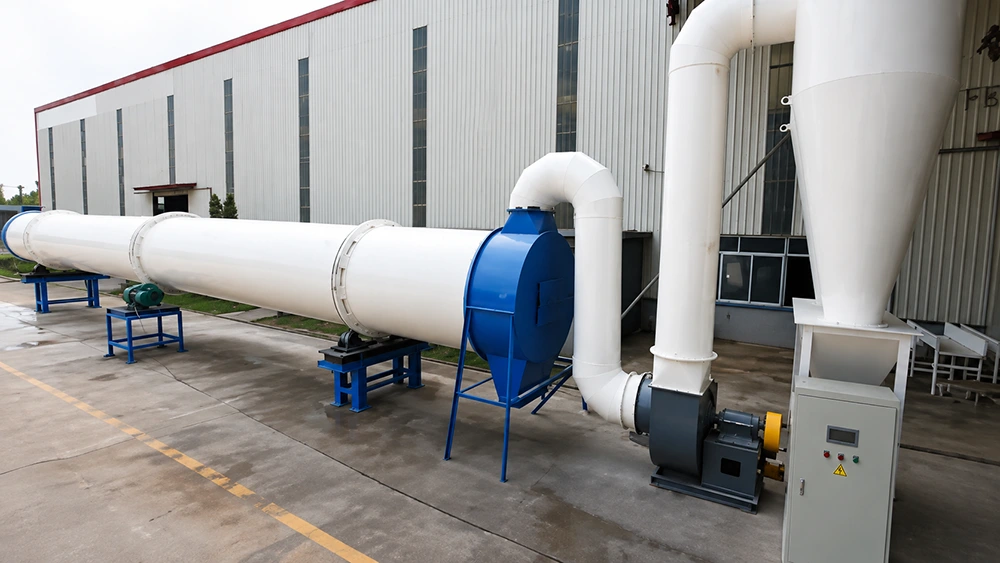
DRYR is configured as an industrial sawdust dryer for continuous operation between raw material preparation and the pellet mill. Four models, H-1010, H-1212, H-1512, and H-1815, cover approximately 0.8–2 t/h so the dryer can be matched to a 1 ton per hour or 2 tph pellet line. The rotary drum dryer uses hot air drying to expose the material repeatedly to the heat flow, while temperature sensing supports operating control as feed conditions change. A screw conveyor and PLC control can be integrated into the line when continuous feeding and automated operation are required.
From Variable Feedstock to a Controlled Moisture Window
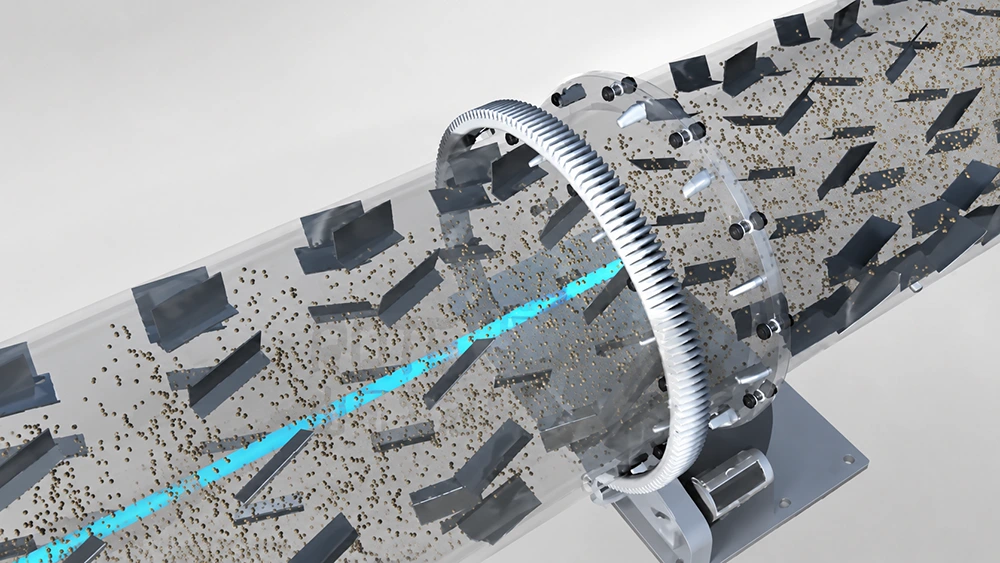
The first image shows the complete industrial rotary drum dryer arrangement, including the horizontal drum, process ducting, cyclone separator, blower, steel supports, and control equipment. The second image provides internal evidence: staggered lifting flights raise and cascade the material through the drum so sawdust receives more even contact with the hot air. This combination of monitored temperature and lifting-flight mixing supports moisture reduction to below 10%, with a process setting below 7% when required. The result is a more stable pelletizing moisture standard, less dependence on sun drying, lower manual handling, and a more consistent feed for biomass pellet production. Contact EMP to size a sawdust dryer for your raw material, target moisture, and throughput.
- The article follows the sequence customer and climate scenario, old drying method problems, product fit, structure and parameter evidence, then production results.
- The DRYR sawdust dryer is described with 0.8–2 t/h capacity, moisture below 10% with adjustment below 7%, temperature sensing, and lifting flights without adding unsupported specifications.
- The two selected images are used as visual evidence for the complete rotary drum system and the internal lifting-flight structure, with distinct image assets.
- The copy uses the resolved Dryr traffic terms naturally and avoids the prohibited weak marketing phrases.


