PRESSWOOD PALLET PRODUCTION | CONFIGURATION, PROCESS & ROI
What AutoML Solves for Industrial Pallet Manufacturers
A presswood pallet machine should be evaluated as part of a production project—not as an isolated piece of equipment. AutoML converts sawdust, wood chips, shavings, straw, bamboo powder, bagasse, and similar lignocellulosic residues into molded, nail-free pallets through material preparation, drying, adhesive dosing, spreading, hot pressing, demolding, and stacking. The right line may be semi-automatic or fully automatic, depending on labor cost, raw-material access, plant conditions, utility capacity, target output, and payback requirements.
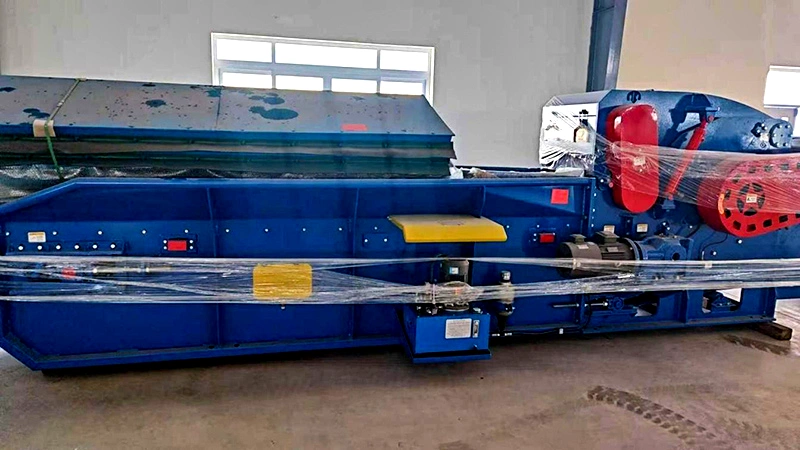
Semi-Automatic or Fully Automatic: Build the Line Around the Project
Full automation is not automatically the best starting point. A fully automatic configuration may include crushing, drying, closed conveying, automatic weighing and spreading, a high-tonnage hydraulic press, robotic demolding, and stacking. Project costing references place this level of investment at about RMB 4 million, with ideal-case static payback often estimated at 1.3–1.8 years and longer periods possible when utilization or selling prices are weaker. A semi-automatic configuration can focus on the glue mixer, weighing system, and core press, while the customer purchases prepared, dried wood fiber and uses local labor for handling, spreading, and takeout. Reference investment is about RMB 2 million. This approach may suit markets with lower labor costs or initial budgets around US$200,000–US$300,000, but it brings higher staffing needs, greater variation in spreading, and a lower long-term management ceiling. Configuration should therefore be selected from a model covering labor, material, energy, utilization, selling price, and financing—not from equipment features alone.
The Process Conditions That Control Pallet Quality
The production chain must be engineered as one system. Wood waste is crushed and separated from metal, dried, conveyed to a buffer hopper, mixed with a measured adhesive dose, spread into the mold, hot-pressed, released, and removed for stacking. A 1600T-class press is a common reference in the project files, with cited forming conditions of approximately 150–180°C, 15–20 MPa, and about 180–240 seconds per cycle. Particle size is commonly referenced at 5–30 mm in length and 2–5 mm in thickness. Moisture is not a universal fixed setting: it must match the adhesive system, mold design, and trial results. MDI is commonly referenced at about 8–10% dosage and offers strong bonding and water resistance, but it costs more and can cause serious mold sticking if release-agent spraying and mold cleaning are inadequate. UF or PF may reduce adhesive cost in suitable applications, but UF has weaker water resistance and potential formaldehyde-related market restrictions. Dust-generating crushing and drying areas should be physically separated from the adhesive, hydraulic, and electrical-control areas.
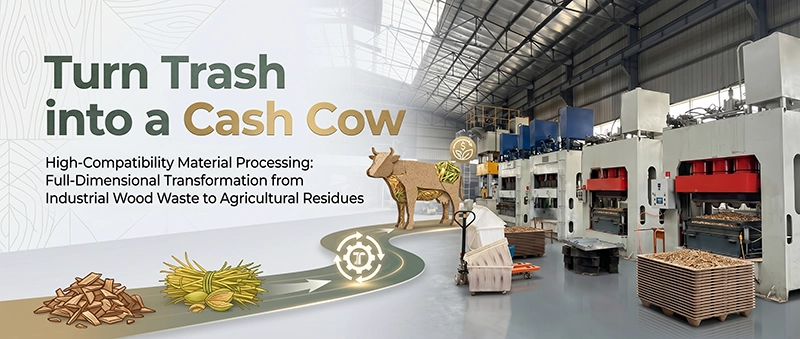
How to Test the Business Case Before Ordering
Start with a project model rather than a catalog specification. Confirm the pallet structure, dimensions, load target, adhesive system, raw-material source, material cost, moisture range, energy price, labor plan, expected utilization, and local selling price. Then test the economics at full utilization and at reduced order levels, such as 80%, because depreciation and fixed costs remain when production falls. A full line can reduce direct labor and per-piece variable cost at scale, while a semi-automatic line can lower the entry barrier and allow a new operator to validate the market before adding upstream or downstream modules. Before factory acceptance, verify pressure stability, mold temperature, cycle time, spreading weight, density, demolding performance, safety interlocks, dust control, and finished-pallet strength. AutoML is most suitable where low-cost fiber supply, adequate plant space, electrical capacity, and disciplined maintenance are already available; it is a poor fit when the budget, raw-material chain, or facility cannot support those foundations.
- The primary SEO keyword, presswood pallet machine, is included naturally in the article positioning.
- The content presents AutoML as a modular production system and explains when semi-automatic and fully automatic configurations are appropriate.
- Investment, payback, adhesive, moisture, cycle, and compliance statements are presented as project-dependent references rather than universal guarantees.
- The article addresses industrial pallet manufacturers and circular packaging buyers with process, facility, risk, and ROI guidance.


