1. Project Objective and Proposed Solution
This proposal outlines a configurable AutoML molded pallet production system for converting wood chips and other plant-fiber materials into standardized, fumigation-free molded pallets. The proposed line is intended to address high manual labor requirements, inconsistent pallet quality, material waste, and the need for export-oriented logistics packaging. The system can be configured as a fully automated line or as a staged semi-automatic solution, depending on the project budget, local labor costs, available raw materials, target capacity, and applicable export requirements. Final performance, product quality, and market compliance remain subject to equipment configuration, raw-material testing, process commissioning, and customer acceptance.
2. Proposed Process Flow and Main Equipment
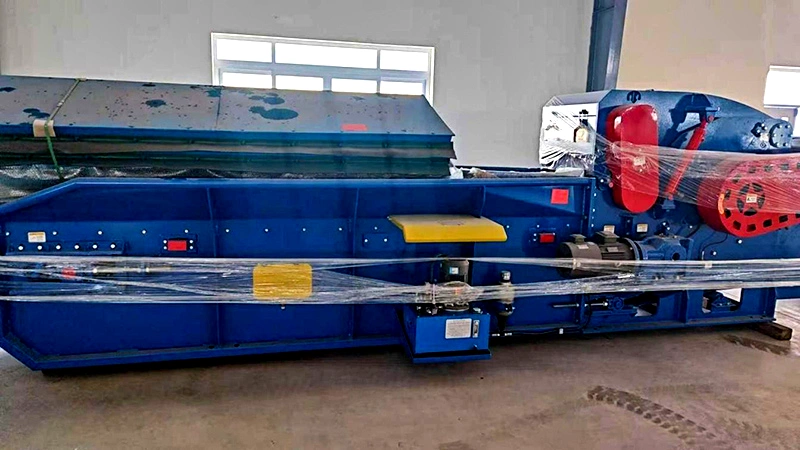
The proposed process can include raw-material conveying, primary crushing with electromagnetic nail and metal separation, secondary size reduction, drying, enclosed storage, dosing and adhesive mixing, automatic weighing and forming, hot-press molding, pallet extraction, and stacking. A full automation reference configuration may include a hammer crusher, fine grinder, rotary dryer, dust-collection system, enclosed buffer hopper with lifting and screw conveyors, automatic adhesive mixer, weighing and forming machine, mold-release spray system, 1,600-ton hydraulic press, thermal-oil heating unit, four-axis servo pallet removal robot, and pallet stacking equipment. The independent loading and unloading arrangement is designed to allow a press, mold, or individual machine to be serviced without necessarily stopping the entire line. The proposed action chain is: prepare and dry the fiber, meter adhesive, mix uniformly, weigh the charge, distribute it evenly in the mold, apply release agent, press and cure, remove the molded pallet, and stack it for storage or shipment.
3. Configuration Options, Adhesive Selection, and Target Performance
The recommended configuration should be selected through a project-specific return-on-investment assessment rather than by assuming that every customer requires the maximum level of automation. A full automatic reference configuration for approximately 1,200–1,600 pallets per 24 hours may include the complete preparation, forming, pressing, robotic handling, and stacking systems. A semi-automatic configuration may retain the adhesive mixer, weighing equipment, and 1,600-ton press while using purchased, pre-crushed and dried fiber and manual loading and unloading. This approach can reduce initial capital expenditure where labor is comparatively affordable, while leaving room for later upgrades. Indicative process targets include fiber moisture of 6–10%, particle length of 5–30 mm, thickness of 2–5 mm, molding temperature of 150–180°C, molding pressure of approximately 15–20 MPa, and a curing cycle of about 180–200 seconds. Adhesive selection must follow the pallet's end use: MDI can support high strength, moisture resistance, and low-formaldehyde applications, but it has a higher cost and can cause severe mold sticking without effective release-agent application; PF can be considered where strength and water resistance are important; UF may reduce cost for lower-demand, dry indoor applications but has weaker moisture resistance and formaldehyde-related limitations. Typical adhesive addition ranges are approximately 8–10% for MDI and 10–12% for UF or PF, subject to laboratory and production trials.
4. Factory Requirements, Safety, and Implementation Controls
Before equipment fabrication or installation, the project should confirm the factory layout, electrical supply, raw-material logistics, dust-control strategy, fire protection, ventilation, lifting capacity, and maintenance access. Crushing and drying equipment should be placed in a physically separated, enclosed preparation area, while adhesive mixing, pressing, electrical controls, and robotic handling should be located in a cleaner forming area. This separation helps limit dust intrusion into PLC cabinets, servo systems, sensors, hydraulic components, and other precision equipment. The proposed press area should allow sufficient height and robot movement clearance; a reference layout may require a high-bay building of approximately 8.5 m or more in the press area, with total floor space determined by the selected equipment, raw-material storage, pallet storage, and safety zones. Commissioning should verify adhesive atomization, release-agent coverage, mold temperature uniformity, press pressure, cycle timing, charge weight, pallet density, pallet strength, and handling accuracy. Operators must be trained to avoid exposure to hot molds, moving machinery, hydraulic pressure, dust, and adhesive materials.
5. Acceptance Basis, Service Scope, and Next Steps
The proposed acceptance basis should be established in the technical specification before contract signing and should cover the agreed equipment scope, operating parameters, output targets, product dimensions, pallet quality criteria, safety functions, documentation, and training. A reference manufacturing schedule is approximately three months after contract signing and receipt of the deposit, subject to equipment scope, customization, component availability, and confirmation of local certification requirements. Proposed service support may include domestic installation and commissioning, operator and maintenance training, remote technical consultation, and optional overseas commissioning at additional cost. A one-year warranty from acceptance may be offered for non-user-caused component failures, excluding normal wear parts, with spare-parts and technical support available after the warranty period. The next step is to confirm the raw-material sample, pallet design, target capacity, adhesive type, factory utilities, local electrical and safety standards, and preferred automation level so EMP can prepare a project-specific layout, equipment list, commercial quotation, validation plan, and ROI model.


