Production Challenges to Address
Molded pallet production requires consistent material size and moisture, accurate adhesive distribution, stable mold temperature, repeatable pressing, and safe handling of hot formed products. The production environment must also manage dust, material storage, electrical loads, operator safety, and the separation of preparation equipment from the molding and control areas.
Project Requirements
Suitable plant-fiber feedstock: Wood chips, sawdust, bamboo powder, straw, or comparable fiber materials should be prepared to approximately 5–30 mm in length and 2–5 mm in thickness. Feedstock entering the molding process should generally have a moisture content of 6–10%.; Defined product and capacity targets: Pallet style, dimensions, load requirements, production schedule, and the required number of molding stations must be confirmed before finalizing molds, conveyors, automation, and auxiliary equipment.; Adhesive and market-performance selection: MDI, phenolic resin, or urea-formaldehyde resin may be considered according to strength, moisture resistance, emissions requirements, application, and cost. MDI offers strong bonding and moisture resistance but has higher cost and increased mold-release sensitivity.; Industrial site and utility readiness: The site should provide sufficient floor area, working height, electrical capacity, ventilation, dust control, fire protection, material storage, and safe access for installation and maintenance.
A Modular, Coordinated Production System
The proposed AutoML solution combines material preparation and drying with controlled adhesive mixing, automatic weighing and spreading, high-temperature hydraulic molding, and robotic pallet removal and stacking. A PLC-based control architecture coordinates the process sequence, while independent loading and unloading equipment can help maintain production continuity during single-machine maintenance or mold changes. The line can be configured as a fully automated system or simplified to a semi-automatic arrangement when site conditions, labor costs, or initial investment requirements call for a lower level of automation.
Proposed Equipment Configuration
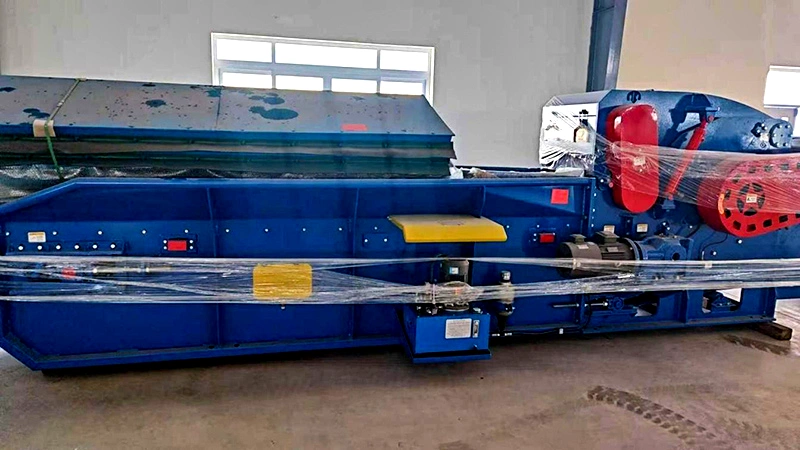
Material preparation and drying: A chipper or crusher, hammer mill, magnetic separation, conveying equipment, dust collection, and rotary dryer prepare the feedstock. The dryer can be designed for different material throughputs and may use electric, gas, oil, biomass, wood waste, or boiler exhaust heat sources where suitable.; Buffer storage and conveying: A covered buffer silo with twin screw conveyors and lifting equipment stores dried material while helping provide a steady feed between continuous drying and batch adhesive mixing operations.; Adhesive mixing system: The automatic mixing unit supports controlled material feeding, water and adhesive addition, and timed mixing. A precision gear pump and atomizing spray gun are intended to improve adhesive distribution and control adhesive consumption. The enclosed discharge arrangement helps limit dust leakage and material buildup at the gate.; Automatic weighing and spreading: Load cells measure the required material quantity for each pallet. The spreading unit transfers the weighed material into the mold, applies mold release agent, levels the charge, and sends a pressing signal after the loading sequence is complete.; Hydraulic molding and temperature control: The proposed molding system uses a 1,600-ton hydraulic press with synchronized positioning, adjustable pressure and dwell settings, and replaceable molds. An oil-temperature unit is intended to maintain mold temperatures in the approximate range of 150–180°C, with a typical molding cycle of about 180–200 seconds subject to process validation.; Robotic removal and stacking: A four-axis servo-driven system uses adjustable forks to remove formed pallets from the mold and place them into single- or dual-station stacks. PLC control, teach-point path recording, status signals, and audible or visual completion alerts support the automated handling sequence.
Technical Collaboration for Project Definition
EMP can support the next proposal stage through layout review, configuration refinement, mold and pallet-style selection, process parameter discussion, utility assessment, and identification of applicable electrical and machinery safety requirements. Installation guidance, operator and maintenance training, technical consultation, spare-parts support, and service arrangements can be defined separately after the site conditions and final scope are confirmed.