Proposal-stage technical concept. Final equipment configuration, process parameters, certifications, pricing, and implementation schedule require further technical clarification and site-specific review.
This proposal-stage technical concept outlines a modular AutoML production system for converting wood chips and other plant-fiber materials into standardized molded pallets. The proposed process combines material preparation, controlled adhesive mixing, precision weighing, hot-press molding, and automated pallet removal and stacking, with the final configuration subject to raw material, capacity, site, utility, and end-use requirements.
Aligning the molded pallet process with raw materials and site conditions
The project is evaluating molded pallet production using wood chips as the primary raw material. The main technical challenge is to match material size and moisture, adhesive performance, forming-cycle requirements, facility layout, electrical capacity, dust control, and the desired level of automation. The line should also accommodate the intended pallet design, load requirements, and market requirements such as moisture resistance, low formaldehyde emissions, and suitability for export logistics.
Project Requirements
| Raw material preparation | Wood fibers should generally be prepared to approximately 5–30 mm in length and 2–5 mm in thickness, with an in-mold moisture content of about 6–10%. Wood chips, sawdust, bamboo powder, straw, and similar plant-fiber materials may be evaluated after suitable screening, drying, and contaminant removal. |
|---|---|
| Adhesive selection | MDI is suited to high-strength, moisture-resistant, and low-formaldehyde applications, but it has higher cost and a greater risk of mold sticking. UF may reduce material cost for dry, lower-demand applications but has lower moisture resistance and formaldehyde-emission considerations. PF may be considered where high durability and water resistance are required. |
| Capacity and cycle target | The proposed process basis includes a molding cycle of approximately 180–200 seconds, with mold temperatures around 150–180°C and forming pressure in the range of 15–20 MPa. Actual throughput depends on pallet geometry, mold cavities, material preparation, loading method, and operating schedule. |
| Facility and utilities | The preparation area for chipping, crushing, and drying should be physically separated from the mixing and molding area. The site should provide sufficient floor space, working height, ventilation, dust collection, fire-safety provisions, and electrical capacity for high-power motors, heating equipment, hydraulic systems, and automation. |
| Automation configuration | The line can be configured as a full automatic system with automatic material handling, lay-up, demolding, and stacking, or as a semi-automatic arrangement centered on the mixer and hydraulic press. The appropriate level depends on budget, local labor cost, target capacity, and operational capability. |
A modular closed-loop system for molded pallet production
The proposed AutoML solution connects material preparation, drying, buffering, adhesive dosing, mixing, weighing, mold filling, hot pressing, demolding, and stacking into a coordinated process. A PLC-based control system can manage material dosing, adhesive delivery, lay-up, press timing, temperature, pressure, and robot movements. The automatic lay-up system is intended to improve weight consistency and material distribution, while the independent loading and unloading arrangement is designed to allow individual machines to be serviced or molds to be changed with less disruption to the wider process. Where investment or labor conditions require a simpler entry configuration, the front-end preparation and downstream automation modules can be omitted or added progressively.
Proposed Equipment Configuration
| Component | Proposal-stage scope |
|---|---|
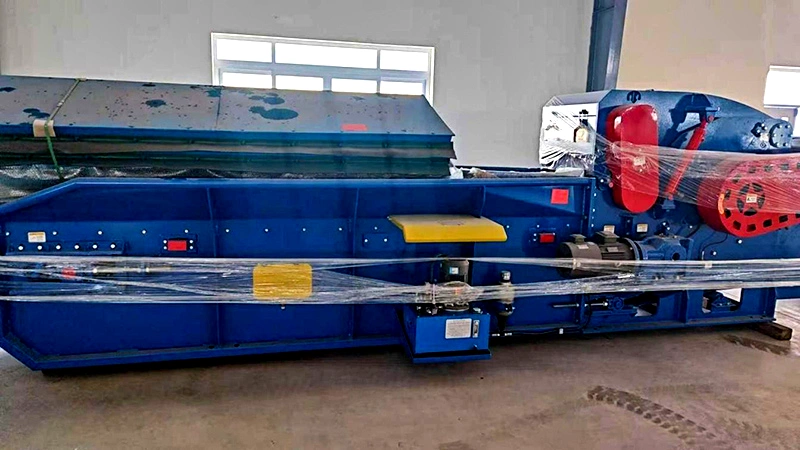
| Crushing and screening system | A crusher and fine crusher prepare recovered wood or plant-fiber materials for molding. Conveyors and electromagnetic separation can support removal of nails and other ferrous contaminants before further processing. |
| Drying and buffer storage | A rotary dryer is proposed to reduce incoming material moisture from approximately 35–75% to about 6–10%, depending on the feedstock. The dryer can be designed around available heat sources such as biomass, wood fuel, gas, oil, boiler exhaust, or electric heating. A covered buffer hopper with screw conveyors supports continuous supply to the mixing process. |
| Automatic adhesive mixing system | The mixer is designed for controlled addition of water and adhesive, with PLC operation, precision gear-pump dosing, and atomized adhesive spraying. The spray system is intended to improve fiber coverage and reduce the risk of adhesive concentration differences. MDI applications require effective mold-release management and regular spray-gun cleaning. |
| Automatic lay-up system | Load cells weigh the material charge for each pallet, transfer it into the mold, apply mold release where specified, and distribute the material across the mold cavity. Servo-driven movement and PLC control support repeatable loading and an adjustable process sequence. |
| Hydraulic molding press and oil-temperature unit | The proposed core press is a 1,600-ton dual-cylinder hydraulic machine with an indicative system pressure of 25 MPa and a maximum opening height of approximately 1,200 mm. A thermal-oil unit circulates heated oil through the mold to maintain the process temperature required for adhesive curing. Replaceable molds can support different pallet formats. |
| Robotic removal and stacking | A four-axis servo robot can remove molded pallets using adjustable forks, transfer them from the mold, and stack them in single- or dual-station configurations. PLC and touchscreen controls coordinate press-complete signals, pallet removal, stacking sequences, and operator alerts. |
EMP support for configuration and technical development
EMP has reported 22 years of hydraulic and composite equipment development experience, including 12 years focused on molded pallet equipment. Within the proposal stage, EMP can review pallet designs, raw material characteristics, adhesive requirements, plant layout, automation level, local electrical and safety requirements, and the desired implementation sequence. The technical scope may be adapted from a semi-automatic core system to a full automatic line as operating requirements become clearer. Operator training, maintenance guidance, and technical consultation can be defined as part of the subsequent project scope.


