From Plant-Fiber Residues to Consistent Molded Pallets
Molded pallet production requires controlled raw-material dimensions, moisture, adhesive distribution, forming weight, temperature, pressure, and cycle time. An integrated line is intended to replace fragmented manual handling with a coordinated process that can support consistent pallet geometry, reliable curing, reduced material waste, and safer operation around dust, heat, and hydraulic equipment. The process can support export-oriented, fumigation-free pallet applications when the selected materials, adhesive system, and finished-product specifications meet the applicable requirements.
Project Requirements
Raw-material preparation: Wood chips, bamboo powder, straw, or comparable plant fibers should be processed to approximately 5–30 mm in length and 2–5 mm in thickness. Recovered wood should also pass through iron and contaminant removal before further processing.; Moisture control: Material entering the forming process should generally be conditioned to approximately 6–10% moisture. The drying system should be selected according to incoming moisture, required dry-material throughput, available heat sources, and local operating conditions.; Adhesive and product specification: Adhesive selection should reflect pallet strength, moisture exposure, emissions requirements, market application, and operating cost. MDI can provide strong, moisture-resistant bonding with lower addition levels but has higher cost and a greater mold-sticking risk; UF is more economical but has lower moisture resistance and potential formaldehyde emissions; PF may be considered where enhanced water resistance is required.; Facility and utility planning: The dust-intensive preparation area should be physically separated from the mixing, pressing, and electrical-control areas. The site plan must confirm floor space, working height, ventilation, dust collection, electrical capacity, heat-source arrangements, material storage, forklift access, and operator safety zones.
A Modular, Coordinated AutoML Process
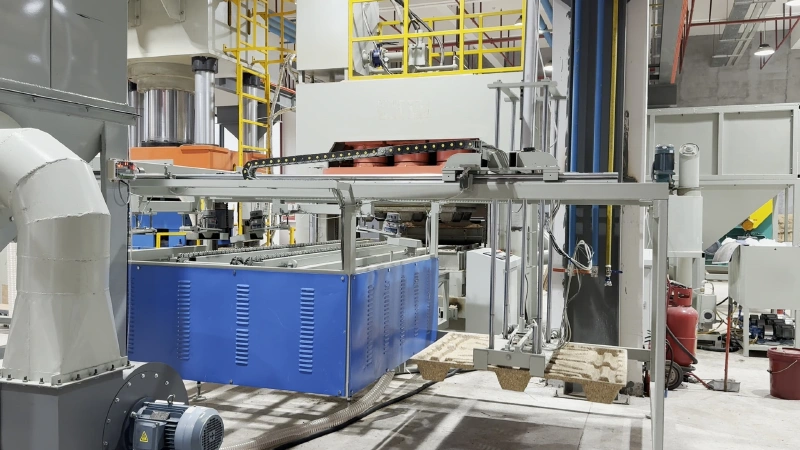
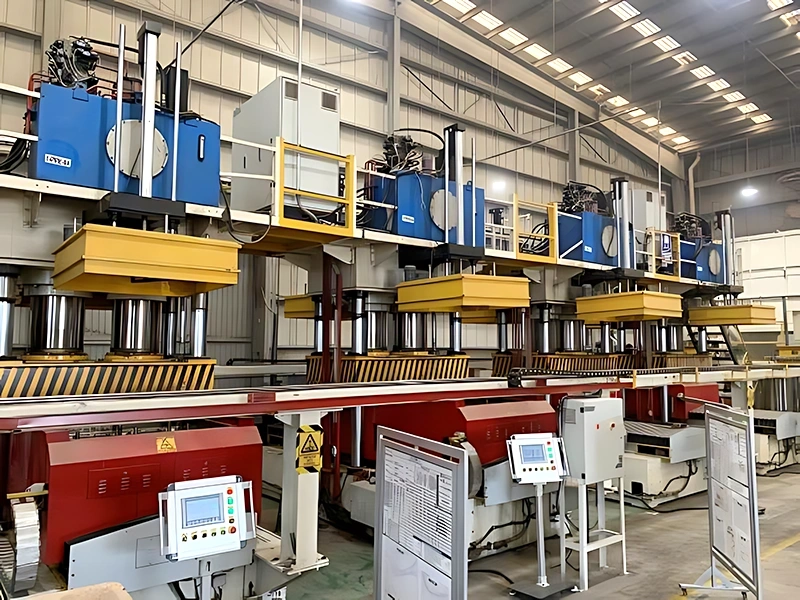
The proposed AutoML configuration links preparation and forming operations through PLC-controlled material handling and process sequencing. Raw material can be crushed, refined, dried, buffered, and metered into the adhesive mixer. A precision gear pump and atomizing spray gun are intended to distribute adhesive evenly, while the automated forming machine weighs the charge, applies release agent, levels the material in the mold, and signals the press. A 1,600-ton hydraulic press can then complete closing, pressure application, heating, curing, pressure release, and mold opening according to the validated recipe. A four-axis servo robot is proposed for pallet removal and stacking, while independent loading and unloading equipment can help limit the effect of maintenance or mold changes on the rest of the line.
Proposed Equipment Configuration
Crushing, refining, and iron-removal system: Initial crushing and secondary size reduction prepare recovered wood or plant fibers for forming. Conveyors and electromagnetic separation support material transfer and removal of nails or other ferrous contaminants.; Dryer and dust-control equipment: A rotor dryer is designed to reduce incoming material moisture to the target range. Heat sources may include electricity, gas, fuel oil, wood fuel, biomass pellets, wood chips, bark, or boiler exhaust, subject to local engineering and safety requirements. Dust collection and fire-protection provisions are essential.; Buffer storage and conveying: A covered twin-auger buffer silo with lifting and enclosed conveying equipment provides dry-material storage and a continuous supply between drying and batch adhesive mixing.; Automatic adhesive mixing system: The mixer supports controlled material charging, water and adhesive addition, and PLC-managed mixing. A servo-driven precision gear pump and atomizing spray gun are intended to improve adhesive metering and fiber coverage, while an enclosed discharge gate with air cleaning helps reduce leakage and material blockage.; Automatic forming and hydraulic pressing: The forming unit uses weighing sensors to measure each charge, applies release agent, and levels material in the mold. The hydraulic press is specified at 1,600 tons with adjustable curing controls; the proposed process window is approximately 150–180°C, 15–20 MPa, and 180–200 seconds, subject to testing and product validation.; Robotic demolding and pallet stacking: A four-axis servo robot uses a fork mechanism to remove molded pallets from the opened mold, return a completion signal to the press, and place pallets in single- or dual-position stacks under PLC and touchscreen control.
Configuration and Technical Coordination
EMP can support the proposal-stage review with modular equipment selection, custom mold development, process-flow coordination, layout refinement, and control-system planning. Technical coordination should confirm the target pallet designs, raw-material characteristics, adhesive system, required production rhythm, heat source, electrical standards, dust and fire protection, operator training, installation scope, spare-parts strategy, and local regulatory requirements before the final configuration is approved.