CHARCOAL BRIQUETTE PRODUCTION | DUST CONTROL
The Production Scenario: Dust Across the Charcoal Briquette Line
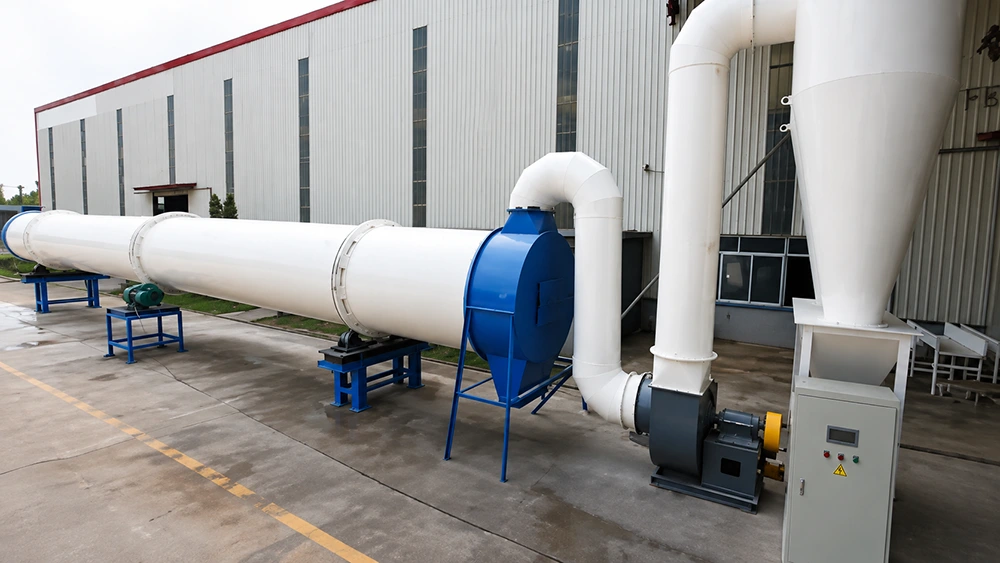
Charcoal briquette plants in East Africa face dust from crushing, drying, conveying, and carbonization. A Dryr sawdust dryer with a standard conical cyclone dust collector, optional baghouse filter, blower cooling duct, and seal monitoring creates a more controlled route for sawdust drying and moisture reduction before briquette forming.
Why Open-Air Drying and Uncaptured Airflow Create Risk
Natural sun drying and manual or open-air drying do not provide a stable continuous drying path when weather, feed moisture, and production demand change. An airflow sawdust dryer or sawdust flash dryer without a coordinated dust collection line may move light fines into the exhaust or work area. The comparison is not only rotary dryer versus airflow dryer; it is whether the selected industrial sawdust dryer controls material flow, hot air, and dust at the same time.
Why the DRYR Sawdust Dryer Fits a Controlled Process
DRYR is configured as a rotary sawdust dryer for continuous sawdust drying and moisture reduction in a charcoal briquette production line. The standard conical cyclone dust collector receives process air through the ducting, while a baghouse filter can be specified when finer dust capture is required by the project. The blower and its pipework also provide a cooling function, and seal monitoring helps identify leakage points before they become uncontrolled emissions. This layout connects drying, conveying, and dust control instead of treating the dryer as a standalone heat source.
Structure, Design Range, and Process Outcome
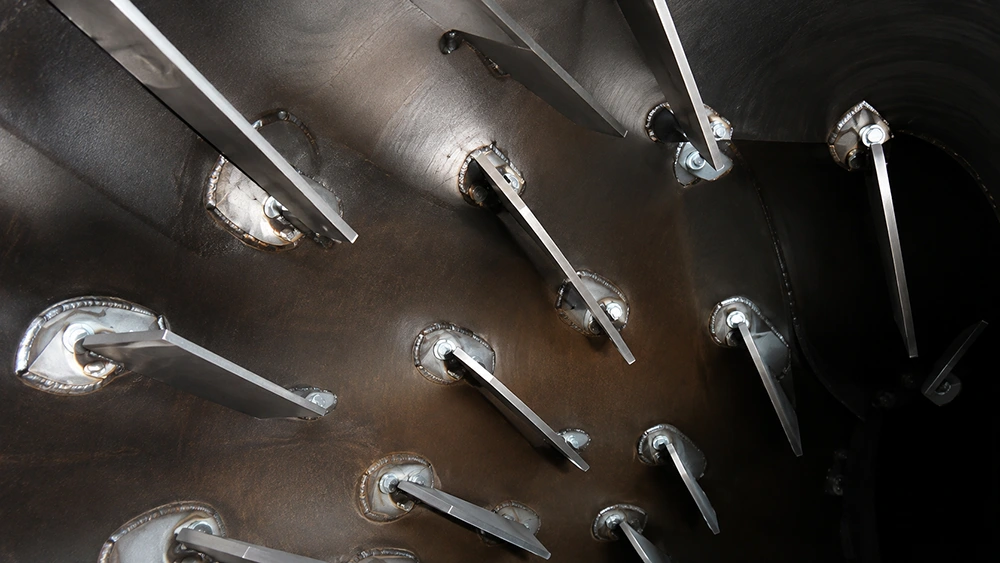
The system view shows a Dryr rotary drum dryer connected to process ducting, a centrifugal blower, and a cyclone separator on steel support frames. The chamber view shows staggered metal paddle bars and bolted mounting hubs, supporting the lifting and turnover of granular biomass material through the drying zone. For a project discussing 0.8–2 t/h, final sizing and operating conditions should be confirmed against feedstock type, initial moisture, particle size, and target output moisture. Where the process is designed for output moisture below 10 percent, the result is a more consistent feed for charcoal briquette forming, less dependence on sun drying, and a defined dust path that supports environmental control. On-site installation and commissioning can then verify airflow, seals, and collection equipment under actual operating conditions.
- The English headline uses a unique charcoal briquette production scenario, the sawdust dryer product term, and a controlled dust emissions result.
- The article follows the required sequence from customer scenario and old method problems to Dryr fit, structural evidence, design range, and process outcome.
- Both images come from the resolved Dryr designer gallery and use the indexed English ALT text without repeating an image within this article.
- The copy uses qualified project language for dust control and moisture targets and makes no unsupported regulatory or performance guarantee.


