CHARCOAL BRIQUETTE PRODUCTION | ROTARY SAWDUST DRYER DUST CONTROL
The customer scenario: dust across a charcoal briquette line
For charcoal briquette plants in East Africa, dust is generated during crushing, drying, conveying, and carbonization. Dryr is an industrial sawdust dryer for charcoal briquette production that combines continuous hot air drying with a conical cyclone dust collector, optional baghouse filtration, cooling airflow, and seal monitoring to reduce fugitive emissions and stabilize feed moisture.
Why old drying methods create production and compliance gaps
Natural sun drying and manual open air drying are weather dependent, expose fine material to wind, and do not provide a controlled continuous sawdust drying path. A small airflow dryer may move hot air quickly, but it can leave transfer points, exhaust lines, and drum seals outside a defined dust collection system. That makes moisture reduction and environmental control harder to manage before carbonization. A rotary sawdust dryer with planned extraction is better suited to continuous industrial operation than an exposed drying yard or an isolated low capacity dryer.
Why Dryr fits: drying, dust collection, and monitoring in one line
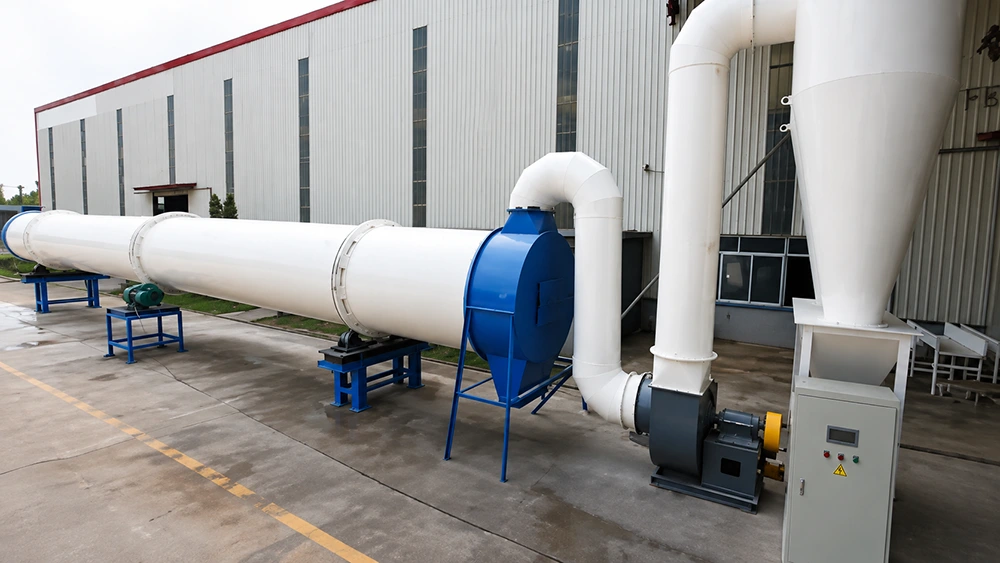
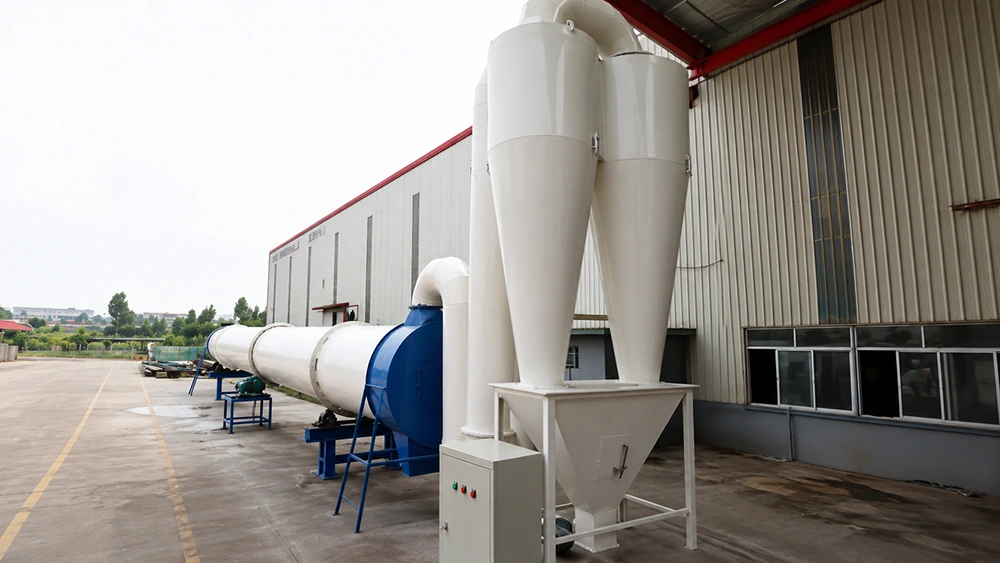
Dryr is a sawdust drying machine built around a rotary drum dryer for continuous hot air drying. The standard conical cyclone dust collector separates captured process dust from the air stream, and an optional baghouse filter can provide an additional filtration stage when the project requires it. The blower and process ducting carry the drying airflow and can also support cooling of connected equipment. Seal monitoring gives operators a defined check around the drum and connected sections, helping reduce fugitive emissions. For a project in the 0.8 to 2 tonnes per hour range, the hot air furnace, airflow route, and dust collection arrangement should be matched to feedstock moisture and the required outlet condition.
The final result: cleaner operation and steadier feed moisture
The equipment evidence shows the complete process arrangement rather than a drum alone. Image one shows the rotary drum dryer, process ducting, cyclone separator, centrifugal blower, steel supports, and control equipment. Image two shows the rotary drum dryer connected to twin cyclone separators and conical dust collection hoppers. Together, these features provide a defined route for process air and collected dust from the drying stage. The result is lower fugitive dust exposure, clearer environmental control points, and steadier feed moisture for charcoal briquette production than natural sun drying. Final dust performance and outlet moisture, including any target below 10 percent, should be confirmed during engineering against the actual sawdust, throughput, fuel, and local requirements. Contact EMP to review the crushing to carbonization dust path and the required cyclone or baghouse configuration.
- Standard conical cyclone dust collector for process air separation
- Optional baghouse filter for tighter dust control requirements
- Blower and process ducting support drying airflow and equipment cooling
- Seal monitoring helps reduce fugitive emissions around the rotary drum


