Mixed Feedstock for Presswood Pallet Lines: A Drum Wood Chipper for 30–35 mm Chips
The presswood pallet plant is handling a mixed feedstock stream
A drum wood chipper gives presswood pallet plants a defined first-stage process for mixed feedstock: branches, small-diameter plantation logs, slabs, bark, used pallets, and construction formwork are reduced before hammer milling, while nails and other metal are removed upstream.
Why buying chips or using a hammer mill alone leaves a gap
Outsourcing wood chips exposes the pallet plant to the same commodity shortage faced by pellet plants, particleboard plants, and biomass fuel operations. When recovered wood is unavailable, the plant buys more plantation logs and moves its raw material cost upward. Sending long, irregular, wet, or bulky pieces straight to a hammer mill also makes the downstream stage perform both coarse size reduction and fine milling. That can increase blockage risk, accelerate wear, and make the feed condition entering the pallet process less consistent. Manual wood sawing and splitting is slower to scale and does not create a controlled chip preparation stage.
Why a drum wood chipper fits the first reduction stage
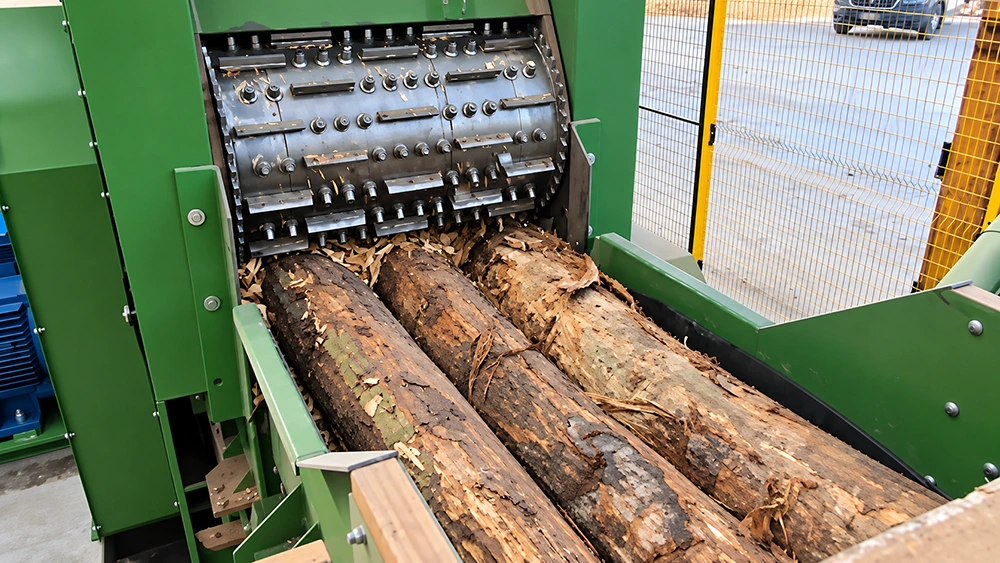
Shred is configured as a stationary, electric industrial wood chipper for raw material preparation ahead of a hammer mill. Its drum-type cutting action is suited to a mixed stream containing irregular branches, knots, slabs, bark-covered logs, and recovered wood rather than only straight, uniform logs. The hydraulic feeding system and feed rollers help maintain continuous feeding, while the knife roller, flying blades, and counter-knife arrangement perform the primary cut. The published model range covers 45 kW at 4–5 t/h, 55 kW at 6–8 t/h, and 110 kW at 8–12 t/h. The target output is 30–35 mm chip size, with adjustable chip length available according to the process requirement. This is the practical distinction between a drum wood chipper and a hammer mill: the chipper prepares a more manageable, defined-size feed before the hammer mill completes the next reduction step.
Evidence from the machine layout and the required metal-control step
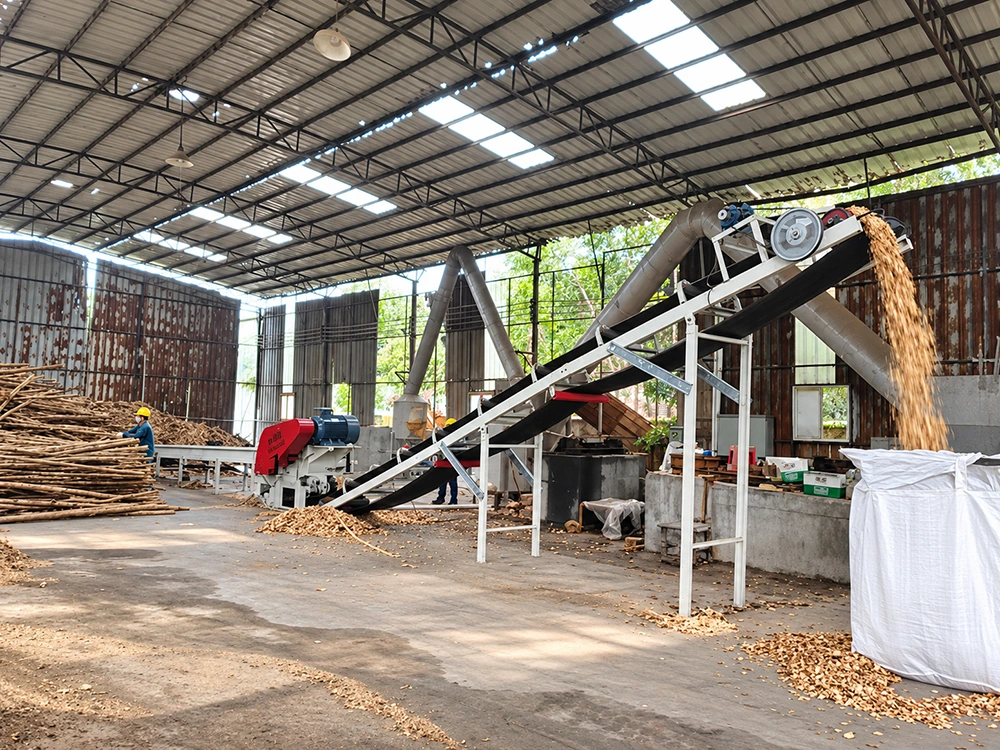
The selected Shred gallery evidence shows the physical sequence that a plant manager needs to review: a guarded feed chute and cutter-rotor area for irregular logs, followed by an inclined conveyor and bulk-bag discharge for collected wood chips. These images support the workflow and equipment layout; they do not replace a feedstock trial or certify a capacity under a specific moisture and density basis. For used pallets and construction formwork, do not treat the drum wood chipper as a direct nail-processing machine. Install upstream magnetic separation and add manual inspection or other agreed foreign-object controls before the chipper. With that boundary respected, the line can turn mixed wood waste and supplementary plantation logs into a more uniform 30–35 mm intermediate material, reduce the hammer mill's coarse-reduction burden, improve self-supply of chips for the pallet plant, and make capacity matching easier across a complete wood chip production line. Contact EMP with feedstock photos, moisture information, contamination details, and required tons per hour for a drum wood chipper selection and test plan.
- The article title, SEO title, slug, H1, first-screen summary, and both image ALT texts use the exact phrase drum wood chipper.
- The production sequence follows customer scenario, old-solution limits, product fit, structure and parameter evidence, then operating result.
- Metal-contaminated wood is not presented as direct feed; upstream magnetic separation, inspection, and removal of nails are stated as required controls.
- The two selected Shred gallery images are unique in this article and are used once each; the article avoids unsupported blade grade, hardness, foundation, operator-count, CE, and payback claims.


