Biomass Pellet Production
Why drying dominates the pellet line energy bill
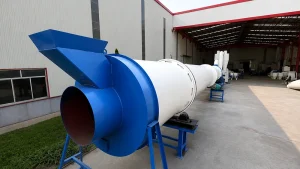
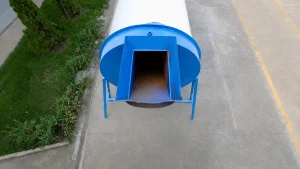
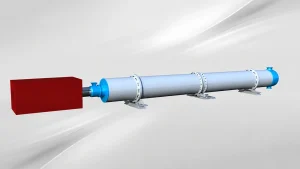
Pellet mills run on tight moisture control. Mr.Biomass-style flowsheets stage a rotary drum dryer as step 03, sized to pull wet feedstock down to under 10% moisture for the pelletizing window. Wet agricultural residue and green wood waste carry a high initial moisture content, so the dryer absorbs the bulk of the line's electrical and thermal load. When moisture drifts out of that 8–12% window, pellets shatter at the die, fines rise, and throughput drops. Lines marketed as "no-binder" depend even more heavily on precise moisture. A BX215 wood chipper preconditions that balance by reducing bulk, exposing fiber, and delivering a uniform chip that the dryer can handle predictably.
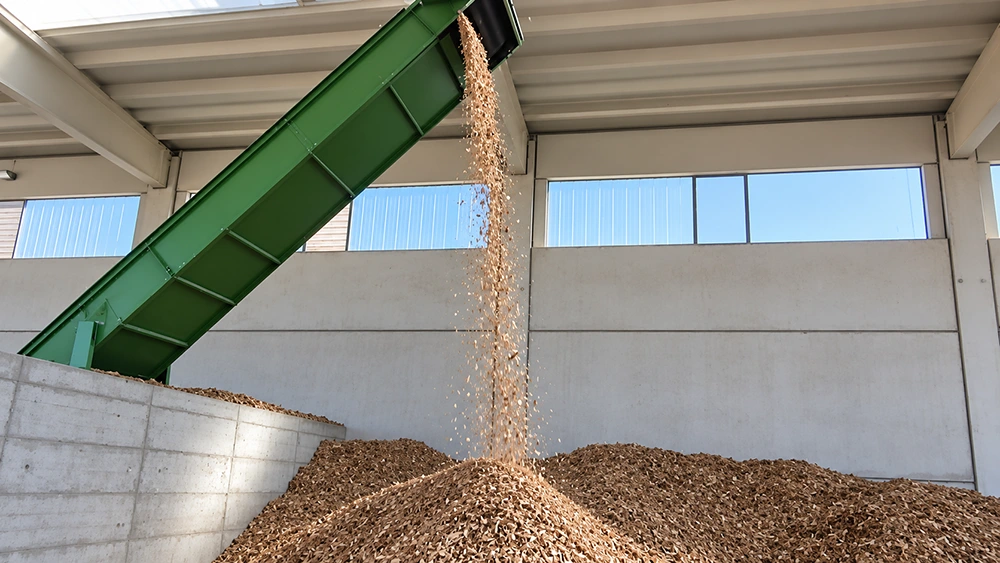
In a biomass pellet plant, drying is the single largest energy line item. A BX215 wood chipper sits at the front of the line, sizing wet logs, branches, slabs, and agricultural stalks before rotary drum drying brings moisture into the narrow 8–12% pellet-bonding window. Choosing the wrong size-reduction stage up front means unstable moisture, wasted heat, and pellet rejects.
Where a BX215 wood chipper fits in the heat-load chain
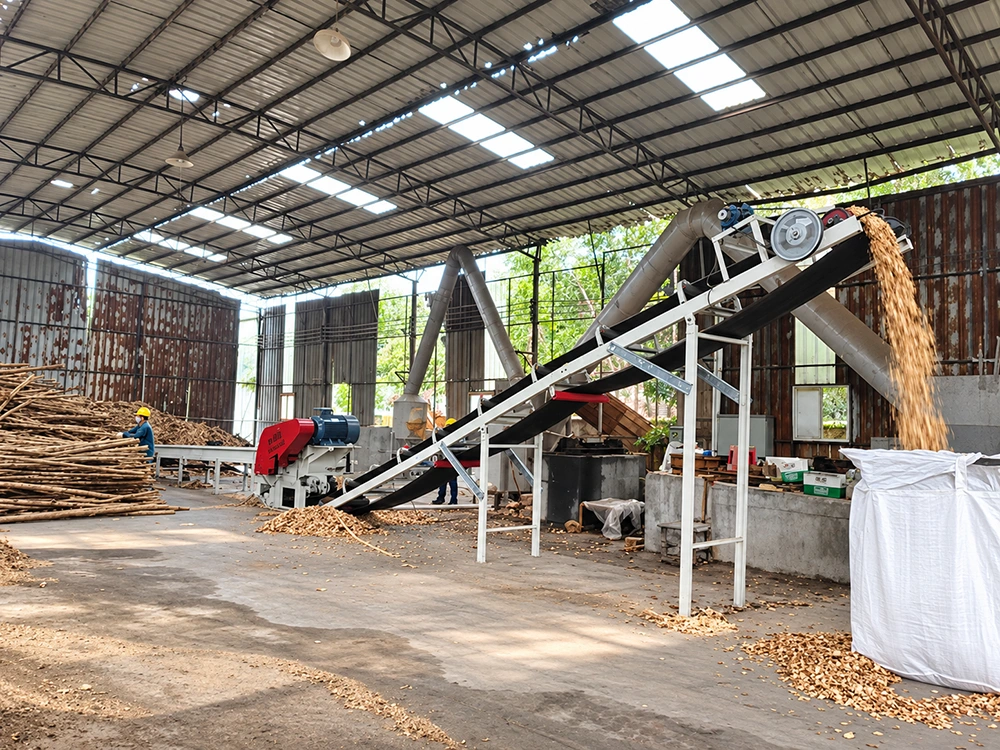
The drying heat load is a function of three things: initial moisture, feed uniformity, and exposure surface area. A BX215 wood chipper addresses two. It takes small-diameter logs, branches, off-cuts, and slab wood and converts them into roughly 35 mm chips at 4–5 t/h on a 45 kW main motor with 2.2 kW × 2 feed motors. The chips present a high, consistent surface area to the rotary drum dryer, which shortens residence time and stabilizes the outlet moisture. Because the EMP line is a presswood pallet and biomass equipment maker, the chipper, pulverizer, dryer, and downstream press are matched as a single flow rather than as standalone boxes.
Why a drum chipper suits irregular, wet biomass feed
Drum wood chippers are designed for the awkward geometries that pellet plants actually receive: crooked branches, mixed slabs, agricultural stalks, and residue with bark attached. The 400 × 180 mm feed opening on a BX215 wood chipper accepts up to 160 mm diameter material, and the hydraulically floated upper feed roller maintains steady compression on uneven loads. A 600 mm knife rotor running at 590 rpm, fitted with alloy steel fly knives and a sizing screen, delivers chips that fall within the screen aperture while oversize material recirculates inside the drum. That internal sizing step is what makes the downstream dryer behave like a steady-state process instead of a chase-the-moisture process. Disc chippers, by contrast, are tuned for clean, uniform logs and suffer higher blade damage when fed the contaminated, irregular mix common to pellet plants.
What buyers should check before sizing a BX215 wood chipper
Capacity figures in this market are quoted without shared test conditions, so a 4–5 t/h rating on a BX215 wood chipper is not directly comparable to a competitor's t/h. Before purchase, request the chipper's rated capacity stated against an explicit moisture content, wood density, and chip length. Confirm the feed opening (400 × 180 mm for the BX215 wood chipper), maximum feed diameter (160 mm), main motor (45 kW), total installed power, weight, and overall dimensions so the plant layout, transformer, and logistics plan can be built. Verify the safety package: 380 V control, soft starter, inverter-controlled feed speed, wireless remote start/stop, dust collection interface, and interlocked rotor guard. Ask whether the supplier can publish a capacity test on your representative feedstock; suppliers that publish test conditions are easier to hold to their numbers. For sites that handle construction formwork or demolition timber, confirm a dedicated metal-removal path, since that material belongs on a wood crusher with magnetic separation rather than on a drum chipper.
From a BX215 wood chipper into a stable drying window
The real ROI of a BX215 wood chipper in a pellet line shows up at the dryer outlet. Stable 35 mm chips feed the rotary drum dryer at a predictable bulk density and surface-to-mass ratio, so the dryer runs closer to its design point and the operator stops fighting swings in outlet moisture. The downstream hammer mill and pellet press receive a feed they can size for, instead of compensating for upstream variability. Net effect: lower specific heat consumption per ton, fewer pellet rejects, and a line that survives a winter of wet feedstock without derating. For presswood pallet plants that share the same feedstock path, the same BX215 wood chipper also feeds the first stage of the pallet line, which is why EMP integrates the chipper into a single turnkey flow rather than selling it as an isolated machine.
- Capacity figure is published against an explicit moisture content, wood density, and chip length, not as a bare number.
- Feed opening 400 × 180 mm and maximum feed diameter 160 mm match the BX215 wood chipper specification on the supplier's data sheet.
- Main motor 45 kW, feed motors 2.2 kW × 2, total installed power, machine weight, and overall dimensions are confirmed in writing for plant layout and transformer sizing.
- 380 V control, soft starter, inverter-controlled feed, wireless remote, dust collection port, and rotor-guard interlock are included in the offer.
- Construction or demolition timber with nails is routed through a metal-removal / wood crusher path, not through the drum chipper.