BX215 Wood Chipper and Drying Heat Load in Biomass Pellet Production
Customer scenario: high-moisture biomass before the pellet press
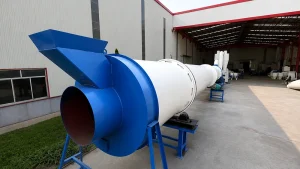
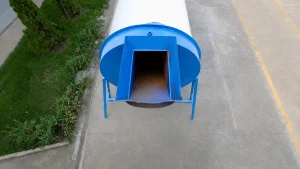
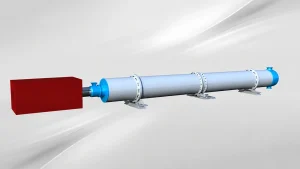
Pellet plants running on agricultural residue and recovered wood waste start the day with a moisture problem, not a sizing problem. Straw, sawmill residue, and demolition timber arrive well above the 10% moisture window that pellet binding needs. Mr. Biomass process step 03 is a rotary drum dryer pulling feedstock down into that window, and that step carries the largest heat load on the line. When the dryer is fed irregular, wet, or oversized material, throughput drops, fuel cost climbs, and downstream pellet quality becomes unstable.
A BX215 wood chipper is the front-end sizing step that decides how much heat your rotary drum dryer has to remove before biomass pellets can lock in their binding window. When agricultural residue and wood waste enter the line with high moisture, the chipper's geometry, screen, and chip length set the evaporative load that follows. This article walks through the customer scenario, the legacy heat-balance problem, why the BX215 wood chipper matches the upstream of a pellet line, the structural and parameter evidence behind that match, and the operating result you can expect on a stable feed.
Legacy approach: drying everything the dryer is handed
The common workaround is to oversize the dryer and hope it catches up. Plants buy a bigger drum, add a second burner, or slow the line to give the dryer more residence time. None of those moves fix the root cause, which is that the chipper ahead of the dryer is producing non-uniform feedstock with unpredictable moisture pockets and oversized fractions. A rotary drum dryer is a heat exchanger first; it performs best on uniform feed at a known bulk density, not on a fluctuating stream of branches, slabs, and shovelled fines. Operators end up tuning the burner by ear, watching the stack, and accepting pellet rejects whenever moisture drifts outside the binding window.
Why a BX215 wood chipper matches the upstream of a pellet line
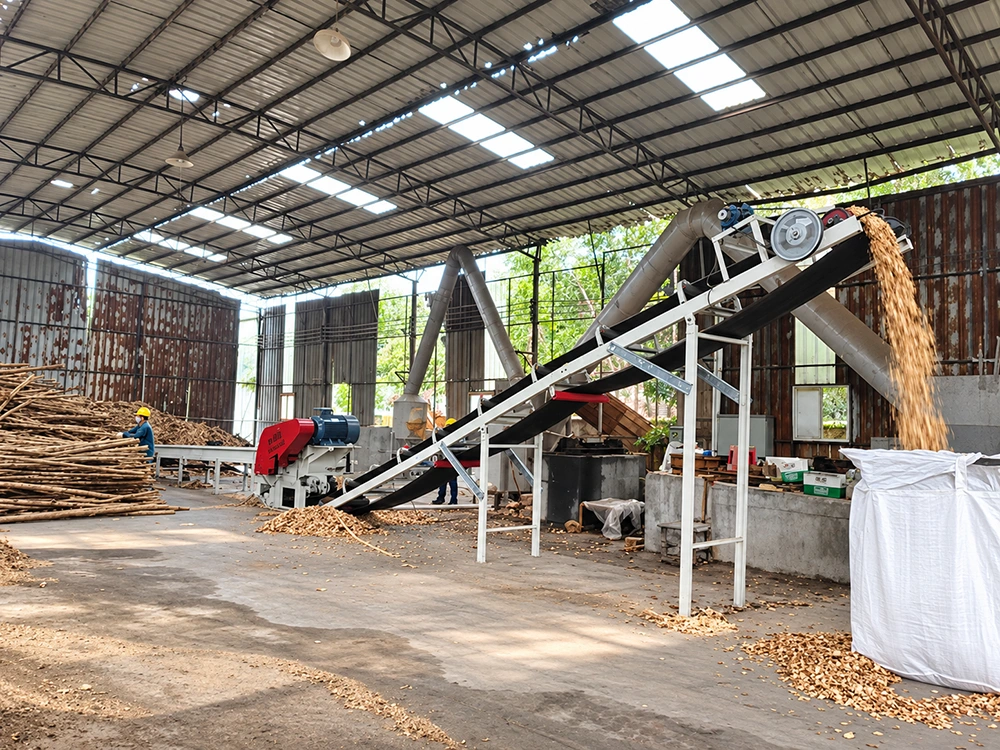
The BX215 wood chipper class is a stationary, electric, drum-type industrial chipper sized for the entry point of a pellet or particleboard line. Its 45 kW main motor and 4–5 t/h capacity put it at the lower end of the BX platform, which is exactly where a pellet plant that runs on agricultural residue and wood waste needs to start: small enough to be efficient on continuous feed, large enough to keep the dryer busy. The drum rotor with a chipping screen produces a more uniform chip than hammer-mill-only preparation, which lowers the peak evaporative load the dryer has to handle and keeps moisture variation inside a tighter band. Because EMP supplies the full line, the chipper geometry is tuned to the downstream dryer and pellet press rather than treated as a standalone machine.
Structural and parameter evidence behind the match
The Shred drum wood chipper in the EMP lineup uses a horizontal knife rotor with replaceable alloy steel fly knives fixed by dedicated bolts and clamps, with a sizing screen under the rotor that recirculates overs until they pass. Two opposed feed rollers, chain-and-sprocket synchronized and driven by dedicated feed motors, hold irregular branches and slabs against the rotor without letting them jump, which is what produces the uniform 35 mm chip length the EMP specification targets. The 45 kW X-215 variant in the same family carries a 600 mm rotor diameter, a 400 × 180 mm feed opening, a 160 mm maximum log diameter, 590 rpm rotor speed, and a listed total power of 49.4 kW across the main motor and the two feed drives; X-216 extends the same architecture to 55 kW, 650 mm rotor, 540 × 240 mm feed opening, 200 mm maximum log, and 6–8 t/h. The shared features that matter for drying heat load are the screen-controlled chip size, the forced-feed geometry, and the soft-start electrical cabinet with variable-frequency feed speed, all of which keep the dryer fed at a steady bulk density instead of a swinging one.
Operating result: dryer stays inside the pellet binding window
When the chipper ahead of the dryer is delivering uniform 30–35 mm chips at a steady mass flow, the rotary drum dryer can be set to a known evaporative load rather than chasing one. Burner trim, retention time, and exhaust temperature become controllable variables instead of survival tactics. Inside the pellet binding window, the press runs without the binder-less rejects that show up when moisture slips above the threshold, and the line's heat-balance cost — usually the largest single line item — drops with the variance, not just with the average. The BX215 wood chipper is the lever that makes that possible, and the rest of the EMP line is built to keep the lever in position.
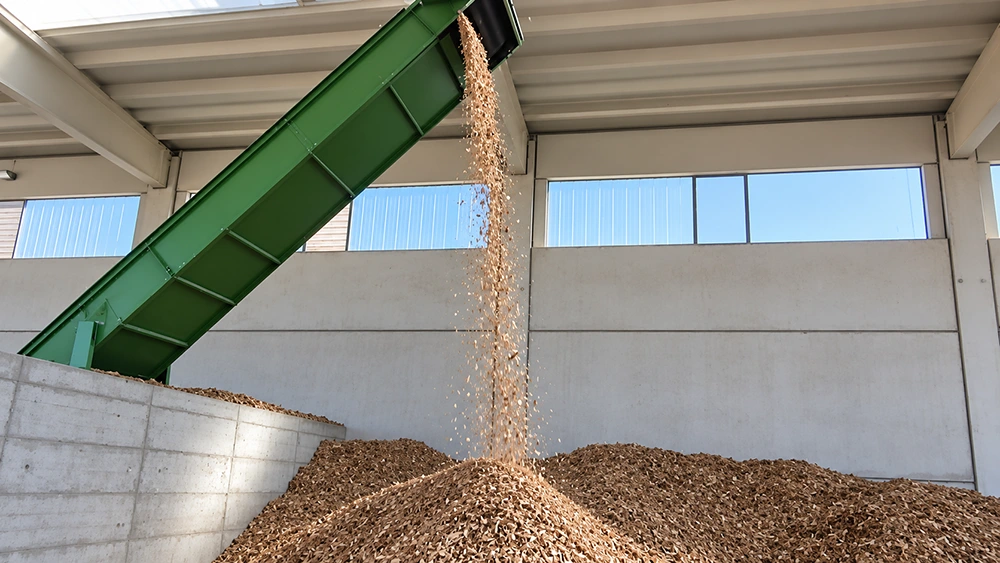
- BX215 wood chipper positioned as the upstream sizing step, not a standalone product.
- Drying heat load framed as the line's largest cost center, with chip uniformity as the lever.
- Shred drum chipper structure and parameters sourced only from the EMP product bundle.
- No fabricated dryer energy savings, no pellet-line throughput numbers, no customer identity.
- Title and H1 carry BX215 wood chipper and stay clear of the previously published Why Single-Cylinder Presses Fail angle.