Drum Wood Chipper Machine for Pellet and Biomass Plants
The Plant That Has to Beat Coal and Heavy Oil on Cost per Ton
A pellet plant or biomass fuel preparation system does not compete on machine specifications. It competes on cost per ton against coal and heavy oil, and the first place that cost is decided is the chipping stage in front of the mill, the dryer and the press. This page follows one buying decision end to end: where an industrial drum wood chipper machine sits on a wood chipper for pellet plant layout, what the three tiers of the Shred platform cover at 45 kW, 55 kW and 110 kW, which structures carry the load, and which claims the plant has to verify itself. Where EMP has no published test data, no number is invented. Power and capacity are stated as nameplate figures so the plant can run its own kWh per ton calculation.
What the Old Route Costs: Outsourced Chips, a Hammer Mill Alone, or a Disc Chipper on Irregular Feed
Four legacy routes keep showing up on cost sheets, and each one leaks margin in a different place. The first is buying chips or sawdust from outside. It looks cheap until the supplier raises price mid-season, short-ships during the wet months, or sells the same tonnage to the plant next door, and the plant carries no control over particle size at all. The second is running a hammer mill with no chipping stage in front of it. Whole branches and slabs enter the mill, the infeed is uneven, the mill spends power on material that should already have been reduced, and the wear rate on hammers and screens climbs with it. The third is a disc chipper sized for straight logs. Crotch wood, curved branch wood and slab ends deflect at the knife, cut length scatters across a wide band, and the dryer and mill downstream have to absorb the variance. The fourth is a diesel mobile chipper used as a stationary machine, which puts fuel and mobile-platform maintenance into the ton cost and was never designed for continuous indoor duty. None of these is solved by buying a larger version of the same thing. They are solved by putting the correct first stage on the floor.
Why Drum Geometry and a Hydraulic Feeding System Fit Irregular Feedstock
The Shred drum wood chipper is built around a heavy welded steel housing, a knife roller carrying fly knives bolted to the drum, a counter knife at the bed, and an upper and lower feed roller that force material into the cutting circle instead of letting it bounce. The hydraulic feeding system lets the upper feed roller float over stock of uneven thickness, so branch wood, slab and pallet material are accepted as they arrive rather than pre-graded. A chip screen under the drum keeps oversize pieces inside the cutting circle until they pass at roughly 30 to 35 mm, and chip length is adjustable within a working range, which is the setting the mill and dryer downstream care about. The same hydraulic circuit opens the upper feed roller for knife change and knife gap adjustment, so the two tasks that used to take a crane and a shift are ordinary planned maintenance. The drum chipper vs disc chipper argument is settled by feedstock shape rather than by a slogan: forced feeding and a cylindrical cutting circle suit irregular, curving and mixed material ahead of a chipper and hammer mill line, while a disc machine is at its best on straight, uniform logs. The platform runs in three tiers. The X-215 carries a 45 kW main motor, 49.4 kW listed total power, a 400 x 180 mm feed opening, 160 mm maximum feed diameter and 4 to 5 tph. The X-216 carries 55 kW, 61 kW listed total, 540 x 240 mm, 200 mm and 6 to 8 tph. The X-218 carries 110 kW, 118 kW listed total, 680 x 310 mm, 300 mm and 8 to 12 tph. Two boundaries belong in the same paragraph as those numbers. First, chipper capacity moves with species, moisture content, wood density, chip length and how continuously the infeed is fed, and EMP has not published the moisture or density baseline behind these figures, so treat them as nameplate figures until a trial confirms them on your own material. Second, EMP has not published a measured kWh per ton result, so no multiplier, saving percentage or payback figure is quoted here. Take the kW figures, your own tariff and your own running load, compute the number yourself, and revise it after commissioning.
Compliance, Spares and the Result That Shows Up on the Cost Sheet
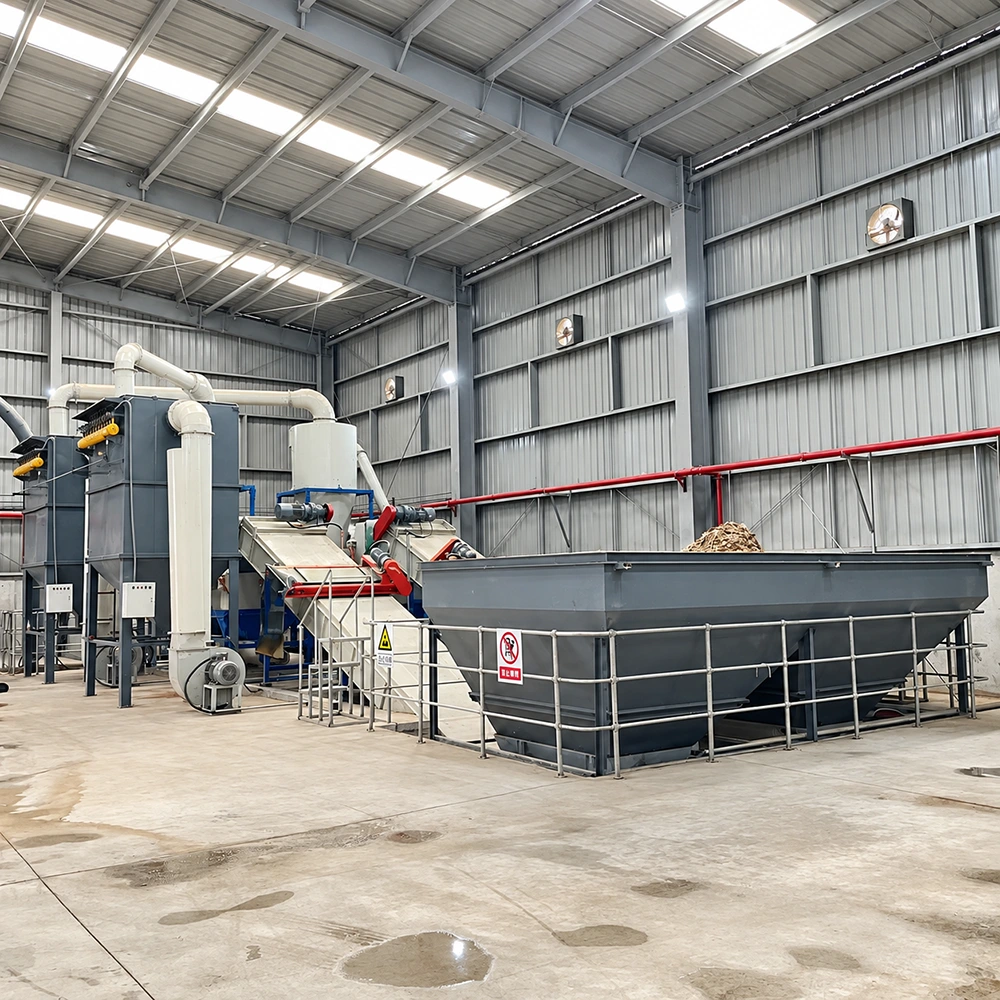
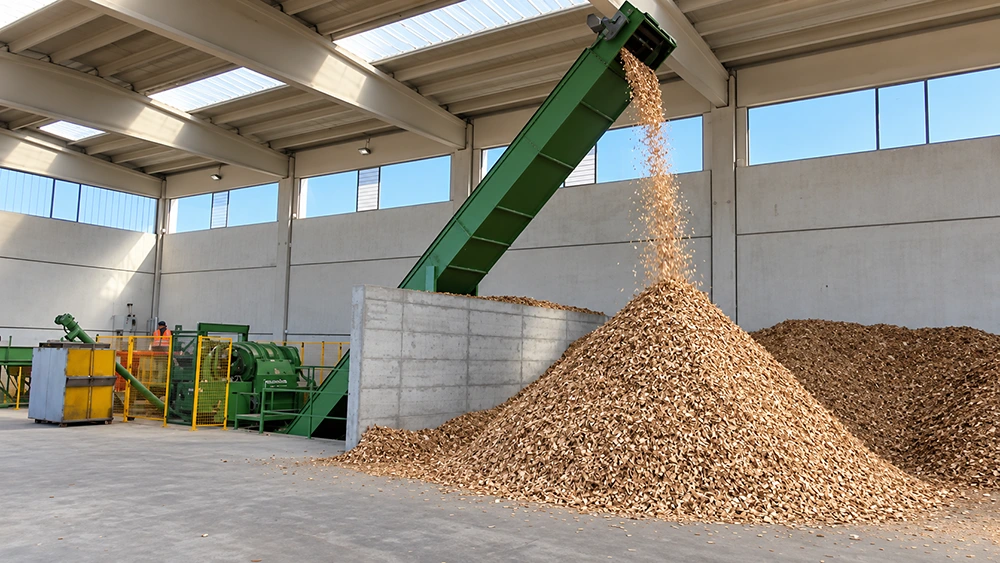
The compliance questions on an export project split into three parts and EMP answers them separately. CE marking is not a legal requirement for a plant selling into its domestic market in Thailand or most of Southeast Asia, and it is required when the machinery is placed on the European market. EMP will not print CE certified on a page when a certificate is not on file. What we can do for a European export project is supply the technical documentation and design review support the conformity route needs, and track the change from Machinery Directive 2006/42/EC to EU Machinery Regulation 2023/1230, which applies from 20 January 2027, so the file is built against the regulation that will be in force when the machine is placed on the market rather than the one being retired. ENplus is a certification of the pellet as a fuel, not a certification of a machine, so nothing here claims to hold it; the equipment side only owes chips uniform enough to support the size and moisture consistency the fuel standard asks for, and that is a job the chip screen and the adjustable chip length do at the front of the line. The maintenance side is where a Chinese-built drum wood chipper earns its place on the cost sheet. The structure is a simple drum in a welded housing rather than a long component chain, fly knives, the counter knife, the screen plate, bearings and the wear liner are the wear list and nothing else is, knife sharpening and knife gap adjustment are carried out on site with the upper feed roller opened hydraulically, and wear parts are supplied as standard items with commissioning support, an operation manual and a spare knife set recommended at handover, so a wear part does not stop the line for a shipment. Put the four sections together and the chain reads the way the plant owner actually decides it: irregular branch wood, slabs and offcuts at the gate, a first stage that turns them into 30 to 35 mm chips at a controlled rate, a mill and dryer that see a stable infeed instead of a variable one, and the plant computing its own cost per ton against coal and heavy oil on figures it can check. The two images on this page show the physical setting rather than a rendering, an infeed station with a heavy steel hopper, inclined conveyors and dust extraction ducting, and a discharge conveyor dropping chips into a bay where the material is handled as bulk, which is the point at which the wood has stopped being waste and become line feed.
- Every section body is plain text with no HTML tags, attributes, Markdown or angle brackets, and the renderer owns the paragraph and CTA markup.
- The primary keyword drum wood chipper machine appears in the eyebrow, the first screen summary and the section headings, and the model and power terms 45 kW, 55 kW and 110 kW are carried into the body.
- No kWh per ton, saving percentage, payback period, CE certified or single operator claim is made, and the missing moisture and density baseline is stated as a boundary.
- Both images are drawn from the Shred designer gallery with their index English ALT values, and neither appeared in the Shred posts returned by the publication scan.


