Waste wood offtake
A recycler with rising intake and three flat outlets
A wood recycler does not lose money on the press. It loses money on the outlet. If your recovered wood goes to biomass boilers, panel board or animal bedding, three buyers decide your gate price and none of them is growing. A wood pallet hydraulic press adds a fourth route that is growing, because the pallet it presses is a product sold by the piece to exporters who need fumigation free pallets, not a fuel sold by the ton to a boiler that may stop taking material next quarter.
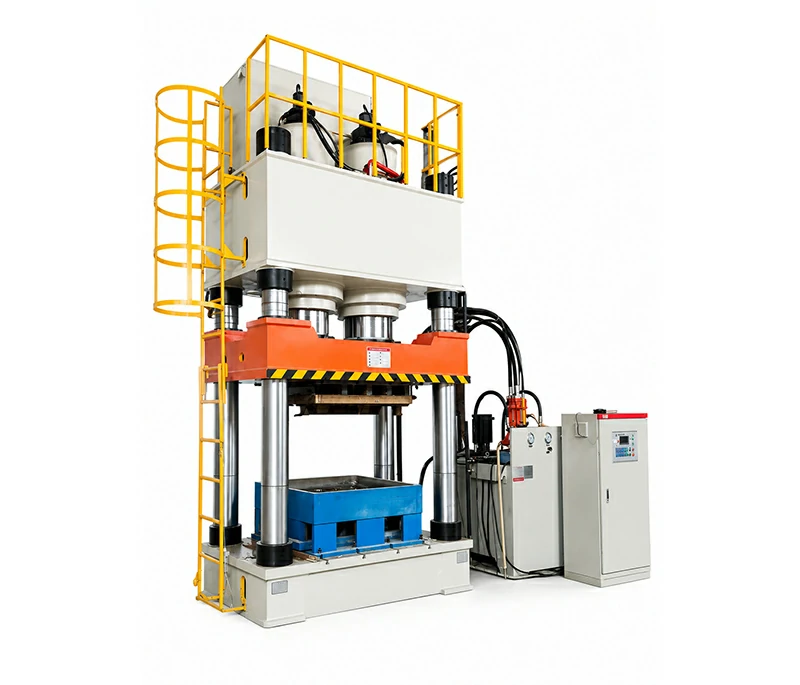
Why the molded pallet route does not overlap the other three
A molded pallet is not a fourth version of the same commodity. It is a manufactured product with its own demand curve, and the curve is up: the global molded pallet market was about USD 630 million in 2025 and is growing at roughly 5.5 percent a year according to PW Consulting. Two forces hold that growth. First, molded pallets are made from wood fiber and binder under heat and pressure, so they are classified as a processed wood product and sit outside the ISPM-15 heat treatment and fumigation requirement that governs solid wood packaging, which is why export packaging teams keep asking for fumigation free pallets. Second, European packaging rules keep pushing single-use solid wood out of export lanes. So the same recovered fiber that biomass discounts gets pressed into a pallet that sells by the piece into export channels, and the two businesses do not compete for the same tonnage, the same buyer or the same price basis.
What the machine actually is: structure, tonnage and shipping
EMP builds the whole line, not just the press: crusher, dryer, glue mixer, mold and the press itself, so a recycler does not need a joinery background to run pallet manufacturing. The press is a Y32 three-beam four-column machine: top beam, slide and worktable carried on four solid columns that also guide and lock the frame, with the hydraulic station mounted on the back of the top beam and a separate control console. The published tiers run 1250, 1600, 2000 and 2500 ton, with slide stroke from 700 to 900 mm, a maximum platen of 2500 x 1700 mm and a 25 MPa system pressure, and the frame splits for shipping, which is why the machine can be containerised and reassembled inside a UK unit instead of needing an oversized load permit. The two images on this page show exactly what that buys you: the four-column frame, guide pillars, worktable and separate hydraulic power unit in the machine, and the double cylinder press head, steel platens and mold workstation during installation, which is the stage most recyclers underestimate. Change the mold and the same press runs nine-leg, grid base or perimeter base pallets.
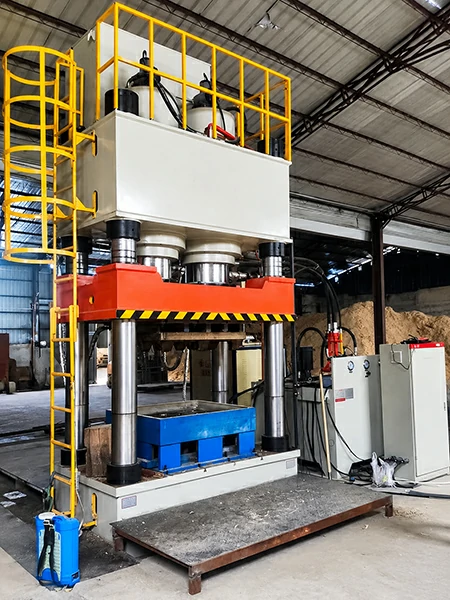
The line boundary and what it changes at the gate
Be clear about the boundary, because this is where a molded pallet project fails. The press cannot fix bad fiber. Particle size has to come down to about 5 mm, drying has to land the fiber at roughly 150 to 180 C and 8 to 12 percent moisture, and the MDI glue has to be mixed evenly before the mold is filled, which is why EMP does not sell the press as a standalone machine. On the site side, plan for at least 600 square metres of floor, 6 metres of clear height and around 200 kW of available power. Inside those limits the economics change shape: instead of negotiating a tonnage price against a boiler or a board mill, the plant sells finished pallets by the piece, nests them about four to one for return and storage, and EMP publishes an indicative payback of 12 to 18 months and a self-production cost of roughly 40 percent of bought-in pallets, both of which are claimed figures your own numbers should confirm. The point is not that pallets are easy money. The point is that the outlet is growing while the other three are not, and that is the difference between capacity you can sell and capacity you have to discount.
- Title, slug, H1 source, intro and both image alt texts carry the phrase wood pallet hydraulic press; no existing presswoodpallet.com post uses this title or slug.
- Every parameter quoted (Y32 three-beam four-column frame, 1250 to 2500 ton tiers, 2500 x 1700 mm maximum platen, 25 MPa system pressure, 150 to 180 C and 8 to 12 percent moisture upstream, MDI glue mixing) is taken from the MldP product brief and traffic profile, not invented.
- Market figures are attributed in the body to PW Consulting (about USD 630 million in 2025, about 5.5 percent CAGR) and the ISPM-15 exemption is stated as the processed wood product route, not as a certificate EMP issues.
- Both images come from the resolved canonical product designer gallery /data/hot/vault/设计师图片库/MldP and are used as structure, layout and installation evidence only, never as proof of a customer molded wood pallet production run.


