Export compliance
The lane where a pallet turns into a border file
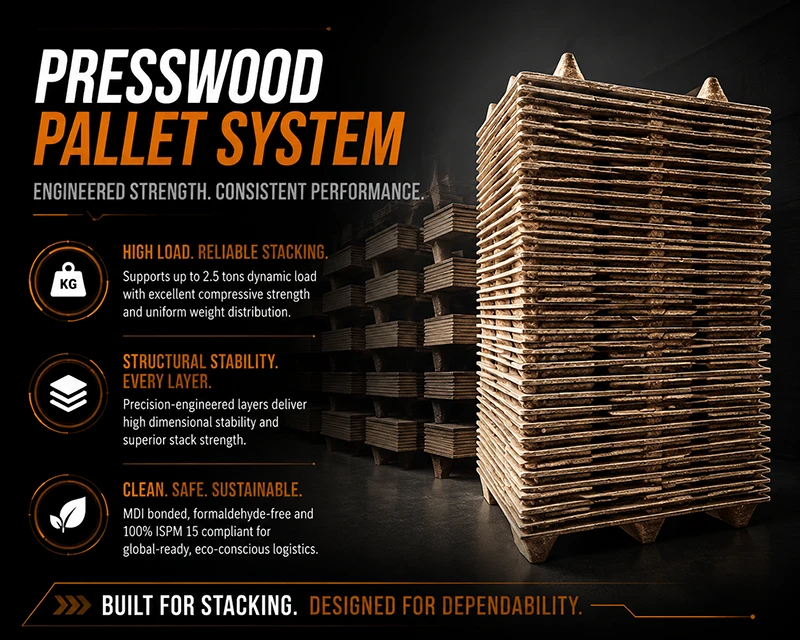
A material science and specialty chemical group that moves drums, jumbo bags and bagged mineral cargo into Europe, North America, Australia and New Zealand does not buy a pallet on those lanes, it buys a compliance route: every solid wood pallet and crate in the consignment has to be heat treated to 56 degrees Celsius core temperature for 30 minutes or fumigated with methyl bromide, stamped with a compliant IPPC mark and covered by a phytosanitary certificate before a plant protection officer will let it land. Ampallet is a pressed wood pallet molded in one piece from recovered wood fibre and an MDI binder on a 1600 ton press at about 150 to 180 degrees Celsius, and it ships inside the ISPM 15 processed wood category that the standard itself exempts, so the fumigation booking, the IPPC branding and the certificate stop being part of the export lane.
What the treatment program costs once it slips
Most of the cost sits outside the pallet price and inside the schedule. A heat chamber booking pulls the pallet out of the shipping plan days before it is needed, the mark has to be applied and kept legible by someone accountable for it, treated and untreated stock has to be segregated in the yard, and a certificate has to travel with each consignment. When a unit fails inspection at destination the bill changes order of magnitude: re-treatment offshore is commonly quoted at roughly five to ten times the domestic cost, the container sits for seven to fifteen days while it is arranged, storage and demurrage accrue, and in the worst case the packing is destroyed or returned. Re-palletizing in a foreign warehouse also means the load comes off the deck and goes back on by hand, which is where bagged and drummed cargo is most often damaged.
Why a molded wood pallet sits outside the treatment program
ISPM 15 exempts processed wood: material that has been glued, heat pressed or pressure treated in manufacture, with plywood, particleboard and presswood named among the exempt categories. Ampallet is that category rather than a sawn timber assembly. Recovered wood fibre is reduced, dried and blended with an MDI polyisocyanate binder, then formed as one body in a steel mold under high temperature and high pressure, so there is no round wood section, no bark edge and no board that a pest could occupy, and no treatment step left for a phytosanitary system to verify. The practical result on the lane is a fumigation free presswood pallet: no chamber booking, no methyl bromide option to consider, no IPPC branding on the deck and no fumigation certificate clipped to the shipping documents. The boundary is stated plainly, because this is a material category reading and not a customs guarantee: the destination rule, the forwarder's reading and the national plant protection authority decision still govern, the packing list and declaration should name the material explicitly, and a pallet exemption never replaces the shipper's own ISPM 15 obligations on any solid wood crate, dunnage or skid loaded beside it.
The structure, the numbers and the evidence a buyer can file
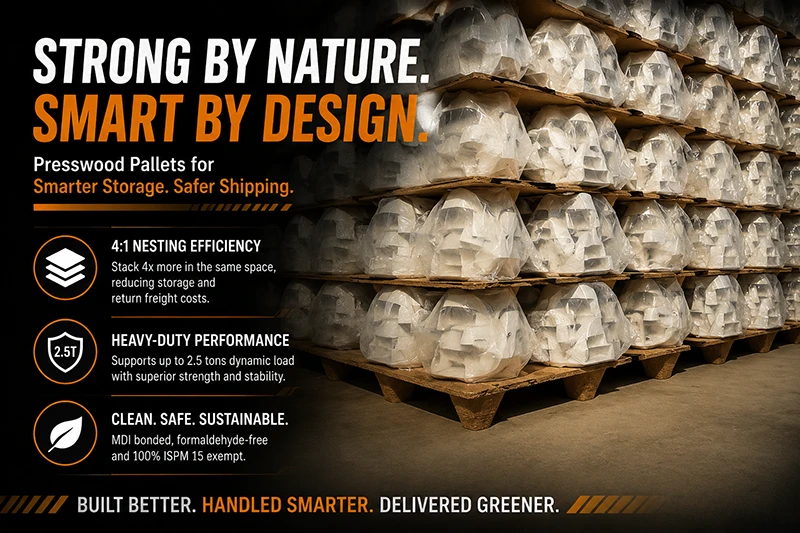
One body means one part number: deck, ribs, guide slots and nine conical support feet formed together, no nail, no staple, no separate foot and no board joint that can be re-boarded and quietly take the mark with it. Finished moisture is held at about 9 percent, deck flatness to roughly plus or minus 2 mm, corners molded and rounded. The chemical drum size runs 1140 x 1140 x 135 mm at about 17 kg with 2500 kg dynamic and 7000 kg static load and 96 mm plus or minus 3 mm fork entry; a nine-leg 1200 x 800 x 125 mm unit runs about 14 kg at 2000 kg dynamic and 6000 kg static; a six-leg 800 x 600 x 125 mm unit runs about 6 kg. Entry is four-way with guide slots for a pallet jack or fork, and empty units nest at roughly four to one, so an export buffer does not become a warehouse. The container photograph above shows the lane this unit is built for, jumbo bags lashed into a container with the deck carrying the load rather than the lashing carrying the deck; the white-background unit shows the molded rib pattern and the one-piece fibre surface an inspector or a buyer can read without a nail head anywhere in the picture. Limits stay attached to the specification: the nestable single-face geometry is not a long-term racking pallet, dynamic and static load follow the confirmed specification and the load pattern rather than the headline number, and destination acceptance of a fumigation free pallet remains a buyer, forwarder and plant protection question to be answered per lane before the first booking.
- The ISPM 15 exemption is described as the processed wood material category, with destination acceptance left to the buyer, forwarder and national plant protection authority rather than promised as clearance.
- Every load, dimension and moisture figure is tied to a named Ampallet size, and no phytosanitary certificate, customs outcome or re-treatment saving is claimed as a guarantee.
- Both images come from the resolved ampallet designer gallery and show the container export lane and the one-piece molded deck with reinforced ribs.
- All section bodies are plain text with no HTML, attributes or markdown, and the treatment limits and racking limits are stated in the body itself.



