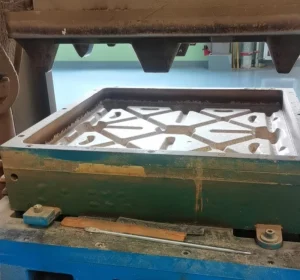
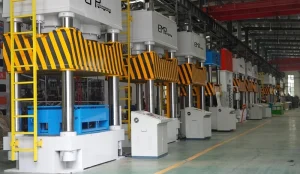
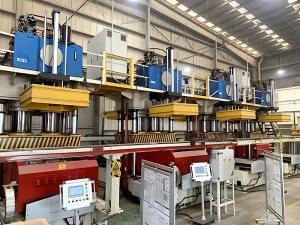
Molded pallet production line · appearance and structure copied by tooling
The Approved Sample Is a Copy Order, Not a Drawing
A buyer approves one pallet sample, then orders it by the thousand, and from that day the requirement stops being a drawing and becomes a copy job: the same deck face, the same edge definition, the same rib pattern underneath, the same foot positions and the same fork entry, unit after unit. This page follows that copy job onto an AutoML presswood pallet machine line, where the pallet is formed in a dedicated steel mold and a 1600T class hydraulic hot press at 150 to 180 degrees Celsius, 15 to 20 MPa and a 180 to 240 second cycle, with fibre metered by a weighing and dosing spreader to a finished density of 0.8 to 1.2 grams per cubic centimetre. The limits are stated plainly as well: structure, size and performance follow the mold design and sample validation, and tonnage, mold and cycle are confirmed per project.
A Hand-Built Pallet Copies the Shift That Built It
The old route to the same order is hand assembly: boards graded by eye, stringers or blocks set against a jig, feet squared by hand, then fasteners driven one at a time and the pallet flipped for the second face. It works, and it can look acceptable, but what it copies is the shift, not the approved sample. Board thickness varies from bundle to bundle, so the deck plane moves before anything is even nailed. A jig that has been knocked a few times loses its square, so foot positions drift by millimetres across a run. Fastener torque and split control depend on the hand holding the tool, which is why one pallet arrives with a split board edge and the next does not. Appearance complaints follow the same pattern: a lifted splinter, a proud nail head, a chamfer that is sharp on Monday and rounded on Thursday. The plant can add inspection, rework and a second pair of eyes, and it will still be correcting a copy that was never set by the tooling in the first place, because on that line the drawing lives in the jig, in the boards and in the operator's judgement at the same time.
What a Mold Fixes: The Cavity Is the Copy Master
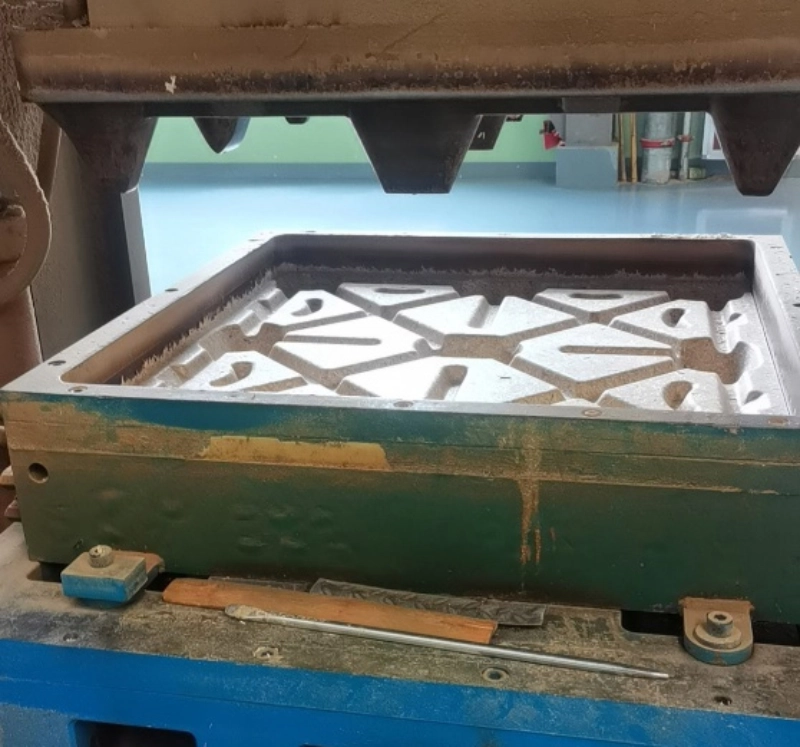
On an AutoML molded pallet production line the copy master is a dedicated steel mold. The deck face, the reinforcing ribs, the foot cones and the fork entry recesses are cut into the upper and lower tooling, so the geometry of the approved sample is carried by the cavity rather than assembled from parts. The sequence is fixed: wood waste, sawdust, shavings or straw is crushed and dried to a length of 5 to 30 millimetres and 2 to 5 millimetres thickness, blended in a metered glue mixer at MDI commonly around 8 to 10 percent or UF and PF around 10 to 12 percent, then weighed and dosed into the cavity by a rail mounted spreader, and closed in a hydraulic hot press at 150 to 180 degrees Celsius and 15 to 20 MPa for roughly 180 to 240 seconds to a finished density of 0.8 to 1.2 grams per cubic centimetre. Because the tooling sets the surface and the frame at the same time, appearance and structure stop being two separate fights. The press tiers used for this work run from 1200T through 1250T, 1600T and 1800T to 2200T depending on pallet size, structure and load target, with a 1600T class press as the repeated reference.
Reading the Evidence, Then Confirming the Rest Per Project
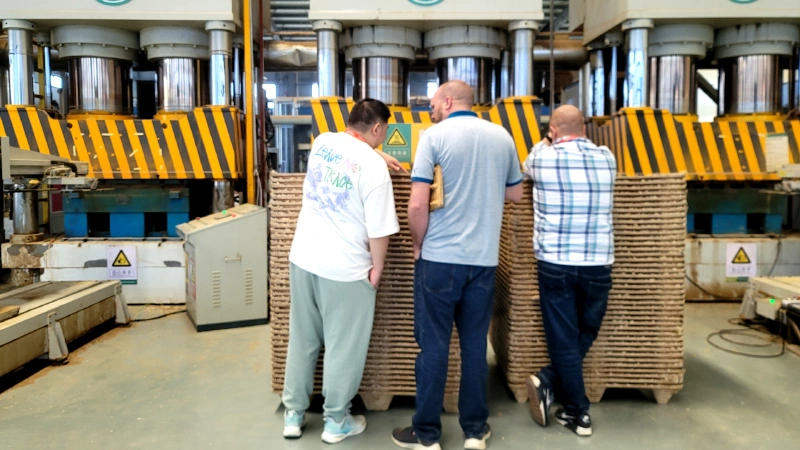
Two pictures tell the story plainly. In the first, an open mold cavity holds a freshly pressed pallet with its reinforcement ribs and fork entry recesses still sitting in the tool that formed them, which is the point: the geometry came out of the cavity, not out of a jig or a hand. In the second, two vertical stacks of finished pallets are checked side by side in the workshop, which is where a copy order is actually accepted or rejected, on stack alignment, edge finish and how the units sit on each other. What follows from that is a process rule rather than a slogan. A change of appearance or structure is a mold question, so it is handled as a tooling revision and re-validated on samples; it is not answered by adjusting a worker's technique. What stays open is honest: structure, size and performance follow the mold design and the validated sample, tonnage, mold and cycle are confirmed per project in the technical agreement, moisture and glue ratio follow trial data, and any fumigation free reading remains a destination rule and a forwarder question.
- Appearance and structure are set by the steel mold cavity, not by jig adjustment or operator judgement
- 1600T class hot press reference at 150 to 180 degrees Celsius, 15 to 20 MPa and a 180 to 240 second cycle
- Structure, size and performance follow mold design and sample validation
- Tonnage, mold and cycle are confirmed per project in the technical agreement