Skip to content
Home » November 5, 2026

November 5, 2026

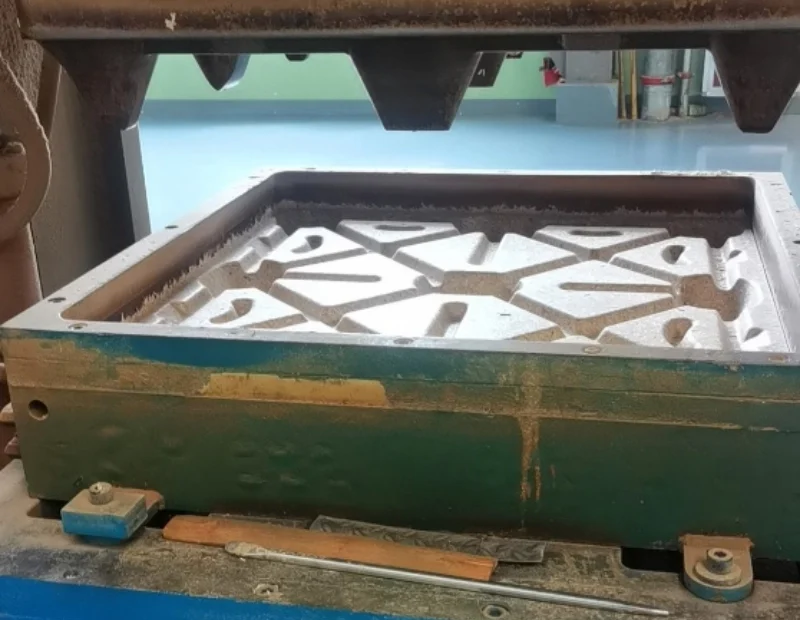
Closeup of open steel mold cavity holding a newly pressed wood pallet with structural reinforcement ribs.

The Mold, Not the Jig: Copying Pallet Appearance and Frame for Volume Runs on a Presswood Pallet Machine

  •  

A buyer signs off one pallet, then orders it by the thousand, and the job becomes a copy order: same deck face, same edge, same ribs, same feet. This page follows that copy job onto an AutoML presswood pallet machine, where a dedicated steel mold and a hydraulic hot press at 150 to 180 degrees Celsius, 15 to 20 MPa and a 180 to 240 second cycle carry the approved geometry instead of a jig and a hand, on 1200T to 2200T press tiers with a 1600T class reference. Limits are stated plainly: structure, size and performance follow the mold design and sample validation, and tonnage, mold and cycle are confirmed per project.
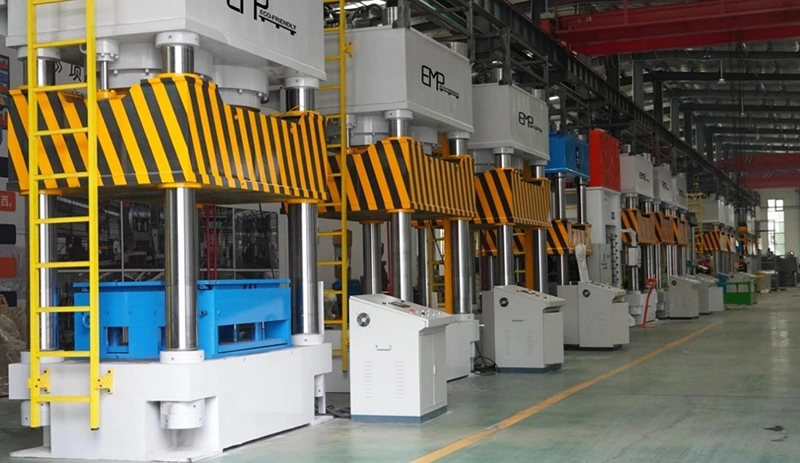
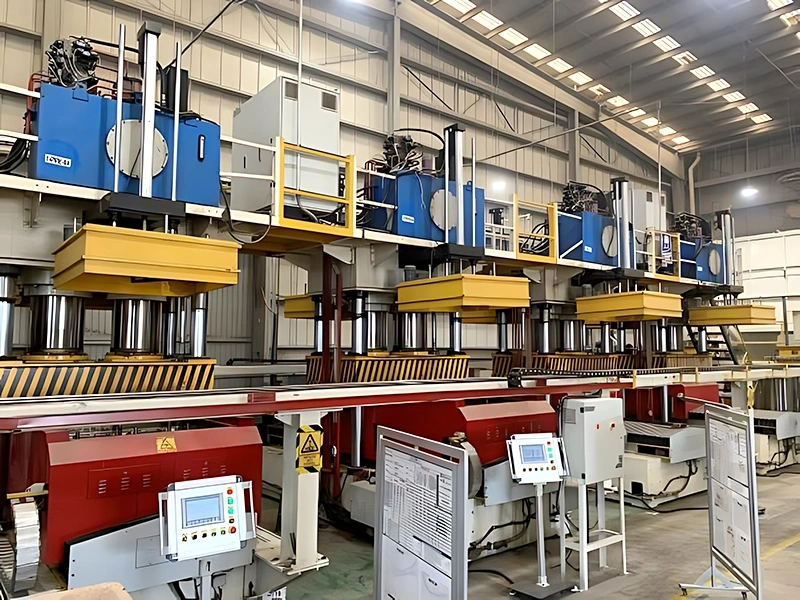
Array of heavy-duty four-column hydraulic presses with control panels on a presswood pallet machine line pacing batch output

A Batch Date Built on the Press Cycle, Not the Crew Roster: Delivery Planning on a Presswood Pallet Machine

  •  

A buyer that raises the delivery-stability requirement is not asking for a faster machine, it is asking for a batch date that survives three shifts, a new crew and a change of fibre. On an AutoML presswood pallet machine the pace of a run is set by the press cycle and the back-end take-out rather than by how many experienced hands are on the floor, so a supplier can plan a call-off against a measured equipment beat: a 1200T to 2200T tonnage ladder, a 1600T class press at 150 to 180 degrees Celsius and 15 to 20 MPa on a 180 to 240 second cycle, and about 12 pallets an hour for a stated fully automatic configuration. Limits are stated plainly: real lead time still has to be counted with downtime, fibre on hand, glue trial data and shift pattern, tonnage, mold and cycle are confirmed per project in the technical agreement, and a fumigation-free reading stays a destination rule and forwarder question.

Row of heavy four-column hot presses with box-welded steel columns on a compressed wood pallet machine line

Hand Assembly Stops at Volume: Repeating One Molded Pallet Structure Batch After Batch on a Compressed Wood Pallet Machine

  •  

A hand-assembled pallet is a record of the shift that built it: boards graded by eye, runners positioned by hand, feet squared against a jig, fasteners driven one at a time, so one approved structure arrives as many slightly different units once volume runs across three shifts. This page follows that problem onto an AutoML compressed wood pallet machine, where the deck, ribs, feet and fork entry are cut into one steel mold and a 1600T class hydraulic hot press forms the pallet in one cycle at 150 to 180 degrees Celsius, 15 to 20 MPa and about 180 to 240 seconds, with fibre metered by a weighing and dosing spreader and blended in a metered glue mixer. Reference figures are stated plainly, including a 1200T to 2200T tonnage ladder and about 0.8 to 1.2 grams per cubic centimetre finished density. Limits are stated plainly too: structure, size and performance follow the mold design and sample validation, tonnage, mold and cycle are confirmed per project, moisture and glue ratio follow trial data, and a fumigation-free reading stays a destination rule and forwarder question.

Automated presswood pallet production segment with rail-mounted sawdust spreading machines and central PLC screens

Short-Notice Pallet Surge, Someone Else’s Order Book: Reclaiming Schedule Control With a Presswood Pallet Machine

  •  

A temporary pallet surge is a date problem before it is a volume problem: under an outsource model the tonnage runs through another plant’s order book, treatment chamber queue and truck, and the delivery date becomes a negotiation. This page follows that month onto an AutoML presswood pallet machine run as a molded pallet production line, where crushing, drying, MDI or UF glue mixing, weighing and dosing spreading, hot pressing at 150 to 180 degrees Celsius and 15 to 20 MPa on a 180 to 240 second cycle, demolding and conveyor stacking sit inside the plant’s own shift plan, on 1200T to 2200T press tiers with a 1600T class reference. Limits are stated plainly: one fully automatic press at roughly 12 pallets an hour is a planning reference for a stated configuration, whether lead time shortens has to be counted on fibre on hand, crew, order book and press hours per week, and a fumigation-free reading stays a destination rule and forwarder question.

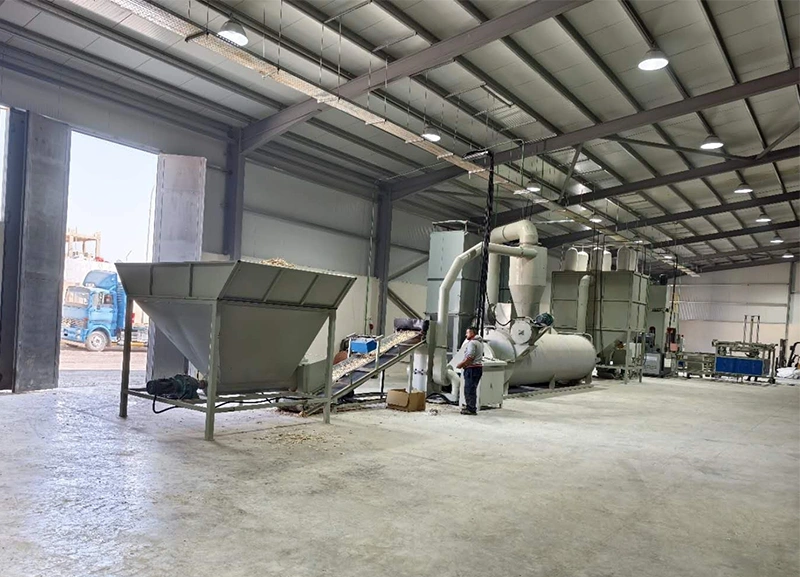
Wood shavings pretreatment plant with feeding hopper, belt conveyor and rotary drum dryer on a presswood pallet machine line

Packaging Supplier Without a Pallet Product: Adding a Molded Pallet Production Line for a High ROI Pallet Production Setup

  •  

A packaging supplier can own the accounts, the call-off schedule and the whole consumables basket and still resell a pallet it does not make, which puts allocation, spec custody, documentation and the repair loop on its own service record. This page follows that gap onto a molded pallet production line: why a resold pallet is not a neutral pass-through, how a presswood pallet machine molds the deck, ribs and feet in one piece from plant fibre under an MDI or UF/PF binder, and which figures actually decide the add-on, from the 1200T to 2200T tonnage tiers and a 1600T class press at about 150 to 180 degrees Celsius, 15 to 20 MPa and a 180 to 240 second cycle to a finished density of 0.8 to 1.2 grams per cubic centimetre. Limits are stated plainly: pallet demand and pallet specifications are validated by the customer first, tonnage, mold and cycle are confirmed per project, a fumigation-free reading stays a destination and forwarder question, and no payback figure is claimed.

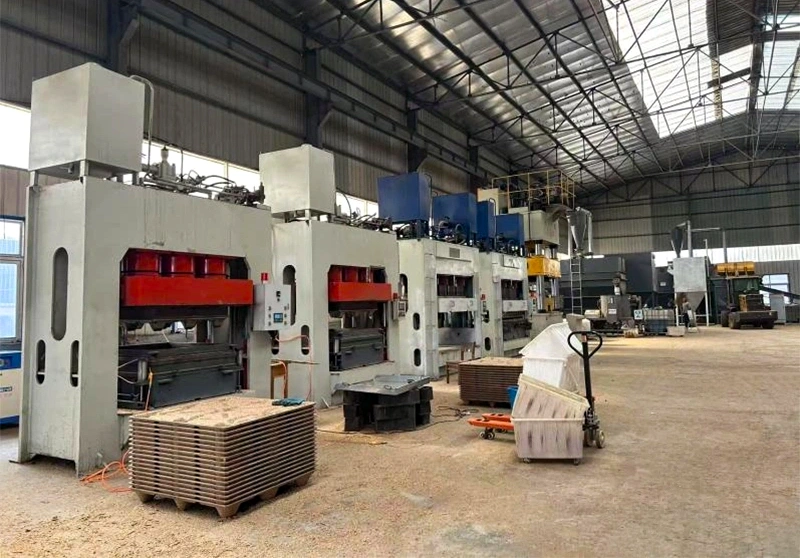
Row of hydraulic presses for molded wood pallets on an automated pallet manufacturing line

Order Growth Past the Workstation Limit: How an Automated Pallet Manufacturing Line Turns Capacity Into a Number You Can Commit

  •  

A molded pallet supplier does not run out of orders first, it runs out of stations: on a manual line every extra thousand pallets a week is bought as another spreading bay, another pair of hands at the press exit and another pair at the stack, until floor area, recruitment and a doubled supervisory span become the real expansion ceiling, and lead times stretch while the press still has hours left in the day. This page follows that problem onto an automated pallet manufacturing line built around a presswood pallet machine, where automatic weighing and dosing, hydraulic molding and robotic stacking make weekly output a function of press cycle, tonnage and shift pattern rather than of headcount. EMP reference figures are used plainly: a 1200T to 2200T tonnage ladder, a 1600T class hot press at 150 to 180 degrees Celsius and 15 to 20 MPa on a 180 to 240 second cycle, and one fully automatic press at about 12 pallets per hour, which is a planning reference for a stated configuration rather than a delivery promise, because real output still moves with fiber, mold, cycle and uptime and is confirmed per project.

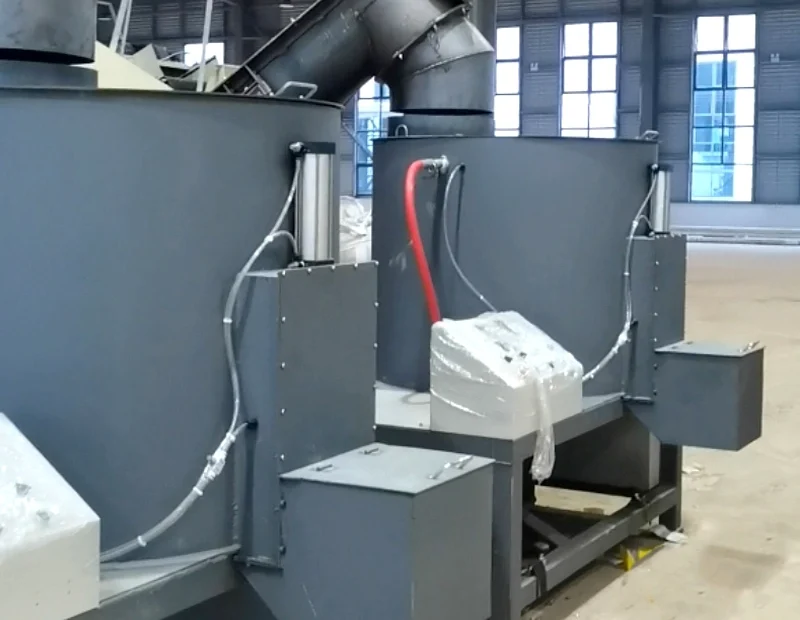
Automated glue mixing and feeding system feeding a presswood pallet machine

Turning a Buyer Spec Consistency Request Into a Repeatable Process on a Presswood Pallet Machine

  •  

A buyer that already approved the sample does not send a new drawing, it sends a consistency request: same length, height, mass and finish across the next thousand units, plus a process statement it can audit. This page separates the three axes on a presswood pallet machine, where dimension is held by one steel mold and the hydraulic press and mass is held by a rail-mounted weighing and dosing spreader with belt feeders plus a metered glue mixer with dosing screw conveyors, against a hand-fed line that shovels fibre, pours binder against a mark and judges moisture by feel. Reference figures used in configuration: MDI around 8 to 10 percent, UF or PF around 10 to 12 percent, density 0.8 to 1.2 grams per cubic centimetre, press tiers from 1200T to 2200T, a 1600T class hot press at 150 to 180 degrees Celsius, 15 to 20 MPa and a 180 to 240 second cycle. Limits are stated plainly: actual dimensions and performance are confirmed on product samples and the agreed test method, tonnage, mold and cycle are confirmed per project in the technical agreement, and any reject improvement is measured on the customer’s own fibre and crew.

Row of hydraulic presses for molded wood pallets on an automated pallet manufacturing line

Established Pallet Plant, Staged Automation: Configuring a Modular Presswood Pallet Machine Without Swapping the Whole Process

  •  

A pallet maker with twenty years of market experience does not need the pallet market explained; it needs its repeated manual steps carried by equipment. How an AutoML presswood pallet machine is scoped as modules against target output and budget, which stages an automated pallet manufacturing line takes over first, where the semi-automatic boundary can stay, and which references (1200T to 2200T press tiers, a 1600T class press at 150 to 180 degrees Celsius and 15 to 20 MPa, a 180 to 240 second cycle, density 0.8 to 1.2 grams per cubic centimetre) are confirmed per project in the technical agreement.

Automated presswood pallet production segment with rail-mounted sawdust spreading machines and central PLC screens

Manual Line Coordination Span: How a Presswood Pallet Machine Turns Scattered Workstations Into One Molded Pallet Production Line Flow

  •  

A plant that molds its own pallets rarely loses output at the press: it loses it in the handovers, where fibre, glue, weighing, spreading, take-out and stacking are still separate manual stations and one production lead carries the span. How an AutoML presswood pallet machine line, configured as a molded pallet production line from pretreatment to forming and stacking, moves that coordination load onto the equipment flow, on a 1600T class reference press at 150 to 180 degrees Celsius, 15 to 20 MPa and a 180 to 240 second cycle, and which staff positions the plant still fills.

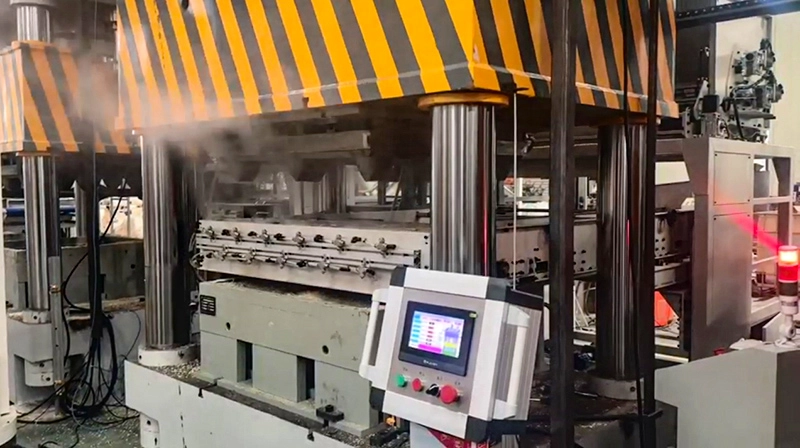
Steam releasing from a hot mold on a molded pallet production line as the press opens

The Hot Mold Is Not a Workstation: Cutting Manual Take-Out From a Presswood Pallet Machine on a Molded Pallet Production Line

  •  

On a manual molded pallet production line the last movement of every press cycle is a person stepping into the open die at 150 to 180 degrees Celsius, pulling a cured pallet out and stacking it, 15 to 20 times an hour across three shifts. This page follows that duty on an AutoML presswood pallet machine: where the take-out post sits in the shift plan, why it is a safety management problem rather than only a lifting one, how a four-axis servo take-out unit extracts the pallet and hands it to a guarded chain or roller conveyor on the press open signal, what changes on a semi-automatic line versus an automated pallet manufacturing line, and the 1200T to 2200T press tiers, 15 to 20 MPa pressing window, 180 to 240 second cycle and 0.8 to 1.2 grams per cubic centimetre density that set real capacity. Limits are stated plainly: reduced direct participation is the claim, not removal of all risk, guarding follows the equipment plan and local rules, robot motion and stacking pattern are confirmed per project, and labour change is measured on the customer’s own shift roster.

Get a Pallet Machine Price Quote & ROI Plan
Request Quote WhatsApp
🇬🇧 EN 🇪🇸 ES 🇫🇷 FR 🇷🇺 RU 🇮🇹 IT 🇩🇪 DE 🇳🇱 NL
×

Get a Precision Quote

Leave your requirements below. Our engineers will reply within 12 hours with customized technical details and pricing.