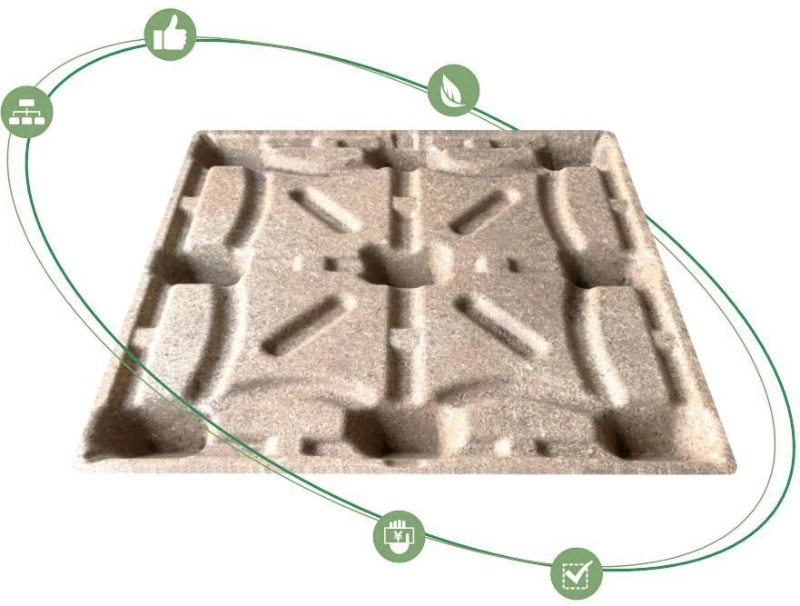
 | Short Answer: Yes. Stop worrying about “Quarantine Orders” or faded IPPC stamps at the port of entry. Compressed wood pallets are classified as “Processed Wood” under international regulations. They require no fumigation, no heat treatment certificates, and no stamps to clear customs globally. |
The “Processed Wood” Logic: Why Customs Officers Wave Us Through
For export managers handling high-stakes shipments—whether it’s precision electronics to Europe or food ingredients to the US—the nightmare isn’t the freight cost; it’s the Customs Hold. A single piece of bark found on a traditional solid wood pallet, or an IPPC stamp that has faded during transit, can lead to your entire container being quarantined, fumigated at your expense, or even incinerated.
Molded wood pallets bypass this risk entirely. They fall under the ISPM 15 exemption clause for “Processed Wood.”
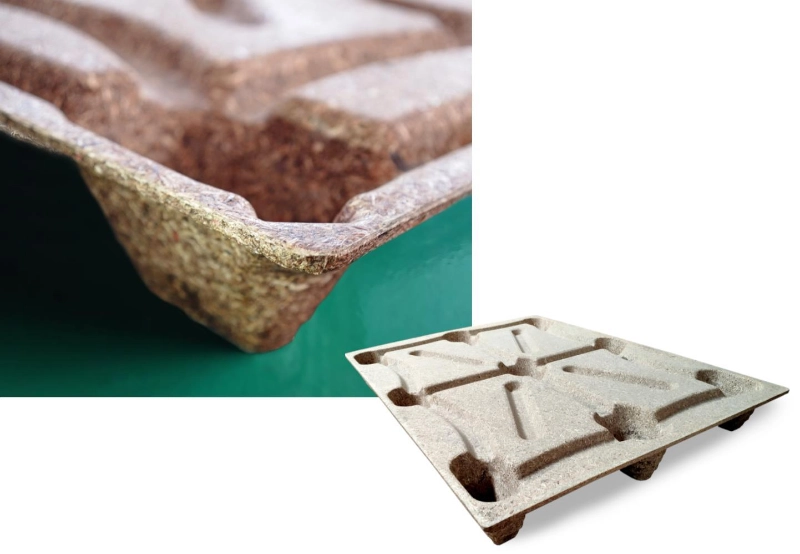
The high-pressure molding process destroys all biological threats, creating a dense, pest-free structure.
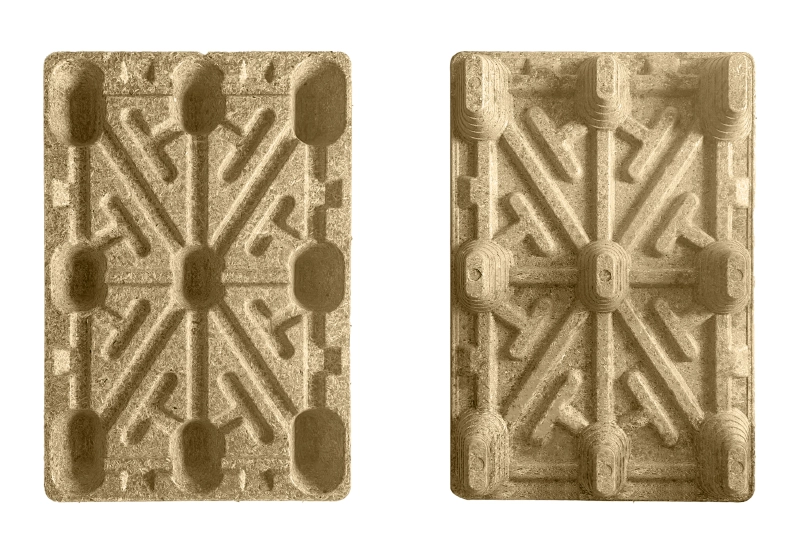
The Technical Reality: Unlike raw lumber that hides larvae deep in the grain, our pallets are manufactured at 220°C (428°F) under 1600 tons of pressure. We use MDI adhesive (formaldehyde-free) to bond wood fibers. This process effectively sanitizes the material, making it biologically inert. To a customs inspector in Australia or the USA, this isn’t “wood”—it’s a man-made composite that poses zero phytosanitary risk.
The “One-Way” Export Economics
If you are shipping goods on a “One-Way” trip (exporting without return logistics), you face a dilemma. Plastic pallets are safe but too expensive to lose ($40+ per unit). Solid wood pallets are cheap but carry the hidden costs of fumigation fees ($150+ per container) and the risk of rejection.
Ampallet serves as the perfect export pallets solution. We offer the low cost of wood with the compliance safety of plastic. Because they are 60% lighter than solid wood, you can load more actual product into air freight shipments, directly impacting your bottom line.
Solving the “Dead Space” Crisis in Containers
Compliance is just one part of the export puzzle. The other is Ocean Freight efficiency. Traditional wooden pallets are bulky and cannot be nested. When you ship empty pallets to your satellite factories or struggle to fit the last row of goods into a 40HQ container, space is money.

Our 4:1 nesting ratio allows you to store 2,500 pallets where only 1,000 solid wood pallets would fit.
Our nestable pallets feature a tapered foot design that allows 50 pallets to stack in a height of just 2.1 meters. This 4:1 space-saving ratio means you reduce storage costs at the loading dock and slash inland transportation costs for pallet procurement by 60%.
Protecting High-Value Soft Packaging
For exporters of chemical powders (in sacks) or food ingredients (in FIBC bulk bags), the “nail pop” is a constant threat. As solid wood dries during a 4-week ocean voyage, the wood shrinks, pushing nail heads up. These nails tear into bottom-layer bags, causing leakage and rejection by the receiver.
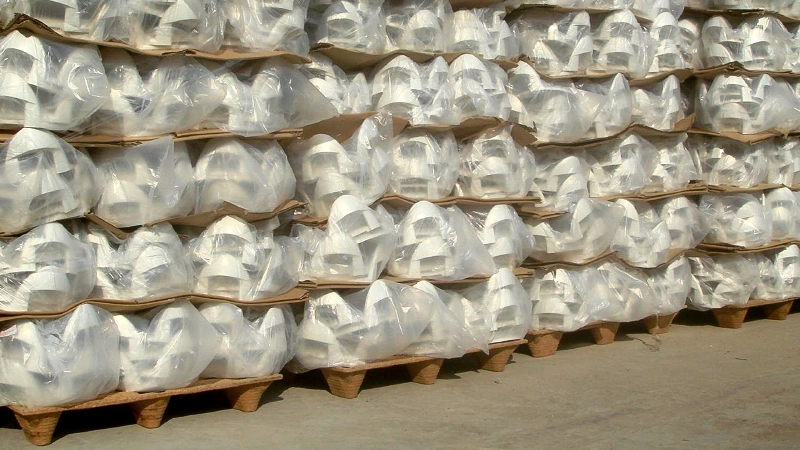
One-piece construction with rounded edges ensures zero damage to soft packaging during export.
Ampallet’s molded wood pallets are strictly nail-free and staple-free. The one-piece design with rounded edges ensures that your bagged goods arrive intact, eliminating the risk of cargo damage claims and keeping your warehouse floor free of dangerous wood splinters.
FAQ: Export Compliance & Specifications
Q: Do I need to provide a fumigation certificate for these pallets?
A: No. Because they are classified as “processed wood” (particle board/molded wood), they are exempt from ISPM 15 certification. You do not need an IPPC stamp or a fumigation certificate.
Q: Are these suitable for exporting to Australia and New Zealand?
A: Yes. Australia and New Zealand have the strictest biosecurity laws (BICON). Our high-heat molded pallets are fully accepted as low-risk processed timber, avoiding the expensive offshore treatment often required for solid wood.
Q: How does moisture affect these pallets during sea freight?
A: Unlike urea-formaldehyde pallets that crumble when wet, we use MDI (medical-grade) adhesive. This creates a waterproof bond. Our pallets maintain high load-bearing capacity even in high-humidity shipping containers.
Q: Can they handle heavy industrial loads like chemical drums?
A: Absolutely. Our heavy-duty models are rated for 2.5 tons dynamic load. The high density (pressed at 1600 tons) makes them rigid enough to support 208L drums without the deformation seen in plastic pallets.
Q: Are they environmentally friendly for the receiver to dispose of?
A: Yes. They are fully recyclable and biodegradable. Unlike plastic pallets that become landfill waste if broken, compressed wood pallets can be shredded and recycled, making them a preferred choice for green supply chains.