BIOMASS SAWDUST DRYER | DUST CONTROL FOR EXPORT-ORIENTED PALLET PLANTS
Why Dust Control Matters Before the Pallet Press
For molded pallet plants supplying Gulf, Australian, or European markets, a Biomass sawdust dryer must address more than moisture reduction. The drying line also needs a defined dust collection path, sealed transfer points, and monitoring that helps reduce uncontrolled emissions before material reaches pressing or pelletizing.
The Limits of Open-Air and Uncontrolled Drying
Manual drying, natural sun drying, and hand-welded low-end drum machines without dust collection can create an inconsistent process. Fine biomass particles may escape around discharge and duct connections, while operators have limited control over where dust moves. A small airflow dryer or sawdust flash dryer may suit a different feed condition, but it should not be selected only because its purchase price is lower. The real comparison is whether the complete line can continuously dry the incoming material and contain the dust generated at the outlet.
Why a Biomass Sawdust Dryer Fits the Process
Dryr is an industrial rotary drum dryer for continuous sawdust drying and moisture reduction. It is a practical fit when a molded pallet production line must prepare variable-moisture material before MDI or UF glue bonding, or when a biomass pellet plant needs a defined front-end drying step. The system can also be configured for wood chips, wood shavings, straw, charcoal briquette feedstock, MDF or particleboard preparation, and organic fertilizer lines. Selection should be based on feed moisture, particle size, target output, fuel, and local emission requirements.
Structure and Evidence Behind the Final Result
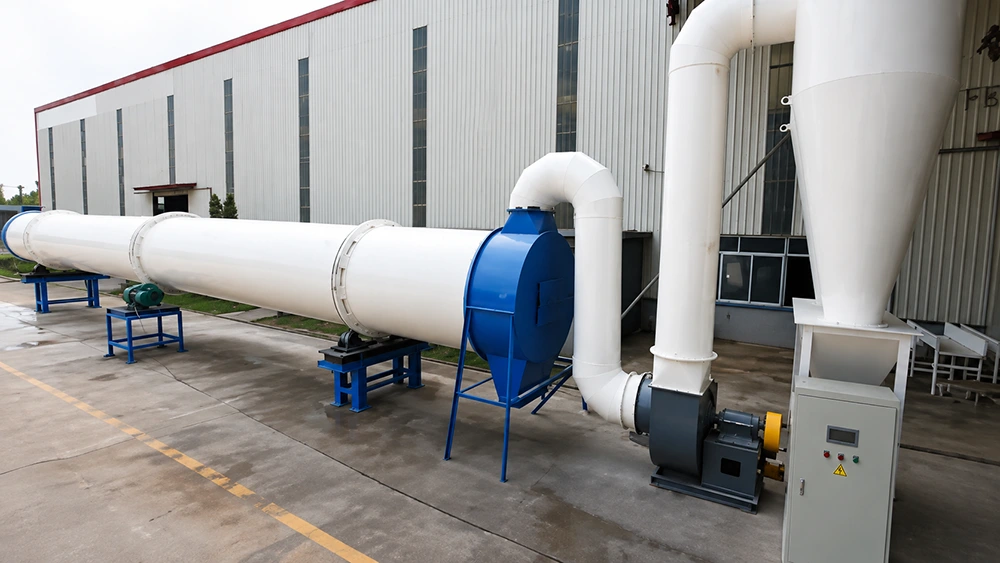
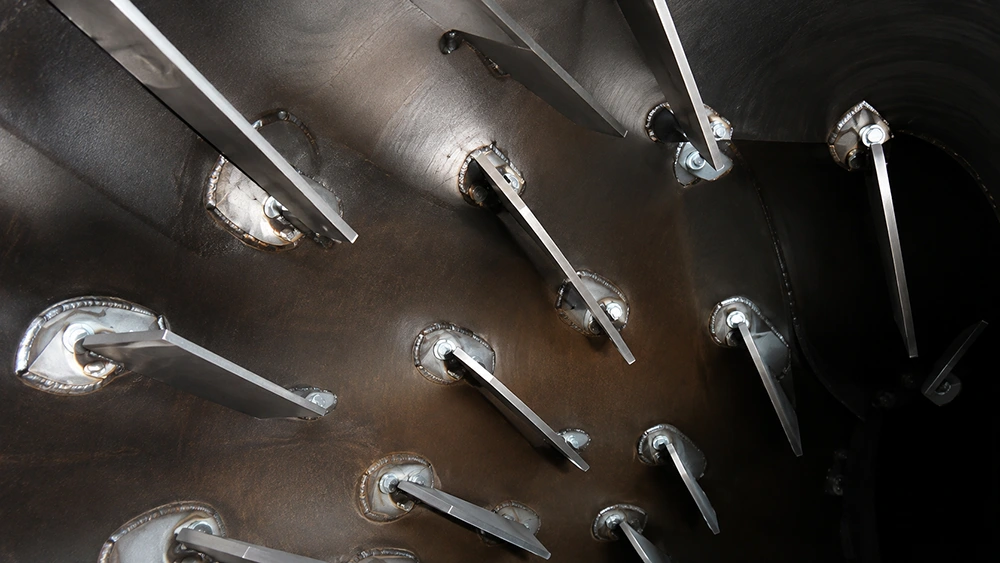
The drying system combines a hot air furnace, rotating drum, conveying equipment, and dust separation. Inside the drum, staggered lifting flights raise and scatter the material so hot air can contact more surface area as the material moves forward. The external girth gear, pinion, gearbox, and motor drive the drum, while rollers and steel supports carry the long cylindrical shell. At the outlet, a cyclone dust collector is shown with process ducting, a blower, and an electrical control cabinet; a baghouse filter can be considered where the project requires additional filtration. Sealed construction and monitoring help reduce uncontrolled release. The result is a defined drying and dust-control path that supports cleaner export-oriented production, while final compliance still depends on site design and local requirements.
- The rendered body uses the exact EMP blog root and required section marker
- The rendered body includes the primary EMP button and the contact route
- Biomass sawdust dryer is used in the title, SEO title, slug, H1, summary, and both image alt texts
- The article follows customer scenario, old method problem, product fit, structure and evidence, and final result


