Inland Pellet Plant Capex
Why a 17–18 m Sawdust Dryer Drum Belongs at Landlocked East African Pellet Plants Like Nakasongola
A 0.8 to 2 tonnes per hour rotary sawdust dryer in 17 to 18 m drum configuration belongs at a landlocked East African pellet plant in Nakasongola, Uganda and similar inland sites. DRYR ships the drum as bolted flange modular sections inside standard 40HQ containers, sends an installation and commissioning crew to reassemble on site, and shrinks the foundation footprint by roughly half. The plant ends up with a continuous sawdust drying line holding output moisture below 10% at the pellet binding window, without the inland logistics, customs and on-site assembly anxiety a single welded drum would carry.
The Inland Logistics Trap: Why a Single Welded Drum Won't Reach or Run at a Landlocked Site
A 17 to 18 m welded rotary drum does not fit a 40HQ high cube container. The longest internal length of a 40HQ is around 12 m, so a single welded shell has to ship as breakbulk on a flat rack or as oversize cargo. That multiplies ocean freight, port handling, and inland trucking cost from Mombasa or Dar es Salaam to a site like Nakasongola, with the inland trucks in this region rarely rated for a rigid 17 to 18 m cylinder, low bridges and tight corners blocking the route, and the oversize load often sitting in customs queue for weeks waiting on route survey and escort vehicles. Once the welded drum finally sits on the foundation, the plant owner discovers that no local crew can re-align a long shell after a long haul, and the original equipment manufacturer cannot fly a service team in fast enough to recover the schedule. The result is a heavy industrial sawdust dryer that arrived but cannot run, with the first pellet batch pushed back by months. Importing a single welded section also ties up working capital in one shipment the inland road cannot move, and the breakdown arrives between distribution and pickup before the foundation is even poured.
Split-Shipped Drum Sections, Compact Footprint, and On-Site Re-Assembly: How DRYR Cuts Total Project Cost
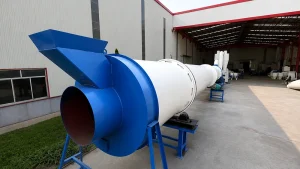
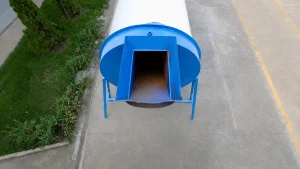
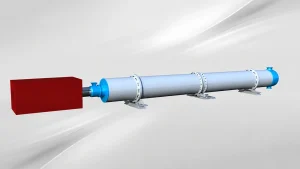
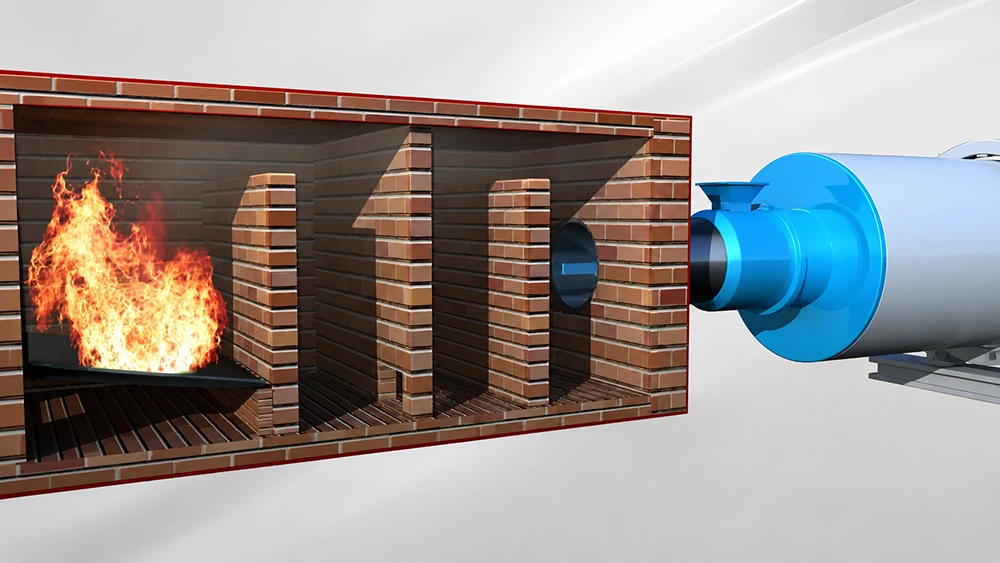
DRYR cuts the 17 to 18 m rotary drum into bolted flange sections, each one short enough to load into a standard 40HQ container. Every flange carries a registered bolt pattern, the drum rides on numbered saddle supports, and the girth gear with pinion, gearbox, and electric motor arrive as a pre-aligned sub-assembly in the same container. The multi-fuel hot air furnace ships as a separate refractory brick-lined module that mates to the drum inlet flange on site, and the cyclone dust collector with optional baghouse filter, screw conveyor, and PLC control cabinet land at the outlet end. DRYR then dispatches an installation and commissioning crew to the inland pellet plant, where they re-bolt the drum sections, true the roller supports, set the girth gear mesh, fire the furnace, and run the line to the 10% output moisture binding window before handover. The compact drum layout cuts plant footprint by roughly 50% compared with a fixed-spec catalog rotary drum dryer, and that 50% footprint reduction translates into roughly 50% civil investment on the foundation pad, the steel support structure, and the dust handling ductwork. The landlocked pellet plant pays for fewer containers, fewer inland trucks, and a smaller concrete pad, while buying back the schedule a single welded drum would have lost.
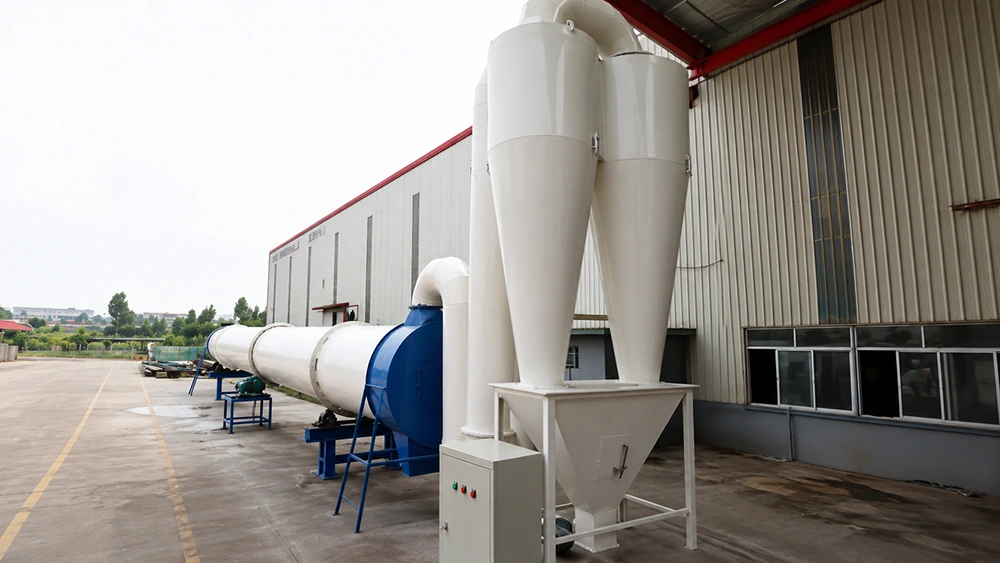
What Lands at Site: Modular Drum, Compact Civil, and a 0.8–2 t/h Line That Holds the Pellet Binding Window
On the foundation pad at the inland pellet plant, the bolted flange drum sections come up in numbered order, the saddle supports set on embedded plates, and the multi-fuel furnace lands at the inlet end with the refractory brick lining already cured. The twin cyclone dust collectors and conical dust collection hoppers mount at the outlet end with seal monitoring already wired, and the optional baghouse filter bolts on where the local dust emission rule calls for finer capture. The PLC control panel and the lifting flight geometry inside the drum are set so the rotary sawdust dryer holds the 10% output moisture window at 0.8 to 2 tonnes per hour through pine, eucalyptus, or mixed wood shavings feed. Continuous hot air drying with the lifting plates inside the drum prevents sawdust mold and fermentation between the dryer and the pellet press, which is the safety knob the inland operator actually feels at the press, and the stable moisture window supports MDI or UF binder bonding for downstream molded wood pallet lines. From the inland buyer perspective, the order arrives in containers the regional trucks can carry, the foundation costs less than half of what a fixed-spec catalog dryer would need, and the DRYR on-site commissioning crew hands over a running sawdust drying line that holds binding window moisture on day one.
- Customer scenario: landlocked East African pellet plant in Nakasongola Uganda facing inland logistics and on-site assembly pain for a 17 to 18 m rotary sawdust dryer
- Old problem: single welded 17 to 18 m drum fails 40HQ container stuffing, inland trucking, customs queue, and local installation at a remote site
- DRYR solution: bolted flange split shipment, multi-fuel hot air furnace module, compact drum layout cutting footprint by 50%, on-site commissioning crew, 50% civil investment savings
- Final result: 0.8 to 2 t/h continuous sawdust drying, output moisture below 10%, pellet binding window held, pellet or molded wood pallet line running on day one