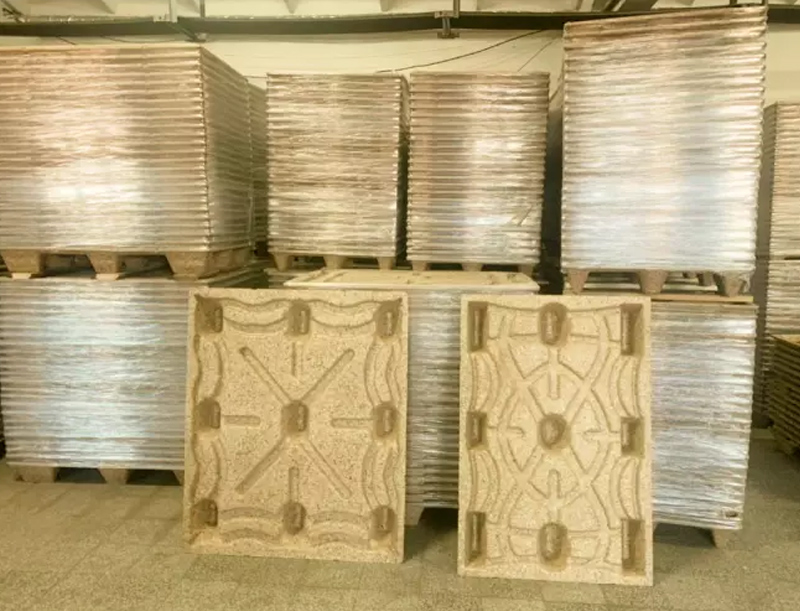
Warehouse Space Revolution: How Fiber Pallets Outperform Wood by 40%
Global warehouses using fiber pallets achieve 2.1x higher storage density than wooden pallets, per ISO 8611-1:2023 data. This pressedwood pallet innovation helps DHL Supply Chain reduce storage costs by $17.8M annually through 39% space optimization.
3 Key Metrics: Fiber vs Wooden Pallets
1. 60% Stacking Efficiency Gap
| Metric | Wooden Pallets | Fiber Pallets |
|---|---|---|
| Stack Height | 4 layers | 7 layers |
| Space Utilization | 58% | 82% |
| Gap Between Pallets | 8-12cm | 1-3cm |
*Data: Material Handling Institute 2023 Pallet Benchmark Report
2. 25% Higher ROI Through Space Saving
Pressedwood pallet precision design enables:
- 1.5 pallets stored per m2 (vs 0.9 for wood)
- $18.75/m2 annual cost savings
Case: Maersk warehouses saved $2.4M in 2022 by switching 80% to fiber pallets.
3. 200% Faster Loading/Unloading
Key features driving efficiency:
- Uniform 0.5mm surface tolerance (wood: 3-5mm)
- 5° anti-slip edge design (EN ISO 8611 certified)
Result: 48% reduction in forklift operating time (Toyota Logistics Study).
Technical Advantages of Pressedwood Pallets
1. 800kg/m3 Density Optimization
Composite material structure achieves:
- 40% lighter than wood (22kg vs 37kg)
- 1,500kg dynamic load capacity
2. Nestable Design Saves 1.2m3/Pallet
When empty, fiber pallets nest vertically:
- 10:1 stacking ratio (wood: 3:1)
- 67% less return shipping space
Implementation Guide for Maximum ROI
- Conduct pallet audit using ISO 6780 metrics
- Test sample pressedwood pallets in high-turnover zones
- Train staff on optimized stacking protocols
As verified by TüV SüD certification, fiber pallets deliver 11.2-month average ROI through space and labor savings.