Pallet Specification Expansion
The Order Book Outgrows the Mold Before It Outgrows the Press
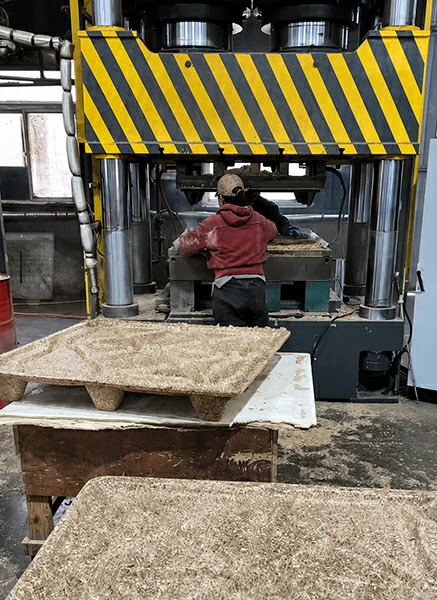
A new molded pallet plant usually opens with one pallet, the 1200 x 800 euro size, and one size caps the order book faster than the machine caps output. Adding 1200 x 1000, the North American 1219 x 1016, a 600 x 800 half pallet or a custom footprint is not a mold purchase, it is a tonnage decision: a larger mold on a press bought for the small mold spreads the same force over more projected area, and the pallet comes out under-pressed. On our molded pallet hydraulic press machine the answer is a mold program plus a matched tonnage ladder, from Y-1250 to Y-2500 on a Y32 three-beam four-column frame with platens up to 2500 x 1700 mm, delivered with the mold temperature and pressing curve parameters for each size.
A Bigger Mold on a Small Press Is a Density Problem, Not a Mold Problem
Force divided by mold projected area is what compacts the fibre and the MDI adhesive, so a press is only correct for the mold sizes its tonnage supports. Take a 1200 x 800 mold at 0.96 square metres and a 1219 x 1016 pallet at 1.24 square metres: the second mold spreads roughly thirty percent more area under the same ram. Move a 1200 x 1000 mold onto a frame sized for the euro pallet and unit pressure per square centimetre drops by about a quarter before the recipe is touched at all, and the pallet that comes out reads soft on the densest section, uneven in thickness across the deck, and weak at the corners where material flow is longest. Operators answer that by stretching the molding cycle and raising the mold temperature, which drives energy per pallet up and still does not restore the density. Then the mold arrives from a third-party tool shop, the pressing curve was written for someone else's machine, the ejector stroke does not match, and weeks disappear in a debugging loop where nobody can tell whether the fault sits in the tool, the press or the recipe. That loop is the real cost of expanding specifications after the fact, and it is why a plant that intends to sell more than one pallet size should choose tonnage from the largest pallet it expects to make, not from the first one it happens to make.
Mold Program, Tonnage Ladder and Recipe From One Place
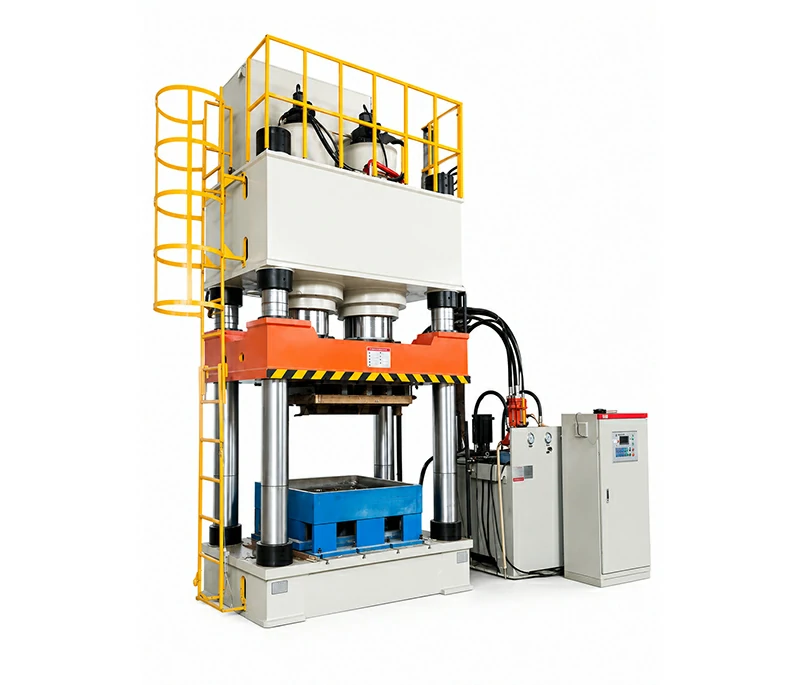
On the Y32 three-beam four-column hydraulic press the expansion is handled as one scope instead of three purchases. The mold program covers the euro 1200 x 800, the 1200 x 1000 industrial pallet, the 48 x 40 in 1219 x 1016 export format, the 600 x 800 half pallet and custom shapes where a buyer brings its own drawing, and each mold ships with the mold temperature window and pressing curve parameters for that geometry rather than a generic recipe. The tonnage ladder runs Y-1250, Y-1600, Y-2000 and Y-2500 tiers on the same frame family, with platen size up to 2500 x 1700 mm, so the largest projected area in the mold set is what fixes the press, and unit pressure on a 48 x 40 pallet stays in the same band as a half pallet instead of quietly collapsing. Because top beam, slide, worktable and the four solid columns come from the same works as the tooling, the ejector, the platen T-slots and the clamping height are already drawn against each other, single station and double station layouts sit on the same platform, and hot press molding at 150 to 180 C runs on parameters proven with that mold on that frame. That is the difference between buying a mold and buying a pallet specification.
What Changes When the Changeover Is a Mold and a Recipe
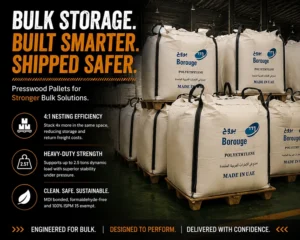
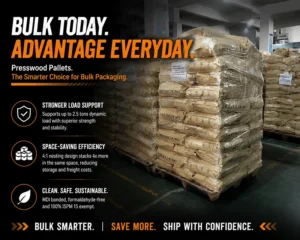
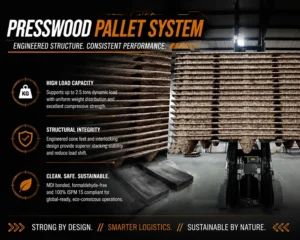
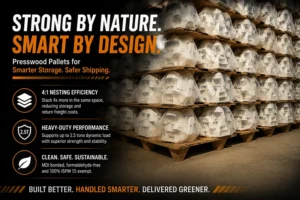
The practical result is that one press stops being one product. A shift that runs euro pallets for a warehouse pallet account can be reset for a 1219 x 1016 fumigation-free export pallet for a container shipping order, and the unit leaving the press is a one-piece molded shape with no nails and no splinters, nestable about four to one when empty, landing in the processed wood material category that takes ISPM-15 heat treatment out of the export file. A 600 x 800 half pallet does not need the largest frame in the ladder, and the selection rule says so plainly: quote the small mold on Y-1250, quote the 48 x 40 on Y-2000 or Y-2500. The limits belong in the same sentence as the benefit. Density, thickness tolerance and molding cycle are confirmed per project on the customer's own fibre, moisture and MDI mix rather than from a catalogue; mold design for a custom footprint is a tooling engineering step, not a stock item; and the upstream stages of crushing to about 5 mm, drying to 8 to 12 percent moisture and even adhesive mixing still decide what the press can press. Handled that way, specification expansion is a mold list and a tonnage number decided once, instead of a debugging project repeated every time a buyer asks for a pallet that is not 1200 x 800.
- Tonnage is chosen from the largest pallet projected area in the mold set, not from the first mold purchased.
- Unit pressure per square centimetre, not nominal tonnage alone, is what the mold program is matched to.
- Density, thickness tolerance and molding cycle are confirmed per project on the customer's own fibre, moisture and MDI mix.
- Mold design, platen size and station count are engineering-confirmed per project rather than assumed from the size name.