In the complex world of global logistics, the shipping pallet is the unsung hero. It’s the foundation of every shipment, yet it’s often treated as an afterthought—a simple commodity chosen based on habit and upfront price. This is a critical mistake. In today’s landscape of complex regulations, volatile shipping costs, and sustainability mandates, your choice of pallet is a strategic decision that directly impacts your operational efficiency, risk exposure, and bottom line.
But with several options on the market, how do you choose the right one? This definitive guide will provide a data-driven comparison of the three primary contenders: the traditional solid wood pallet, the durable plastic pallet, and the modern engineered molded wood pallet.
The Contenders: Defining the Players
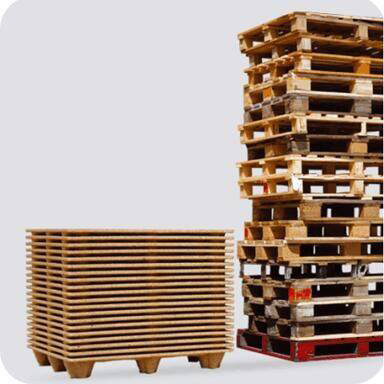
- Solid Wood Pallets: The long-reigning industry standard. They are typically made from new timber and are valued for their low initial purchase price and widespread availability.
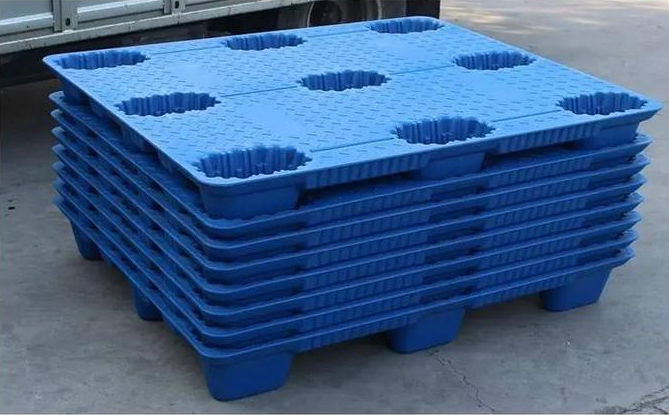
- Plastic Pallets: Made from petroleum-based plastics, these pallets are known for their exceptional durability, precise dimensions, and hygienic properties, making them a favorite for closed-loop systems and cleanroom environments.
- Molded Pallets (Presswood): An engineered alternative created by combining reclaimed wood fibers with a resin under intense heat and pressure. This process results in a sterile, nail-free, and precisely shaped one-piece pallet.
The Ultimate Comparison: Head-to-Head Analysis
To move beyond generalities, let’s compare these options across the key performance indicators that matter most to your business.
| Metric | Solid Wood Pallet | Molded Wood Pallet | Plastic Pallet |
|---|---|---|---|
| Load Capacity | Dynamic: 1-2 tons. Varies by wood type and condition. | Dynamic: ≥2.5 tons; Static: 7-10 tons. Engineered for consistent, high strength. | High and consistent, but can become brittle in extreme cold. |
| Export Compliance (ISPM15) | Requires heat treatment or fumigation. A constant source of compliance risk and cost. | Exempt. Inspection and fumigation-free. High-heat manufacturing process makes it inherently sterile. | Exempt from ISPM15. No treatment required. |
| Handling & Safety | Heavy. Prone to splinters and protruding nails, creating safety hazards. | Lightweight and nail-free for safer, faster manual handling. | Lightweight but can be slippery when wet. No splinters. |
| Storage (Nesting) | Cannot be nested. Occupies significant warehouse space. | Highly nestable. A stack of 65 pallets is approximately 2.4 meters high. | Some models are nestable, others are stackable. |
| Transport Density | A 40-foot container fits approx. 450 units. | A 40-foot container fits approx. 1650 units. | Varies by model, but generally less dense than nestable molded wood. |
| Raw Material | Typically requires harvesting new timber. Wood resource utilization is often under 60%. | Made from recycled wood fibers. Wood resource utilization is over 98%. | Virgin or recycled plastic (petroleum-based). High energy consumption. |
| End-of-Life | Recyclable or biodegradable. | Recyclable and biodegradable. | Recyclable, but not biodegradable. Can persist in the environment for centuries if not properly handled. |
| Carbon Footprint | High due to forestry and transport. | Very low. A key advantage for future carbon tariffs (CBAM). | Very high (petroleum-based). Creates a significant carbon tax liability. |
| Durability & Moisture | Weak against moisture; prone to mold and deformation. | Superior waterproofing, especially MDI models, due to resin and high-density structure. | Excellent waterproofing; will not absorb moisture. |
| Total Cost of Ownership (TCO) | Low initial purchase price, but high hidden costs (treatment, transport, risk, damage). | Moderate initial price, but very low TCO due to savings in transport, storage, and compliance. | Highest initial cost. TCO is only favorable if used many times in a closed-loop system. |
Deep Dive: What This Data Means for Your Business
The table provides the data, but the strategic implications are what truly matter.
For the Export Manager, the Choice is Clear: The single greatest operational risk in international shipping is a customs hold. The fact that molded wood pallets are inherently exempt from ISPM15 inspection and fumigation requirements is a game-changing advantage. It transforms a major uncontrollable risk into a certainty, guaranteeing smoother passage through ports worldwide.
For the Warehouse Manager, It’s About Space and Safety: Efficiency is the language of the warehouse. The ability to store 1650 molded pallets in the same space as 450 wooden ones is a revolutionary improvement in space utilization. Furthermore, eliminating the daily hazards of splinters and nails from traditional wood pallets leads to a safer work environment and reduces injury-related downtime.
For the CFO, the Numbers Point to TCO: A smart financial analysis looks beyond the initial invoice. While plastic pallets have the highest upfront cost and wood pallets have the lowest, molded wood pallets present the most compelling business case for one-way export shipping. The massive savings in freight density, the elimination of all fumigation and compliance costs, and the mitigation of future carbon taxes deliver the lowest Total Cost of Ownership.
Choosing the Right Tool for the Modern Era
While every pallet type has its niche, the demands of modern global commerce—efficiency, risk-aversion, and sustainability—have clearly revealed a new frontrunner.
- Solid wood pallets remain a choice for simple, domestic, low-cost applications where international compliance and space efficiency are not concerns.
- Plastic pallets excel in closed-loop, high-hygiene environments where their high cost can be amortized over dozens of uses.
- Molded Pallets, however, are uniquely engineered for the primary challenge of today: one-way international export. They deliver an unparalleled balance of low total cost, zero compliance risk, high operational efficiency, and future-proof sustainability.
The next time you approve a pallet purchase, look past the price-per-unit. Analyze the data, calculate the true total cost, and choose the platform that gives your business a lasting competitive advantage.