PULVZ | MOLDED WOOD PALLET PRODUCTION LINE
The pallet waste problem starts before size reduction
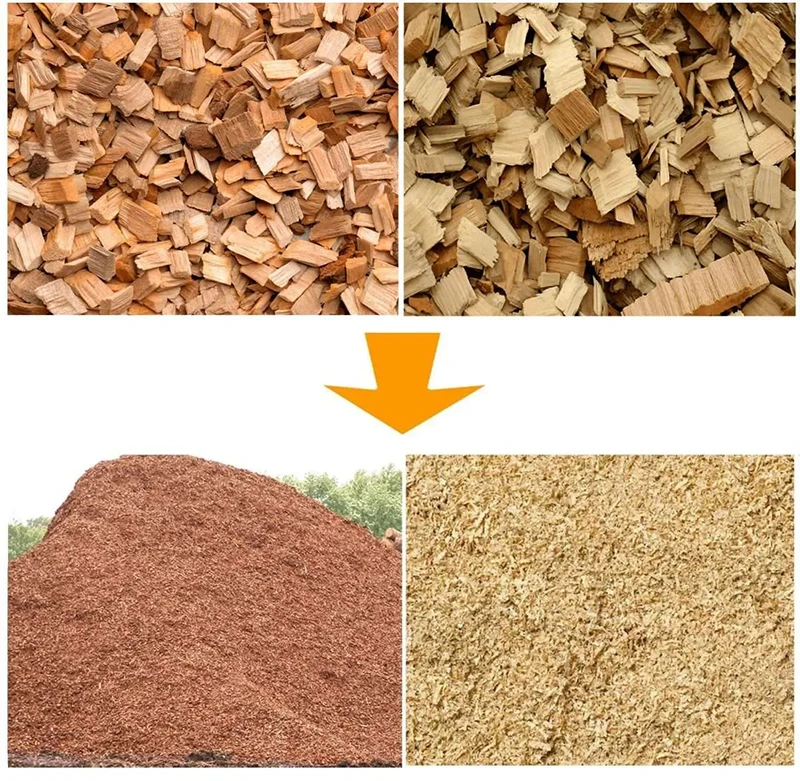
Molded wood pallet plants often receive waste pallets with high-strength nails, U-nails, bolts, and other metal fasteners. For this feedstock, the key question is not simply how fast a Wood Pulverizer Machine can reduce wood. It is whether the crushing section can control metal contamination, protect wear parts, and keep pallet raw material preparation moving. Pulvz addresses this process point with an F-series Wood Crusher & Hammer Mill layout, thickened manganese steel hammer plates, an integrated manganese steel liner, replaceable screens, and a project-confirmed magnetic separation option. The result is a clearer route from wood waste recycling crushing to controlled sawdust preparation, with target output around 2–5 mm and an equipment-center reference of ≤5 mm uniform particles.
Why manual crushing and adjacent machines fall short
Manual Wood Splitting by Axe or Saw cannot provide a stable continuous feed for a molded wood pallet production line. Buying ready-made sawdust avoids the first crushing step but gives the plant less control over pallet raw material preparation and can add dependence on outside supply. A Wood Chipper produces chips, while a Wood Shredder is generally selected for coarse size reduction; neither should be assumed to deliver the same screened material as a Wood Hammer Mill. An old single-roll crusher may also struggle with mixed, dry waste wood and uneven feed. These alternatives make it difficult to connect waste wood volume reduction with a repeatable sawdust preparation section.
Pulvz fit: screen control, wear structure, and metal separation
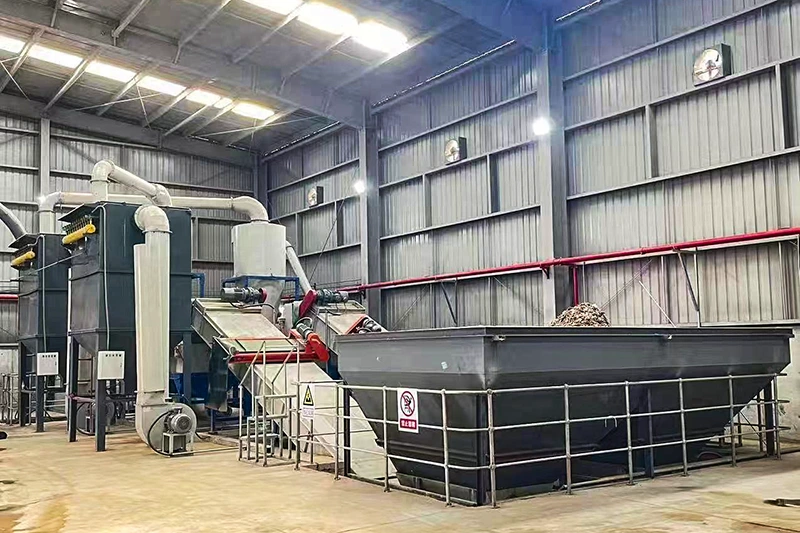
Pulvz is positioned as the raw-material entry point for a presswood pallet production line. Material enters the feed inlet and crushing chamber, where the rotating crushing assembly applies impact and cutting action. The screen then controls which particles can pass to the discharge. The F-series covers a nominal 1–8 t/h range: F-800 is listed at 1–2 t/h with a 780 mm screen and 45 kW motor; F-1000 at 2–3 t/h with a 980 mm screen and 55 kW motor; F-1200 at 3–5 t/h with a 1180 mm screen and 75 kW motor; and F-1500 at 5–8 t/h with a 1480 mm screen and 110 kW motor. Actual output depends on wood type, moisture, feed uniformity, and screen condition. For nailed pallet waste, the equipment-center materials show a Magnetic Separator for Wood Crusher after crushing to separate metal from processed material. Because this option is not confirmed as standard across every F-series model, the selected configuration and separation position should be confirmed with the manufacturer before ordering.
From metal-aware crushing to usable pallet-line feedstock
The documented structure supports a maintenance-focused operating sequence. Thickened manganese steel hammer plates and an integrated manganese steel liner are specified for impact resistance when processing dry, hard wood and occasional abnormal feed; dynamic balancing is also listed as an operating-stability feature. A replaceable high-hardness screen supports Particle Size Control by Screen, while a hydraulic open cover can simplify access for inspection and hammer plate set replacement. A belt conveyor feeding arrangement, cyclone separator or cyclone dust collection can be matched to the wider line when required. In operation, the intended result is continuous Wood Waste to Sawdust Crushing, lower wood residue volume before transfer, and a more controlled ≤5mm Wood Particle Crushing step for drying, gluing, and hot pressing. Confirm the magnetic separation configuration, raw-material limits, and target screen before final selection.
- Use the title Molded Wood Pallet Line Wood Pulverizer Machine for Metal Contamination Control
- Use Wood Pulverizer Machine with Wood Pallet Crusher, Magnetic Separator for Wood Crusher, and ≤5mm Wood Particle Crushing naturally
- Keep the sequence pallet waste with nails, old method problems, Pulvz fit, structure and parameter evidence, then operating result
- State that magnetic separation is shown in equipment-center materials and confirm the selected F-series configuration before ordering


