MDF AND PARTICLEBOARD PRODUCTION | DRYR BLOG
Why Furnish Moisture Shows Up as a Hot-Press Defect
A rotary sawdust dryer gives MDF and particleboard producers a controllable way to reduce moisture in wood furnish before gluing and hot pressing. For pine or eucalyptus residues with changing incoming moisture, continuous hot air drying, monitored temperature, and lifting flights help move the process away from open-air guesswork toward a more stable feed for panel production.
Why Open-Air and Simple Airflow Drying Leave a Process Gap
Natural sun drying and manual open-air drying cannot provide a dependable continuous feed when rain, humidity, season, and yard conditions change. Operators may mix material by experience, but that does not remove the variation between a wet chip fraction and fine dry sawdust. A small airflow dryer or sawdust flash dryer can fit selected fine-material duties, yet the choice depends on particle size, starting moisture, required residence time, and throughput. Treating every furnish stream as the same can leave the panel line oscillating between steam defects and under-consolidated boards.
Why a Rotary Sawdust Dryer Matches Continuous Furnish Preparation
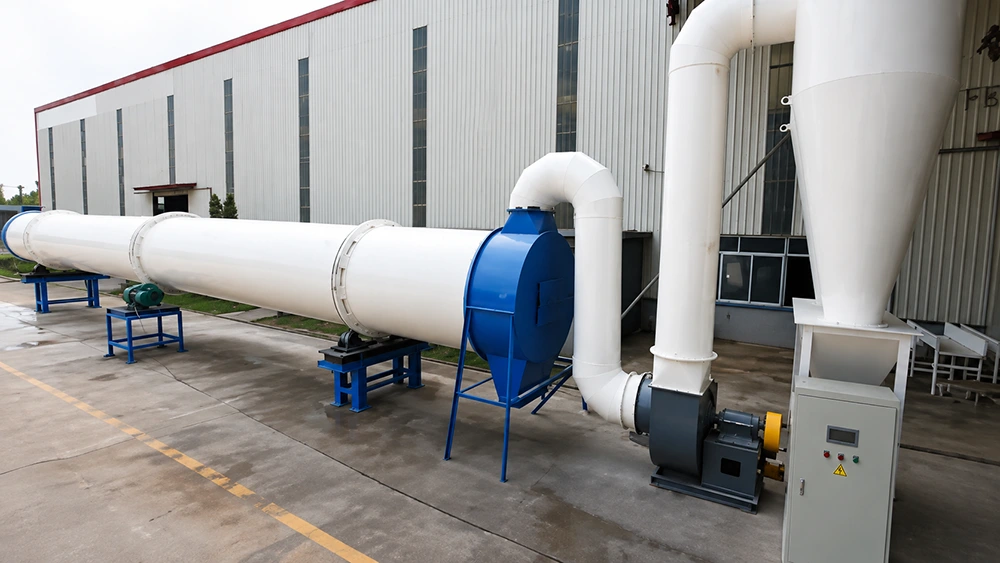
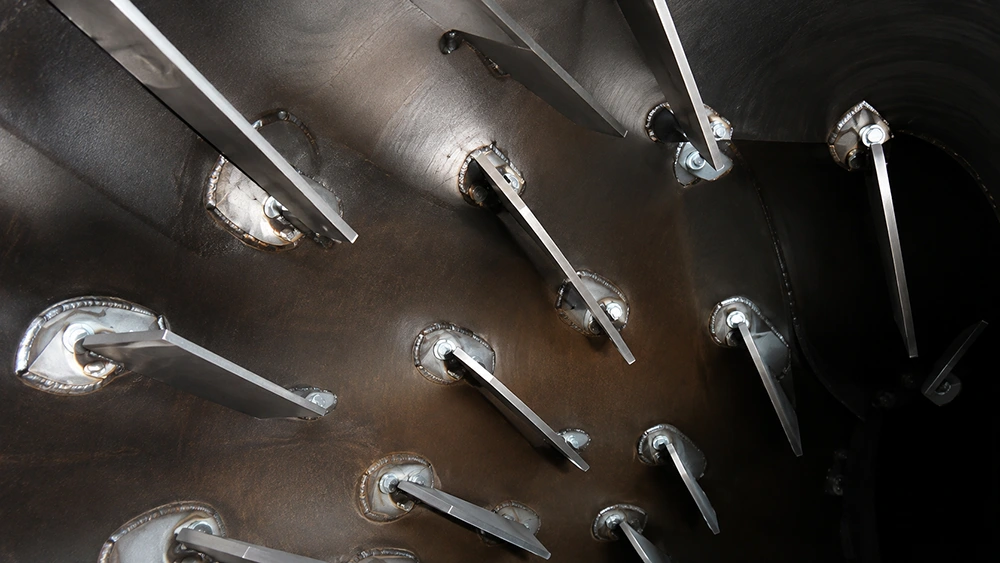
Dryr is a rotary sawdust dryer built around continuous hot air contact inside a turning drum. A screw conveyor or belt can meter wet furnish into the inlet, while the rotating drum and combination lifting flights repeatedly raise and disperse the material through the air stream. This increases contact opportunity and helps the feedstock heat more evenly than a static pile. Temperature monitoring gives the operator a process signal instead of relying only on touch or appearance. The reference range includes four sizes: H-1010 at 0.8 to 1 tonne per hour, H-1212 at 1 to 1.2 tonnes per hour, H-1512 at 1.2 to 1.5 tonnes per hour, and H-1815 at 1.5 to 2 tonnes per hour. The system can be configured with a hot air furnace, PLC control, screw conveyor, cyclone dust collector, or baghouse filter. Actual selection must be checked against feedstock moisture, particle size, target outlet moisture, heat source, and site conditions.
The Result: A More Predictable Feed for Gluing and Hot Pressing
The equipment evidence shows the complete process path rather than a bare drum: the system view includes a segmented rotary drum, process ducting, cyclone separation, blower, motor, and control cabinet, while the chamber view shows staggered metal lifting bars, welded mounting plates, bolted hubs, and continuous internal construction. Product reference data lists dried sawdust moisture below 10 percent and thermal efficiency above 80 percent, but both figures require confirmation against the test feedstock and project operating conditions. With the outlet target verified by sampling, continuous sawdust drying can give the gluing and hot-press stages a more predictable furnish supply, reduce dependence on sun drying, and support stable MDI or UF bonding. Send the feedstock type, initial moisture, particle size, hourly capacity, target moisture, available fuel, dust-control requirement, and installation conditions for a Dryr selection review.
- Use the Dryr rotary drum dryer only for feedstock and process conditions confirmed during project selection
- Use the Dryr designer gallery images as visual evidence for the drum, lifting flights, and cyclone system
- Present below ten percent outlet moisture and the 0.8 to 2 tonnes per hour range as reference data requiring feedstock confirmation
- Avoid unsupported certification, price, universal performance, and unqualified temperature claims


