DRYR Sawdust Dryer — Organic Fertilizer Feedstock
Mixed biomass feedstock in organic fertilizer lines hits the granulator with moisture that does not match the recipe
Chicken manure leaves the sheds near 70 percent moisture, composted organic sits in a 40 to 60 percent band, and dry straw arrives much drier. Blended in a single weigh hopper, the mix drifts out of the 20 to 25 percent wet-granulation window that disc and drum granulators are calibrated for, and the granulator downstream starts losing yield, granule hardness and finished tonnage. A DRYR rotary sawdust dryer with combined lifting flights, multi-fuel hot air and continuous drum drying pulls the blended moisture below the 20 percent ceiling and holds it there, so the granulator infeed becomes a controlled feedstock instead of a moving target.
Sun drying, open-air drying and manual blending all fail the same mixed-stream test
Natural sun drying is the first option most plants try, and it works when one stream dominates the recipe. With mixed biomass it fails twice. Chicken manure and compost take days under cover to come down from 60 to 70 percent and never reach the 20 to 25 percent band that wet granulation needs, while straw in the same yard finishes much earlier and re-absorbs ambient humidity overnight. Open-air drying in shed rows loses control of fines and odour, and any rain event during the drying window resets the moisture curve back to where it started. Manual blending tries to compensate by eye and by feel, but the operators are not reading 70 percent chicken manure against 18 percent straw against 45 percent compost with a moisture meter on every shovel. The result is a blended moisture that drifts hour by hour and a granulator whose controls are fighting a moving target. None of these methods drop the initial moisture below the 20 percent ceiling that wet granulation requires, and none of them keep it there during a continuous shift, so the production manager keeps paying the same granulation-yield penalty every day.
A DRYR rotary sawdust dryer is sized to take mixed biomass below 20 percent and hold it there
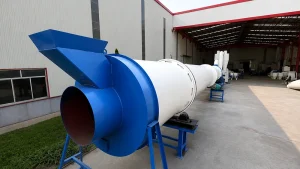
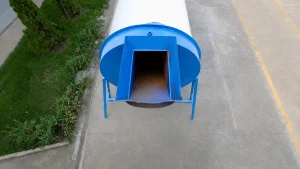
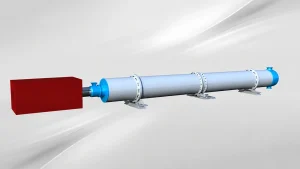
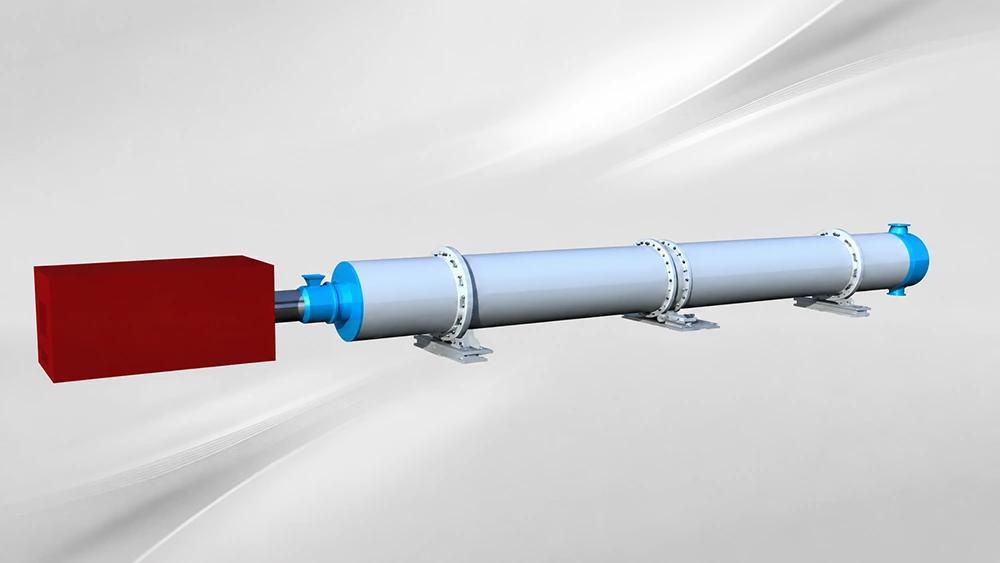
DRYR is a rotary drum dryer built for the biomass stream an organic fertilizer plant actually receives, not for a clean wood-chip recipe. The drum is a horizontal rotating cylinder with combined lifting flights along the inside wall that lift and drop the wet biomass repeatedly through the hot-air stream, so a mix of sticky chicken manure, fibrous compost and lighter straw particles all contact the hot air on every pass instead of letting the heavier wet fraction sit on the drum bottom. A multi-fuel hot air furnace burns coal, oil, natural gas, biomass powder or on-site wood waste to feed the drum, which matters when the plant is rural and gas pipeline access is limited. Temperature sensing along the drum lets the operator hold a stable hot-air curve, and the self-insulation shell keeps the heat inside the cylinder rather than wasting it through the steel wall. The continuous feeding path is a screw conveyor into the feed end and a discharge at the tail, with a cyclone or baghouse dust collector on the exhaust. The whole line is engineered to take an initial 40 to 70 percent mixed biomass blend and drop it into a controllable moisture band the granulator can lock onto.
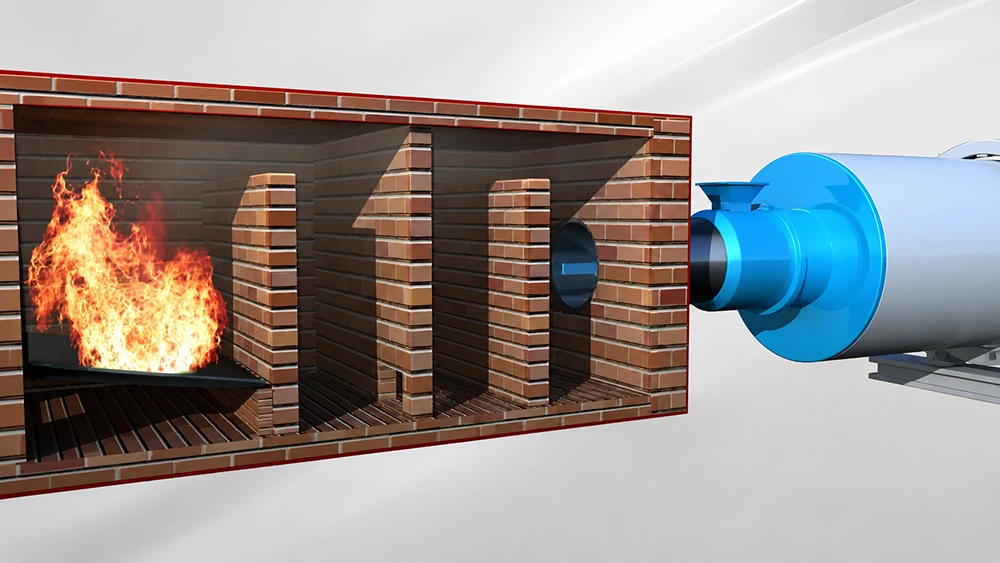
Model range, drum structure and the result at the granulator infeed
The DRYR four-model range covers the 0.8 to 2 tonne per hour working band that organic fertilizer lines typically run. H-1010 is a 1000 millimetre drum with a 4 kilowatt main motor and a 7.5 kilowatt induced-draft fan, sized for 0.8 to 1 tonne per hour of dried material. H-1212 steps the drum to 1200 millimetres with a 5.5 kilowatt main motor for 1 to 1.2 tonnes per hour. H-1512 widens the drum to 1500 millimetres at 7.5 kilowatts for 1.2 to 1.5 tonnes per hour. H-1815 tops the range at 1800 millimetres, an 11 kilowatt main motor and a 15 kilowatt fan for 1.5 to 2 tonnes per hour. Drum length scales with the diameter, and projects that need a longer residence time, for example very high initial moisture or finely shredded chicken-manure-and-straw blends, can move into the 17 to 18 metre custom drum range, which ships as bolted-flange sections and is reassembled on site. With the combined lifting flights holding the blend in the hot-air curtain and temperature monitoring keeping the air curve stable, the outlet moisture sits below 10 percent by default, with a process option to tighten it under 7 percent for plants that want to send dried biomass to storage rather than straight to the granulator. The granulator then sees a feedstock whose moisture is no longer the variable on the batch sheet, and granulation rate, granule hardness and return-pile size all settle back to the recipe the line was sold on.
- Section 1 names chicken manure, compost and straw with their starting moisture ranges and the 20 to 25 percent wet-granulation target.
- Section 2 names sun drying and open-air drying as the old methods and explains why mixed biomass defeats them.
- Section 3 names DRYR rotary drum dryer, combined lifting flights and multi-fuel hot air furnace as the fit.
- Section 4 includes at least one DRYR model number (H-1010, H-1212, H-1512 or H-1815) and the below 10 percent output moisture target.