Skip to content
Home » November 5, 2026 » Page 2

November 5, 2026

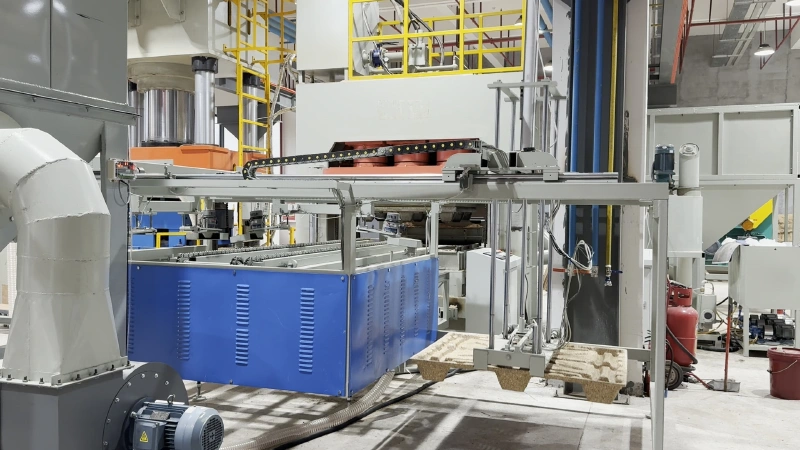
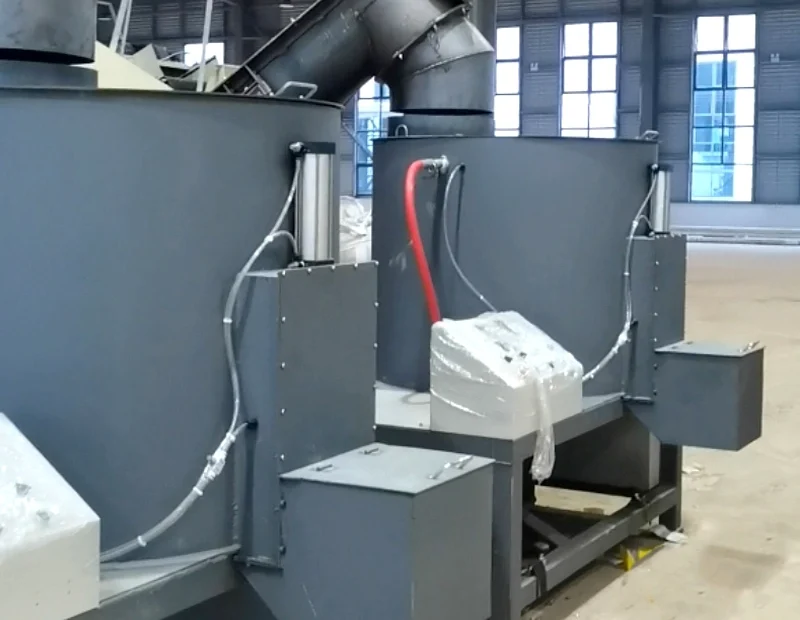
Automated glue mixing and feeding system feeding a presswood pallet machine

Same Pallet Spec, Different Batch: Weighing and Dosing Control on a Presswood Pallet Machine Against Manual Batching Rework

  •  

A plant can hold one pallet size, one mold and one recipe and still ship three different batches in three shifts, because on a manual line the fibre load into the cavity and the glue charge in the mixer are still estimates made by a person. This page follows that drift onto an AutoML molded pallet production line, where a rail-mounted weighing and dosing spreader with belt feeders and a metered glue mixer with dosing screw conveyors move those two feeding actions from operator judgement to equipment control, on a 1600T class hot press at 150 to 180 degrees Celsius, 15 to 20 MPa and a 180 to 240 second cycle, with finished density at 0.8 to 1.2 grams per cubic centimetre, MDI commonly around 8 to 10 percent and UF or PF around 10 to 12 percent. The limits are stated plainly: moisture must be matched to the glue system from trial data, tonnage, mold and cycle are confirmed per project in the technical agreement, and the reject and rework improvement has to be measured on the customer’s own fibre and crew rather than assumed.
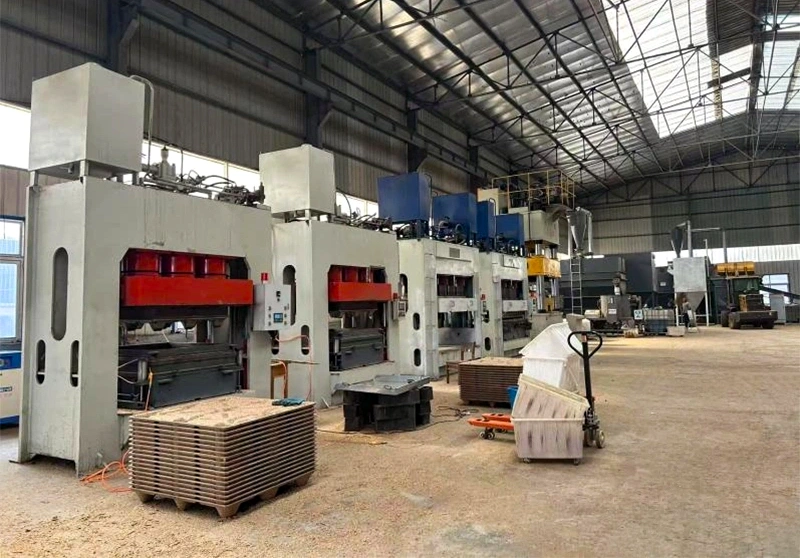
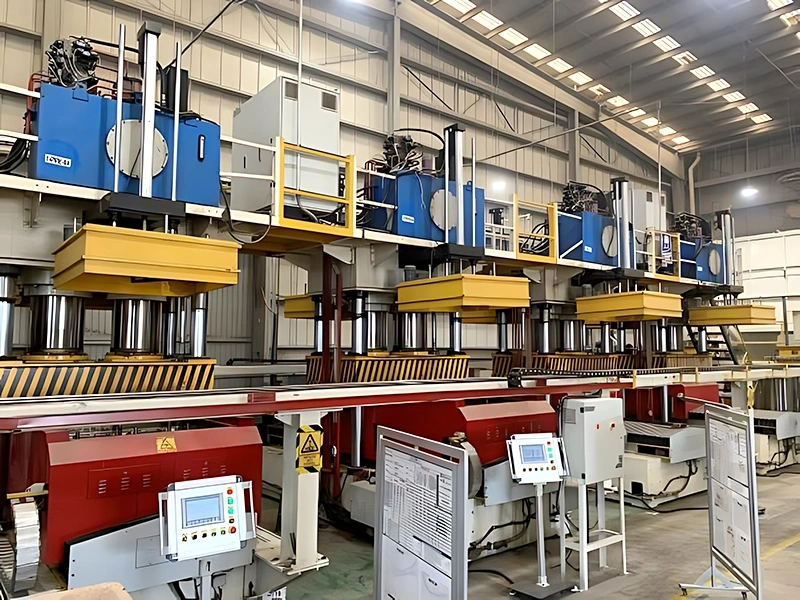
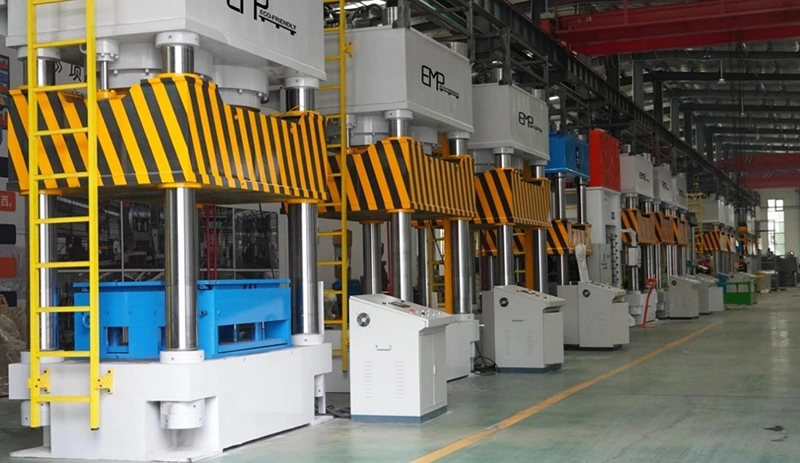
Row of hydraulic presses for molded wood pallets on an automated pallet manufacturing line

Repeatable Shift by Shift: How an Automated Pallet Manufacturing Line Takes Presswood Pallet Machine Rhythm Out of Individual Experience

  •  

A presswood pallet machine plant loses consistency between people, not inside the press: one shift weighs the fibre by eye, judges moisture by feel, spreads the mat by hand and then waits on the press between the open and close signal, so pallet mass, glue fraction and cycle time all drift with the crew. This page follows that drift onto an automated pallet manufacturing line, where weighing and dosing, glue mixing, spreading, hot pressing, demolding and take-out are sequenced on the line control, with 1200T to 2200T press tiers, a 1600T class reference, hot pressing at 150 to 180 degrees Celsius and 15 to 20 MPa, a 180 to 240 second cycle, MDI at roughly 8 to 10 percent and finished density at 0.8 to 1.2 grams per cubic centimetre. The limits are stated plainly: moisture still has to be matched to the glue system from trial data, tonnage, mold and cycle are confirmed per project in the technical agreement, and automation does not replace training, process confirmation or shop-floor management.

Automated presswood pallet production segment with rail-mounted sawdust spreading machines and central PLC screens

Extra Volume Without Extra Stations: How an Automated Pallet Manufacturing Line Changes Presswood Pallet Plant Expansion

  •  

A molded pallet plant that already runs two or three shifts and wants 30 to 40 percent more output usually buys that step as stations: another spreading bay, another take-out hand at every press, another pair at the stack, and a supervisor span that doubles quietly. How a presswood pallet machine line changes the arithmetic: the spreading, dosing, hot pressing, demolding and conveyor stacking handovers that the automated pallet manufacturing line owns, the 1200T to 2200T press tiers and the 180 to 240 second cycle that set real capacity, the semi-automatic versus fully automatic boundary, and the four checks (press count, cycle time, shift pattern, site conditions) a plant should verify before treating volume growth as a configuration question rather than a headcount one.

Servo take-out arm extracting a molded wood pallet from an open presswood pallet machine die

Presswood Pallet Machine Take-Out Stage: Four-Axis Servo Stacking That Ends Repeated Manual Pallet Handling at the Press Exit

  •  

Every hot press cycle on a molded pallet production line ends with an open die and a cured pallet that has to be taken out and stacked, and on many presswood pallet machine lines that last step is still manual: the pace drifts with the shift, the press waits between the open and close signal, and an operator works beside tooling held at 150 to 180 degrees Celsius. AutoML configures a four-axis servo robot at the back end of the line to follow the process motion, take the pressed pallet out and place the stack, so the repeated handling after pressing is carried by the machine. Press references, tonnage tiers, demolding and conveyor evidence are set out plainly, and robot motion, safety zone and stacking pattern are stated as project confirmations rather than fixed promises.

Array of heavy-duty four-column hydraulic presses with control panels on a presswood pallet machine line pacing batch output

Steady Packaging Customers, No Pallet Line: Turning Outsourced Pallet Demand Into In-House Output With a Presswood Pallet Machine

  •  

A packaging distributor can hold the accounts, the call-off schedule and the whole consumables basket and still resell pallets it does not control. How a presswood pallet machine moves that volume in-house: the molded pallet production line from crushing and drying through glue mixing and hot pressing, semi-automatic versus fully automatic costing, the 1200T to 2200T tonnage tiers and the pressing window, and the four conditions (real pallet demand, a channel for a molded unit, utilities and layout, an investment case) a supplier should verify before quoting a pallet contract.

Array of heavy-duty four-column hydraulic presses with control panels on a presswood pallet machine line pacing batch output

From Steady Pallet Volume to In-House Output: Which Plants Should Stop Buying and Run a Presswood Pallet Machine

  •  

A steady pallet count still reprices whenever sawn lumber, freight and treatment chamber hours move, so the real question is not machine price but whether in-house molded output beats continued purchase on your own numbers. Which plants fit that test, what a nailed wood pallet purchase price leaves out, where the AutoML molded pallet production line sits in the cost chain, and the four conditions (fibre, utilities, shift labour, order discipline) that decide make versus buy, with the parameters, investment references and limits stated plainly.

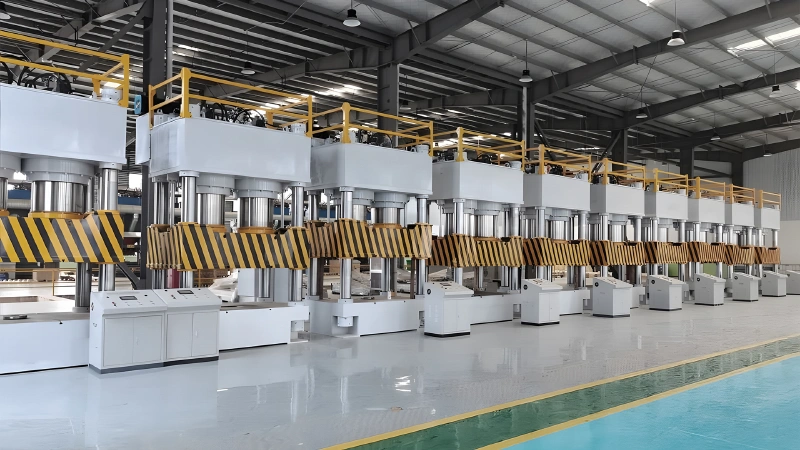
Row of 1600T three-beam four-column presswood pallet machine hot presses set up for dedicated-mold batch production of one pallet specification.

Lightweight Packing Spec Change: Turning a New Customer Size Into In-House Output With a Presswood Pallet Machine

  •  

When a customer lightens the pack, the pallet spec arrives with a new size, a new load class and a new volume, and a bought-in program or a nailing cell may not answer it. How a presswood pallet machine turns that changed order into in-house molded output, which tonnage tiers, pressing window and mold questions to test, and the drawing, duty cycle and order volume to send first.

Get a Pallet Machine Price Quote & ROI Plan
Request Quote WhatsApp
🇬🇧 EN 🇪🇸 ES 🇫🇷 FR 🇷🇺 RU 🇮🇹 IT 🇩🇪 DE 🇳🇱 NL
×

Get a Precision Quote

Leave your requirements below. Our engineers will reply within 12 hours with customized technical details and pricing.