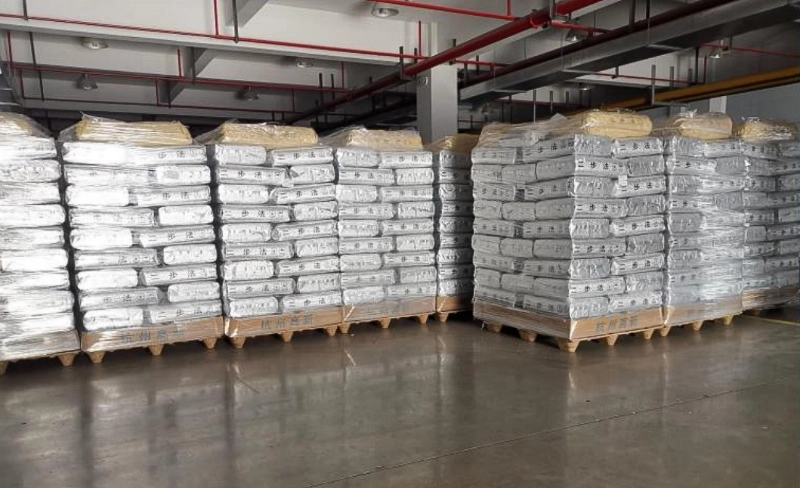
 | Food Safety Alert: Is your shipment of hygroscopic milk powder or high-value spice blends risking rejection at the EU border due to mold on traditional lumber? For Quality Assurance Managers in the food and pharmaceutical sectors, the pallet is no longer just a transport tool—it is a “Food Contact Surface.” Discover why MDI-bonded molded pallets are the only sanitary choice for your HACCP plan. |
The “Dirty” Truth About Traditional Wood in Food Zones
In a certified GMP (Good Manufacturing Practice) facility, you spend thousands on stainless steel equipment and air filtration. Yet, the moment your finished product—be it 50lb bags of flour or drums of glucose syrup—hits the shipping dock, it often lands on a traditional wooden pallet that acts as a biological sponge.
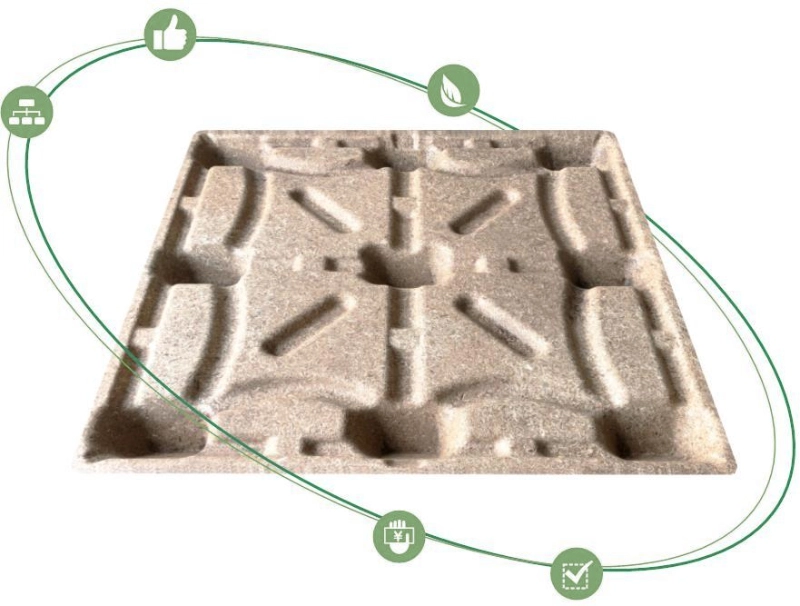
Traditional lumber is porous. Even after heat treatment, it can re-absorb moisture during ocean freight, creating a breeding ground for Aspergillus mold and bacteria. Furthermore, the risk of “nail pops” tearing multi-wall paper sacks creates immediate physical contamination and spillage. This is why forward-thinking food exporters are switching to the pressed wood pallet.
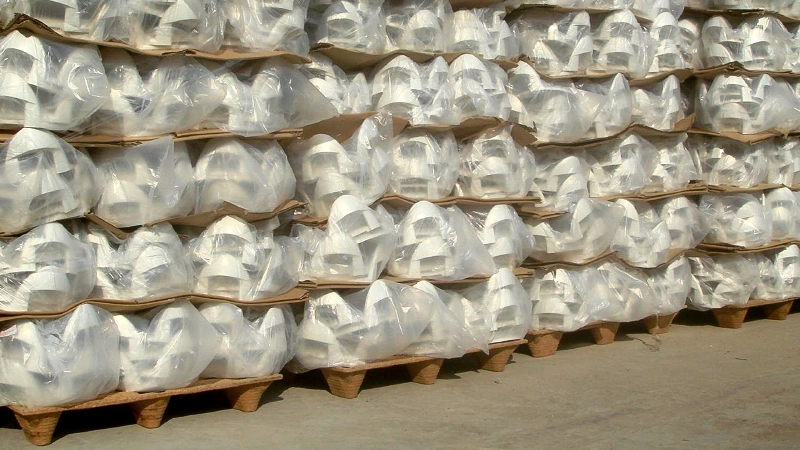
Ampallet’s nail-free design prevents tearing in soft packaging like flour or chemical bags.
Chemistry Matters: Why MDI Makes It Food Safe
Not all molded pallets are created equal. The critical differentiator for food safety is the resin. Many low-cost alternatives use Urea-Formaldehyde (UF), which is brittle and emits formaldehyde—a carcinogen that can migrate into permeable food packaging.
Ampallet utilizes MDI (Methylene Diphenyl Diisocyanate) adhesive. During the manufacturing process, the wood fiber and MDI are subjected to 1600 tons of pressure at 428°F (220°C). This creates a cross-linked polyurethane bond that is:
- Formaldehyde-Free: Meets CARB-NAF standards, ensuring no VOC contamination of sensitive food ingredients like tea leaves or cocoa.
- Water Resistant: Unlike UF glue, MDI does not break down when exposed to humidity, preventing the pallet from becoming a host for mold spores during trans-equatorial shipping.
- High Density: The surface is sealed and smooth, making it difficult for bacteria to colonize compared to rough-sawn lumber.
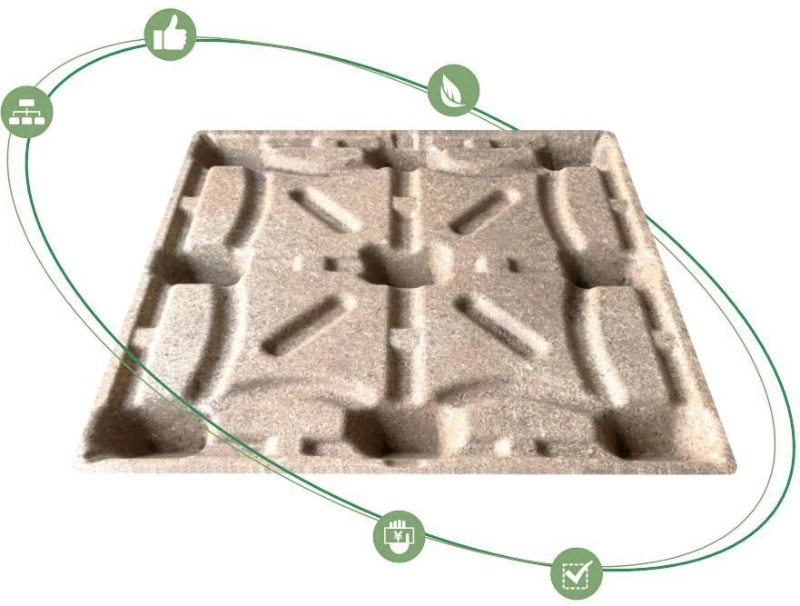
Certified Formaldehyde-Free and ISPM 15 Exempt: The gold standard for food export.
Eliminating Physical Contamination Risks
In the food industry, a “foreign object” complaint can trigger a full-scale product recall. Traditional pallets are held together by nails and staples. As wood dries and shrinks, these fasteners protrude.
If you are shipping bagged goods—such as sugar, flour, or citric acid—a single protruding nail head can rip the bottom layer of bags. This causes product loss, invites pest infestation due to spillage, and creates a safety hazard for manual handlers. Our pressed wood pallets for sale feature a one-piece, molded construction. There are no nails, no staples, and no sharp edges to compromise your packaging integrity.
ISPM 15 Compliance Without the Chemicals
Exporting food ingredients requires strict adherence to phytosanitary regulations. While solid wood requires fumigation (often with Methyl Bromide, a toxic chemical) or heat treatment to meet ISPM 15, these certifications can expire or be questioned by zealous customs officers.
Ampallet products are classified as “Processed Wood.” They are technically 100% ISPM 15 compliant by nature of their manufacturing process. The high heat and pressure destroy all larvae and biological contaminants instantly. This means your shipment flows through customs without the need for fumigation certificates, eliminating the risk of chemical residue on your food packaging.

Clean, uniform stacking for PVC or food ingredients, free from biological contaminants.
Warehouse Hygiene and Space Logic
Space in a food-grade warehouse is expensive, and clutter invites pests. Empty wooden pallets are bulky and often stored outside where they collect dirt and bird droppings before being brought back into the production zone.
Our nestable pallet design allows 50 pallets to be stacked in a 7-foot column. This 4:1 space-saving ratio means you can store your pallet inventory indoors, in a clean, dry environment, without sacrificing valuable production floor space. A cleaner pallet means a safer food supply chain.
Frequently Asked Questions (FAQ)
1. Can these pallets be used in a cleanroom environment?
Yes. Because they are molded from fiber and resin, they do not shed chips or dust like sawn lumber. Their smooth surface is easy to clean, making them ideal for pharmaceutical and food ingredient cleanrooms.
2. Do your pallets contain formaldehyde?
No. We use MDI (Methylene Diphenyl Diisocyanate) adhesive, which is formaldehyde-free. Our pallets meet CARB-NAF standards, ensuring they are safe for transporting sensitive food products.
3. Are they strong enough for heavy liquid drums?
Absolutely. Our heavy-duty models are engineered to handle dynamic loads of up to 5,500 lbs (2.5 tonnes). They provide a stable, flat base perfect for stacking four 55-gallon (208L) drums without the deck board deflection seen in wooden pallets.
4. Will moisture from a shipping container ruin the pallet?
Ampallet products are water-resistant due to the MDI resin bond. While they are not waterproof like plastic, they withstand high-humidity ocean freight and “container rain” significantly better than standard wood, maintaining structural integrity without growing mold.
5. Do I need a fumigation certificate for export to Europe?
No. Pressed wood pallets are considered “processed wood” under ISPM 15 regulations. They are exempt from fumigation and heat treatment requirements, simplifying your customs documentation.