 | Procuring for the Chemical Sector? Stop Compromising on Safety. If you are managing logistics for petrochemical resins, carbon black (N220), or 208L chemical drums, you know the nightmare of “nail pops” in traditional wood. One protruding nail can puncture a super sack, causing leakage, contamination, and thousands of dollars in rejected cargo. When you look for where to buy compressed wood pallets bulk, you aren’t just buying wood; you are buying asset protection for your high-value chemical exports. |
Why Chemical Plants Are Switching to Molded Pallets
In the chemical industry, particularly for producers like Borouge or Cargill, the integrity of the packaging is non-negotiable. Traditional wooden pallets are assembled with nails and staples. Under the dynamic stress of a forklift or the vibration of a container ship, these fasteners loosen. For a pallet carrying bagged goods like PVC resin or mineral sands, a loose nail is a disaster waiting to happen.
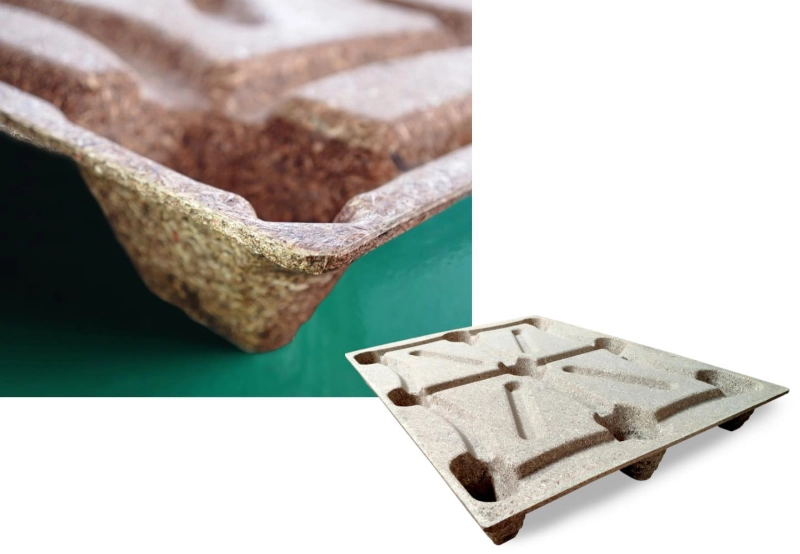
Our pressed wood pallets for sale are manufactured using a 1600-ton hydraulic press. This process creates a one-piece, solid structure with no nails, screws, or staples. The rounded corners and smooth surface design are engineered specifically to protect soft packaging, such as FIBC bulk bags and woven sacks, from tearing during handling.
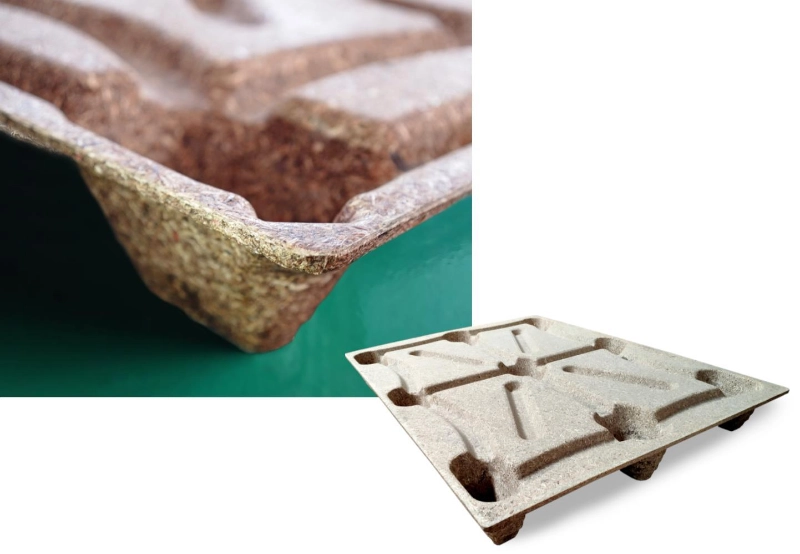
The high-density, nail-free surface prevents bag punctures typical in chemical logistics.
Solving the “Bulk” Storage Crisis in Your Warehouse
When you search for where to buy compressed wood pallets bulk, you are likely looking to order in quantities of 5,000 to 10,000 units to secure a stable supply chain. However, storing 10,000 standard wooden pallets requires a massive amount of real estate—often forcing plants to store pallets outdoors where they absorb moisture and rot.
Ampallet’s space-saving nesting design changes the equation. Thanks to the inverted cone foot design, our pallets nest inside one another with a 4:1 ratio.
The Math of Efficiency:
In a standard 40ft container, you can load approximately 400-500 traditional wooden pallets. In that same container, you can load over 1,500 of our nestable pallets. This doesn’t just save warehouse space; it slashes your inbound freight costs by 60%.
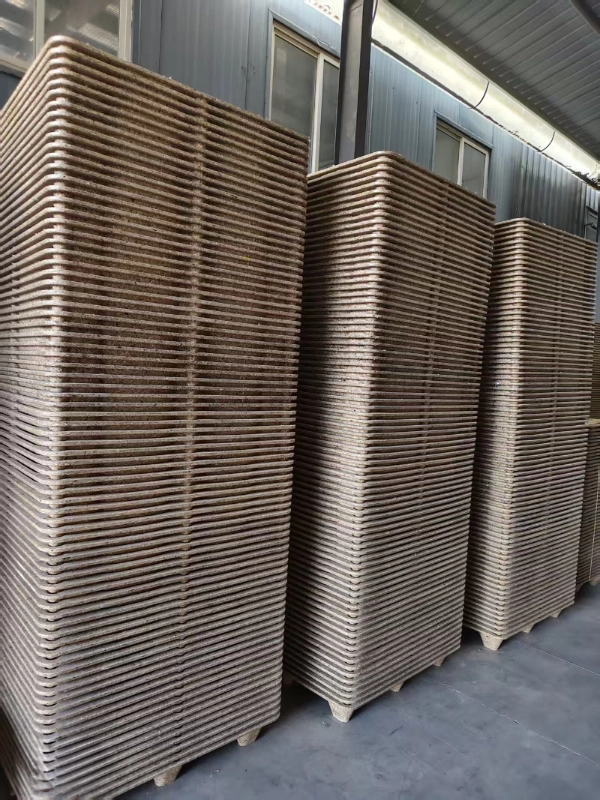
Factory view: High-density nesting allows you to store thousands of pallets in a fraction of the space.
Handling 208L Drums and Heavy Loads
A common concern for procurement managers in the liquid chemical sector is stiffness. Can a molded pallet handle four 208L (55-gallon) drums without bowing?
The answer lies in our resin formulation. We use MDI (isocyanate) adhesive, which creates a waterproof, high-stiffness bond that outperforms urea-formaldehyde glues used by cheaper competitors. For heavy chemical tanks storage, we offer reinforced double-face options or heavy-duty single-face designs capable of dynamic loads exceeding 2.5 tons.
Furthermore, because our pallets are ISPM 15 exempt pallets (processed wood), your shipments of hazardous materials or chemical intermediates will never be detained at customs for fumigation certificate issues. You avoid the “quarantine hold” nightmare at ports like Rotterdam or Long Beach.
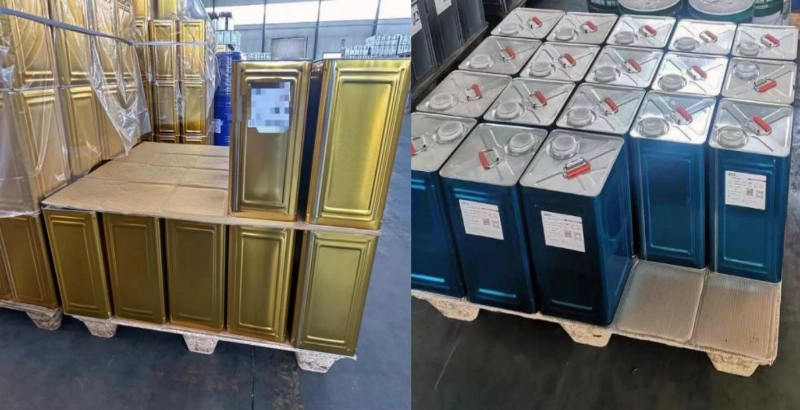
Perfectly flat surface support for 208L drums and square chemical containers, ensuring stability.
Frequently Asked Questions
1. Can these pallets support double-stacked super sacks of carbon black?
Yes. Our heavy-duty fiber pallets are designed with high static load capacities (up to 7 tons). However, for double stacking 1-ton bags, we recommend using our specific 1140x1140mm or 1200x1000mm models designed to distribute bottom-layer pressure evenly to prevent bag deformation.
2. Are your pallets resistant to moisture in high-humidity plants?
Absolutely. Unlike standard molded pallets that use cheap urea glue, Ampallet uses MDI adhesive. This creates a waterproof bond. We have clients in high-humidity regions like Indonesia and Vietnam storing pallets in non-climate-controlled warehouses without swelling or mold issues.
3. Do I need a heat treatment certificate for export to the EU?
No. Our products are classified as “Processed Wood” under international regulations. They are naturally ISPM 15 compliant. You do not need a fumigation stamp or a separate heat treatment certificate, simplifying your export documentation significantly.
4. What is the lead time for a bulk order of 5,000 pallets?
Thanks to our automated production lines, a single machine produces about 360 pallets per day. For a 5,000 unit order, we typically dispatch within 7-10 days. The high nesting ratio also means we can deliver this quantity in far fewer trucks than traditional wood suppliers.
5. How do these compare in price to plastic pallets for chemical drums?
Ampallet compressed wood pallets are a cost-effective alternative to wood pallets and are significantly cheaper than plastic. While a heavy-duty plastic pallet might cost $40-$80, our solution offers similar load-bearing capabilities for one-way export at a fraction of that cost (typically 60-70% less), improving your bottom line.