
Stop Paying to Store “Air” in Your Warehouse
In the logistics of bagged goods and chemical ingredients, floor space is your most expensive asset. Traditional wooden pallets consume massive cubic footage even when empty. Our nestable pallet design offers a 4:1 compression ratio, allowing you to reclaim 75% of your storage area immediately.
The Physics of Warehouse Density: Why “Nesting” Matters
For facility managers handling high-volume exports of mineral sands, PVC resins, or agricultural feed, the “dead pile” of empty pallets is a constant operational bottleneck. Traditional GMA pallets are rigid; they stack like bricks. If you have 1,000 pallets waiting for the bagging line, they are occupying valuable staging lanes that should be used for finished goods.
The pressed wood pallet changes this equation through its geometric “Inverted Cone Design.” Unlike nailed lumber which sits one-on-top-of-another, our molded pallets slide into each other.
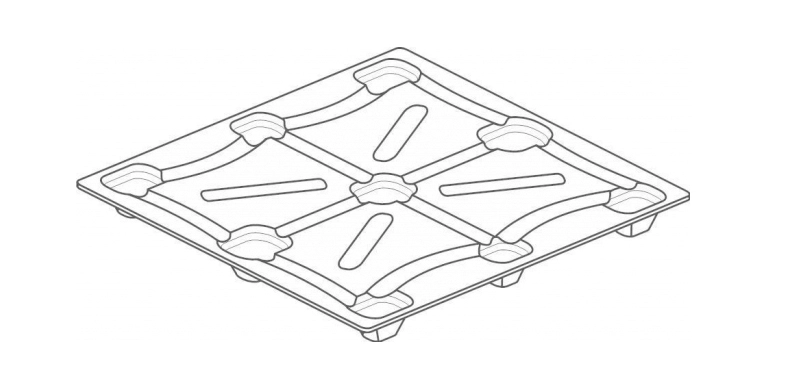
The engineered geometry allows for precise nesting, critical for automated dispensers.
Quantifying the Savings: The 4:1 Ratio
Let’s look at the actual math for a standard warehouse bay. When your forklift operator is clearing the receiving dock, the difference between handling nestable export pallets versus traditional lumber is drastic.
| Metric | Traditional Wooden Pallet | Ampallet Nestable Pallet |
|---|---|---|
| Stack Height (50 units) | Approx. 7.5 meters (Unsafe to stack) | Approx. 2.1 meters (Safe single stack) |
| Forklift Trips (per 1000 units) | ~60 trips | ~15 trips |
| Warehouse Footprint | 150 m² | 40 m² |
This space-saving nesting capability means that in a standard shipping container or a 53′ trailer, you can load nearly 2,000 empty pallets for return logistics or inter-plant transfers, compared to fewer than 500 traditional pallets. You are essentially cutting your return freight costs by 75%.
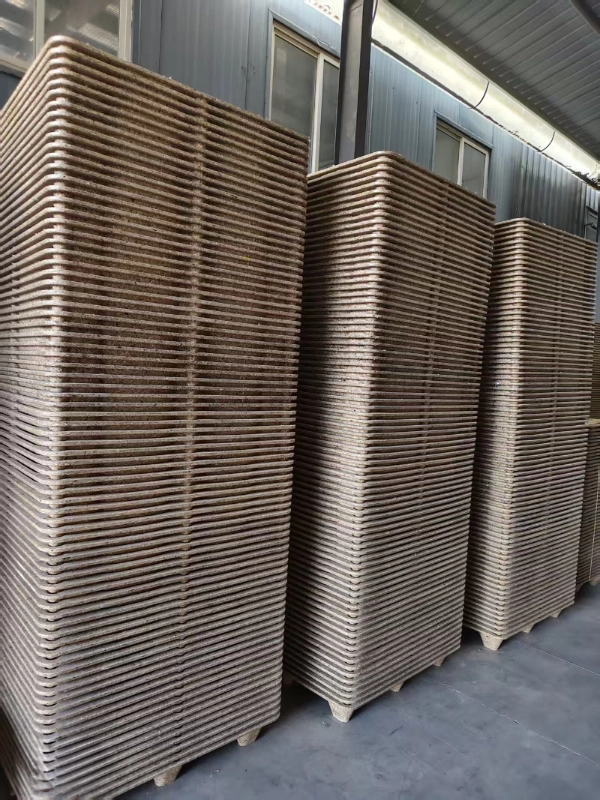
High-density storage: Reclaiming warehouse lanes for active inventory.
Stability Under Load: It Nests, But Does It Hold?
A common concern in the chemical and mineral industries is whether a “space-saving” pallet can handle the static load of heavy tonnage bags. The answer lies in the high-pressure molding process.
Because our molded wood pallets are formed under 1600 tons of pressure using MDI adhesive, they possess a density far superior to softwood. They are designed specifically for bagged goods stacking. The flat surface prevents the “bottom sag” often seen with slat pallets, which can cause bags to tear or stacks to lean.
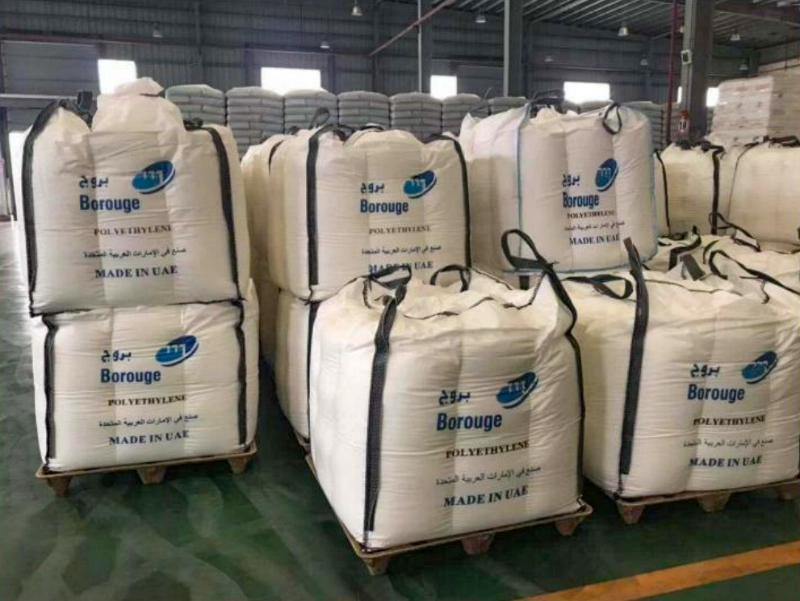
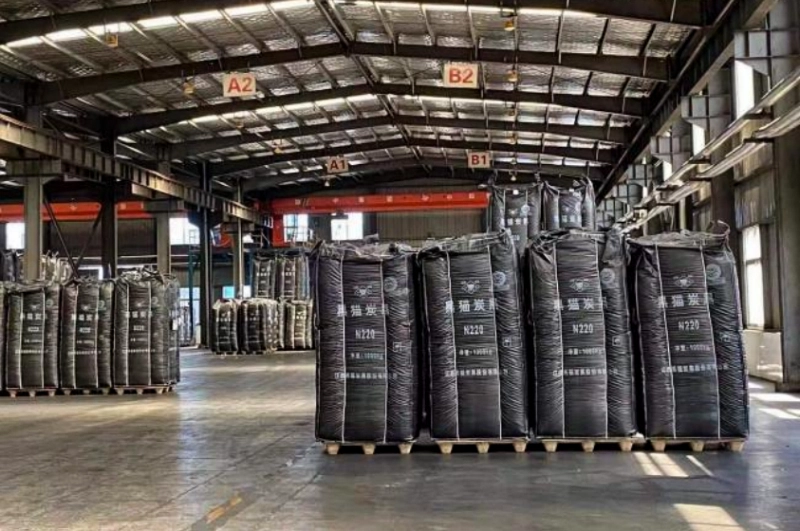
Borouge petrochemical bags stacked securely on nestable pallets, ready for export.
Furthermore, for one way pallet shipments, the cost-to-performance ratio is unmatched. You get the load capacity required for heavy industrial ingredients without the penalty of paying for bulky, expensive plastic pallets that you will never see again.
Seamless Integration with Material Handling
Space saving implies tighter operations. The Ampallet design includes precise guide slots that facilitate 4-way entry. Whether your team uses a standard forklift or a manual pallet jack, the equipment slides in without the resistance caused by nails or warped lumber.
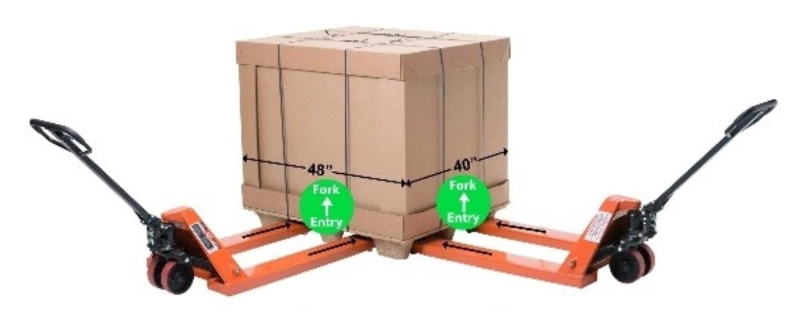
This dimensional consistency is also critical for automated pallet dispensers (palletizers) found in modern chemical bagging lines. Unlike wooden pallets that jam due to loose boards, our molded pallets dispense reliably, keeping your line running at full speed.
Frequently Asked Questions
1. Can these nestable pallets handle double-stacking of chemical drums?
Yes, but for heavy double-stacking (like 208L drums), we recommend our reinforced double-face or cross-bottom models to ensure even weight distribution on the lower tier’s caps.
2. Are they ISPM 15 compliant for export to Europe?
Absolutely. Ampallet products are classified as “processed wood,” making them 100% ISPM 15 exempt. No heat treatment stamps or fumigation certificates are required for any port globally.
3. How does moisture affect the stack height over time?
Unlike standard wood that swells, our MDI-bonded fibers are water-resistant. The pallets maintain their shape and nesting tolerance even in humid warehouse conditions, preventing “stuck” stacks.
4. What is the exact nesting height for 50 pallets?
A stack of 50 standard Ampallet nestable pallets stands approximately 2.1 to 2.2 meters high, allowing for double-stacking of empty pallets inside high-cube trailers.
5. Do I need special equipment to un-nest them?
No. While they nest tightly to save space, the anti-jam design ensures they can be easily separated by a standard forklift or automated pallet dispenser without manual prying.