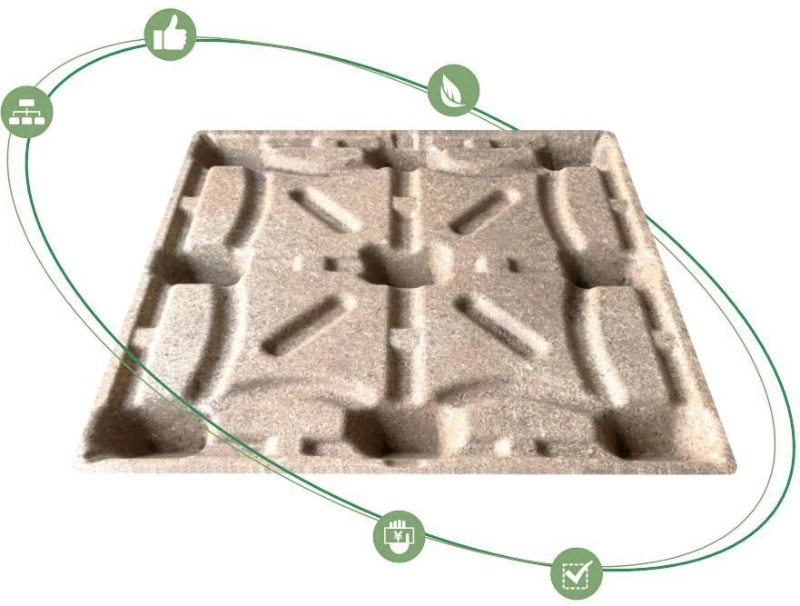
 | Operating in Southeast Asia’s 80%+ humidity means traditional wood pallets are a ticking time bomb. Mold growth, delamination, and customs quarantine rejections at destination ports can cost thousands per container. You need a packaging solution engineered specifically to resist tropical moisture ingress while securing your bagged goods and corrugated boxes from bottom-layer collapse. |
The Tropical Logistics Nightmare: Mold, Delamination, and Rejected Containers
For supply chain managers exporting animal feed, agricultural products, or chemical resins out of tropical climates like the Philippines or Indonesia, moisture is the ultimate enemy. When using standard GMA solid wood pallets, the high ambient humidity causes the wood fibers to act like a sponge. This moisture absorption leads to rapid mold and fungi growth. If European or North American customs officials spot visible mold spores, your entire container faces immediate quarantine, expensive fumigation, or outright destruction.
Furthermore, standard plywood pallets rely on cheap Urea-Formaldehyde (UF) resins. In humid conditions, these pallets suffer from severe delamination—the layers literally peel apart. Add the inevitable nail pops caused by wood swelling and shrinking, and your bottom-layer bagged goods are at severe risk of puncture, leading to costly product leakage and rejected deliveries.
The Science of Moisture Resistance: MDI Polyurethane Cross-Linking
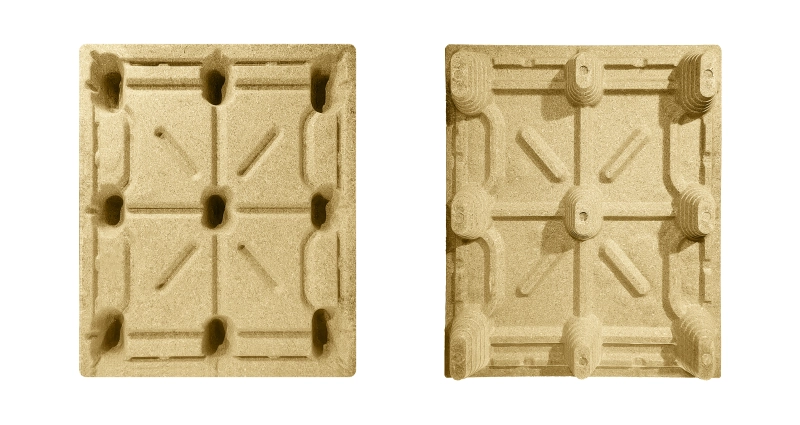
To survive the tropics, you need a structurally superior pressed wood pallet. Our manufacturing process utilizes a 1600-ton hot press molding technology combined with premium pMDI (Polymeric Methylene Diphenyl Diisocyanate) adhesive. Unlike cheap UF glues that break down in moisture, MDI reacts chemically with the cellulose and water molecules in the wood fiber.
This creates an irreversible polyurethane molecular chain. The result? Extreme weatherability. In 24-hour water immersion tests, our molded wood pallets demonstrate a thickness swelling rate of less than 2%, compared to the 15%+ swelling seen in traditional alternatives. Because the MDI glue is completely formaldehyde-free, it will not degrade in high heat and humidity, ensuring your pallets maintain their structural integrity from the humid loading dock all the way to the destination warehouse.
Real-World Gains: Securing Bagged Goods Stacking in High Humidity
By switching to a moisture-resistant cheaper alternative to wooden pallets, export managers eliminate the unpredictable variables of tropical logistics. The one-piece, nail-free design features a perfectly flat surface with rounded corners. When stacking heavy 50 lb sacks of PVC resins or animal feed, there are no internal stress points or protruding fasteners to tear the bags.

Because the material is classified as “processed wood,” it is globally recognized as ISPM 15 exempt pallets. You completely bypass the need for heat treatment certificates or fumigation scheduling. Your goods move faster through customs, and your packaging arrives pristine, dry, and odor-free—critical for food-grade and agricultural exports.
Space and Payload Optimization for Export
Beyond moisture resistance, these export pallets drastically reduce your operational overhead. The patented nestable design allows for a 4:1 space-saving ratio. Instead of towering stacks of unstable wood pallets clogging up your staging area, 50 nested pallets stack just 82 inches high.
Weighing up to 60% less than solid wood, this one way pallet allows you to maximize your actual product payload inside the shipping container, driving down your per-unit freight costs significantly.
Frequently Asked Questions (FAQs)
1. Will the pallet absorb moisture and transfer it to my corrugated boxes?
No. The high-pressure molding process combined with MDI adhesive seals the wood fibers, preventing moisture capillary action. Your bottom-layer corrugated boxes remain dry and structurally sound even in humid tropical warehouses.
2. Do I need to arrange fumigation for these pallets before exporting from Southeast Asia?
Absolutely not. Because they are manufactured under high heat (220°C) and pressure, they are internationally classified as processed wood. They are naturally ISPM 15 compliant and require no fumigation or stamping.
3. Can this pallet safely support double-stacked bagged goods without breaking?
Yes. Our heavy-duty models offer a dynamic load capacity of up to 5,500 lbs (2.5T) and a static load of over 15,000 lbs (7T). The flat, one-piece surface evenly distributes the weight of bagged agricultural or chemical goods, preventing bottom-layer sag.
4. How does the nestable design benefit my port warehouse operations?
Port warehouse space is expensive. Our nestable design allows you to store 2.5 times more pallets in the same square footage compared to traditional GMA pallets, freeing up valuable floor space for your actual inventory.
5. Are there any nails or staples that could puncture my fertilizer or resin sacks?
Zero. The one-piece molded construction eliminates all metal fasteners. This completely eradicates the risk of nail pops tearing your sacks and causing expensive product leaks during forklift handling.