 | If you are shipping PVC resin, carbon black, or agricultural feed in 2,000 lbs FIBCs (Flexible Intermediate Bulk Containers), you already know the nightmare of traditional wood boards. The heavy PP woven bags sag into the gaps between deck boards, creating uneven weight distribution. A single protruding nail can puncture the bottom discharge spout, causing hazardous chemical leaks or product loss. Worse, the lack of uniform friction causes these slick bulk bags to shift and lean during tight forklift cornering or rough ocean transit. You don’t need a heavier pallet; you need a gap-free, high-friction foundation designed specifically for soft packaging. |
The FIBC Slippage and Puncture Crisis
In the bulk material logistics sector, the interface between the pallet deck and the bottom of a bulk bag is the most critical failure point. Traditional GMA wooden pallets are constructed with multiple deck boards separated by gaps. When a 2,500 lbs bag of mineral powder or polymer granules is placed on top, the flexible bottom fabric immediately sags into these voids under the immense point-loading pressure.
This sagging creates two severe operational headaches. First, it compromises the center of gravity, making the bag highly susceptible to slipping and leaning. Second, as the forklift lifts the load, the tension on the sagged fabric drastically increases, often leading to tears. Add the inevitable “nail pops” caused by wood shrinkage, and you have a recipe for punctured bottom spouts and expensive chemical spills on your warehouse floor.
How One-Piece Molding Eliminates Slippage
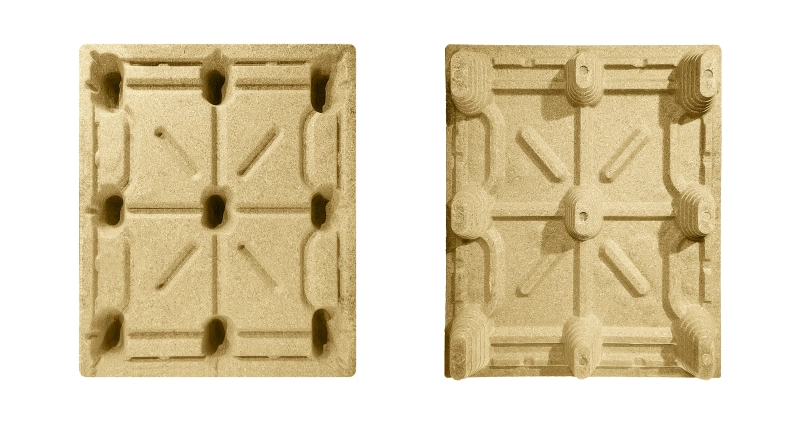
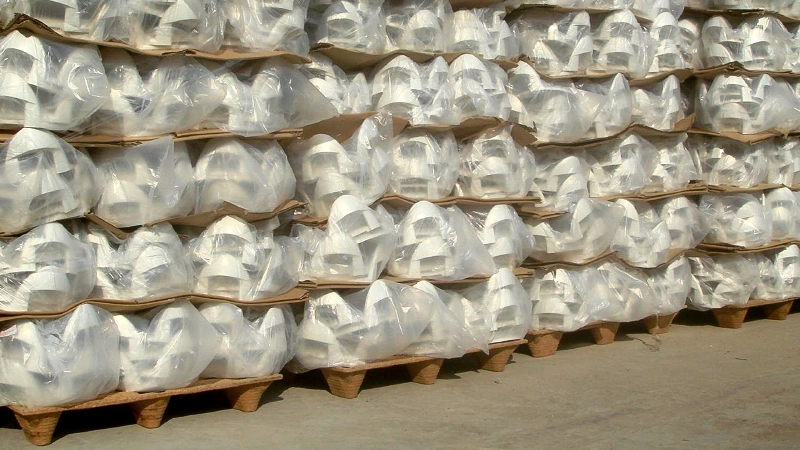
The engineering logic behind the pressed wood pallet completely resolves the FIBC interface issue. Manufactured under 1,600 tons of hydraulic pressure at 428°F (220°C), these pallets feature a solid, one-piece construction. There are zero gaps, zero nails, and zero splinters.
For anti-slip performance, the magic lies in the surface texture. Unlike the slick surface of heavy-duty plastic pallets—which often require expensive rubber anti-slip grommets that wear out—the compressed wood fiber creates a naturally micro-textured, high-friction deck. When a bulk bag settles onto this flat, uniform surface, the weight is distributed evenly across the entire footprint. The bag cannot sag, and the textured wood fibers grip the PP woven fabric, locking the bag in place even during aggressive forklift braking or the pitch and roll of a cargo ship.
Double-Stacking: Maintaining Vertical Integrity
Maximizing container space often requires double-stacking bulk bags. If the bottom pallet warps or the bag shifts, the entire stack will lean, causing the container doors to jam upon arrival—a common nightmare for receiving docks.
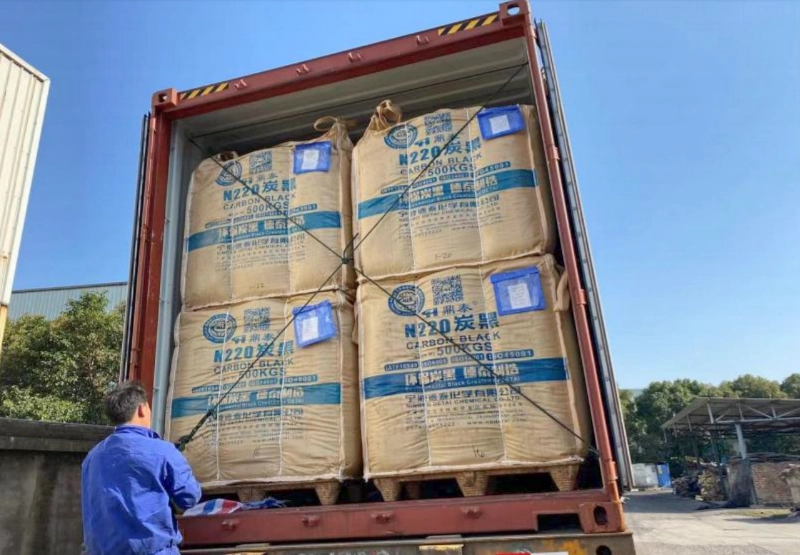
Because molded pallets are produced with steel dies, their dimensional consistency is flawless (tolerance within ±0.08 inches). When configured with a double-face design for chemical stacking, they easily handle a dynamic load of 5,500 lbs. The flat deck prevents the top bag’s weight from forcing the bottom bag to bulge asymmetrically, keeping your N220 carbon black or PE resin stacks perfectly vertical inside the 40ft high-cube container.
The Ultimate Export Solution for Bulk Materials
Many chemical plants mistakenly believe they must upgrade to $50 plastic pallets to avoid nail punctures and ensure smooth international shipping. However, plastic is cost-prohibitive for one-way shipping. The molded wood solution is a significantly cheaper alternative to wooden pallets when factoring in total cost of ownership.
Furthermore, because they are manufactured under high heat and pressure, they are globally recognized as “processed wood.” This makes them naturally ISPM 15 exempt pallets. You can load your one way pallet with bulk bags and ship them to any port in the world without paying for heat treatment certificates or risking customs quarantine delays.
Performance Comparison: Handling 2,000 lbs FIBCs
| Operational Metric | Traditional Wood Pallet | Pressed Wood Pallet |
| Deck Surface | Gaps up to 3 inches (Causes bag sagging) | Solid, flat, one-piece (Zero sagging) |
| Puncture Risk | High (Nail pops, wood splinters) | Zero (Nail-free, splinter-free) |
| Anti-Slip Friction | Low (Wood boards get slick, bags shift) | High (Micro-textured wood fiber grips PP fabric) |
| Export Readiness | Requires ISPM 15 Heat Treatment ($$) | Naturally ISPM 15 Exempt (Ready to ship) |
| Warehouse Storage | Stacks 15-20 high max (Wastes space) | Nestable 4:1 ratio (Saves 70% space) |
Frequently Asked Questions (Bulk Bag Logistics)
1. Do molded pallets provide enough friction to prevent FIBCs from sliding off the forks?
Yes. The high-pressure molding process leaves a micro-textured finish on the wood fiber surface. This creates superior friction against the woven polypropylene (PP) fabric of bulk bags compared to smooth plastic or planed lumber, significantly reducing slippage during transit.
2. Can these pallets withstand the dynamic load of a 2,500 lbs chemical bulk bag?
Absolutely. The heavy-duty models are engineered for dynamic loads exceeding 5,500 lbs (2.5 tons). The solid deck distributes the massive point-load of the bag evenly across the structural ribs, preventing pallet failure.
3. How does the flat deck protect the bottom discharge spout?
Because there are no gaps between deck boards, the bag’s bottom spout cannot sag into voids. Combined with the 100% nail-free design, this eliminates the tension and puncture hazards that typically cause bottom spouts to tear and leak.
4. Are they suitable for double-stacking bulk bags in a shipping container?
Yes. For double-stacking, we recommend the double-face (cruciform bottom) configuration. It provides a wide, flat footprint that sits securely on top of the lower bag without causing point-pressure damage, ensuring the stack remains vertical.
5. Why choose this over a simple slip sheet for bulk bags?
While slip sheets save space, they require specialized push-pull forklift attachments which many receiving facilities do not have. Molded pallets offer the space-saving benefits of nesting (saving 70% warehouse space) while maintaining standard 4-way entry for any conventional forklift or pallet jack.