Wood Chipper Machine for Presswood Pallet Lines: Matching 4–12 t/h to Stable Chip Supply
When the First Chipping Stage Sets the Line Ceiling
In a presswood pallet production line, the first chipping stage controls whether the hammer mill receives enough material and whether it receives a consistent feed. EMP Shred is a stationary electric drum wood chipper machine with 45, 55, and 110 kW options for 4–5, 6–8, and 8–12 t/h, producing controlled 30–35 mm first-stage chips before hammer milling.
Why Outsourcing Chips or Keeping a Small Chipper Creates a Bottleneck
Buying wood chips from outside suppliers can leave a pallet plant exposed to supply timing, material consistency, and raw material purchase cost. Keeping an undersized chipper creates a different limit: the machine may run continuously while the hammer mill and dryer remain underfed. Manual sawing and splitting also add handling between waste wood and the production line. A wood chipper for presswood pallet lines must therefore be sized against actual wood consumption, not selected only by the press model or a nominal annual target.
Drum Chipper Structure and Capacity Options
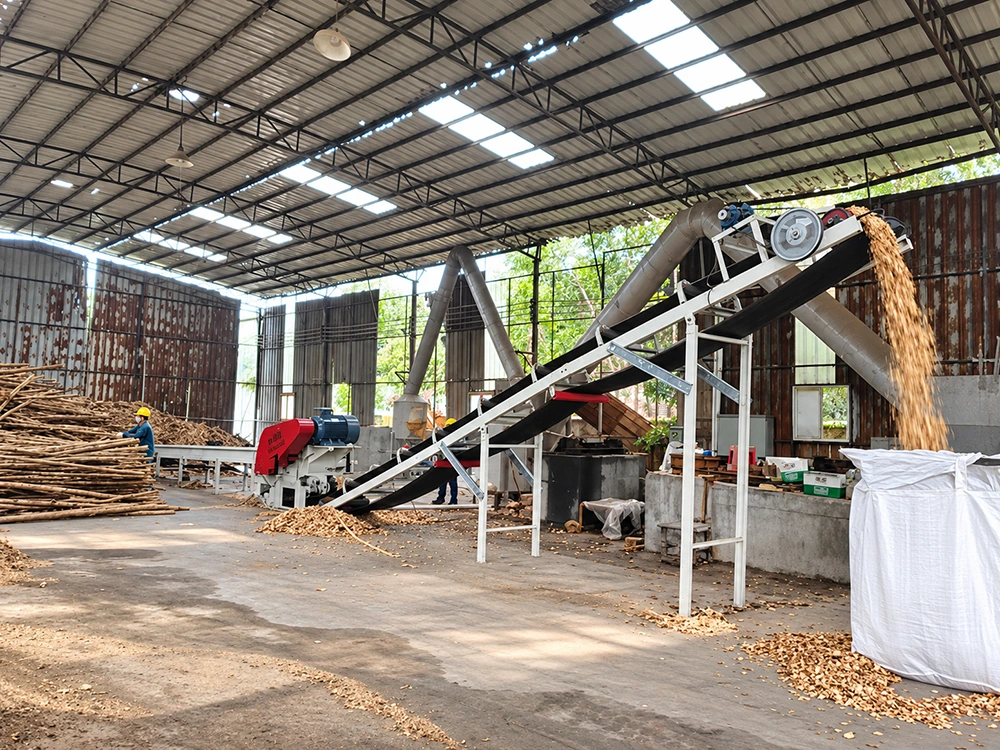
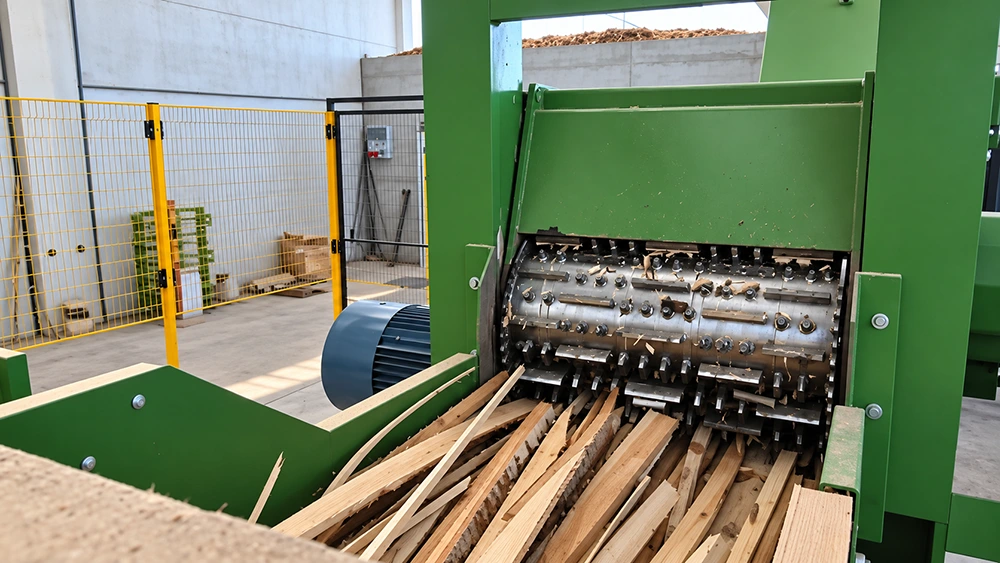
Shred uses a knife roller with flying knives and a hydraulic feeding system to pull irregular wood feedstock into the cutting zone. The selected gallery images show the guarded knife rotor, cutting tools, inclined conveying, ducting, and bulk material discharge used around an industrial wood chipping line. The available electric stationary configurations are 45 kW at 4–5 t/h, 55 kW at 6–8 t/h, and 110 kW at 8–12 t/h. For a medium presswood pallet plant, the 6–8 t/h and 8–12 t/h ranges are the relevant planning bands, but the final selection should be checked against wood species, moisture, density, working hours, and measured wood consumption. The first-stage output is controlled at about 30–35 mm; final 5–10 mm or smaller material is produced by the downstream hammer mill, so the drum chipper and hammer mill remain two linked stages rather than substitutes.
The Result: A More Deliberate Feed Basis for Expansion
Matching the chipping capacity to real material demand gives the hammer mill and dryer a steadier upstream supply, while more uniform first-stage chips give the next size-reduction step a clearer feed basis. This does not replace a complete production-line calculation, and it does not promise a fixed output independent of feed conditions. It gives the plant a defined starting point for capacity calculation, chip preparation, downstream milling, and raw material self-supply. If you are planning a presswood pallet production line or upgrading an existing wood waste recycling line, send your wood consumption, feedstock description, moisture range, working hours, and target output to EMP for a Shred capacity review.
- The article explains the customer bottleneck, the limits of outsourcing wood chips and undersized chippers, and the role of Shred as raw material preparation equipment.
- The article uses the 45, 55, and 110 kW options with their stated 4–5, 6–8, and 8–12 t/h ranges, and states that capacity selection must follow actual wood consumption.
- The article distinguishes 30–35 mm first-stage chips from the final 5–10 mm or smaller particle size made by the downstream hammer mill.
- The body includes the required contact call to action and uses the selected Shred gallery images as machine and output evidence.


