Drum Wood Chipper Machine | Chip Size Consistency for Boiler Fuel
The Buyer Behind the Order Is Paying for Steady Steam, Not for Tonnage
A fuel supplier does not sell wood chips, it sells combustion stability, and inside a boiler fuel contract the number that decides it is chip size distribution inside a window of roughly 25 to 50 mm, about 1 to 2 inch. When chips arrive from several yards and several machines, oversize pieces and fines travel in the same load, the boiler feed rate swings, and the buyer stops calling about tonnage and starts calling about steam pressure. This page follows one fuel yard from that churn problem through the stage that actually sets particle length: the Shred drum wood chipper machine, an industrial wood chipper built in 45 kW, 55 kW and 110 kW versions at 4 to 5 tph, 6 to 8 tph and 8 to 12 tph, producing a controllable first-stage chip of about 30 to 35 mm inside the buyer's 25 to 50 mm window. The boundary is stated plainly here as well: the drum type wood chipper holds chip length uniform and controllable, while the final graded window is set by the customer's own screening stage and boiler specification.
Why Outsourced Chips, a Hammer Mill Alone or a Mobile Chipper Cannot Hold a Size Window
The old route on a fuel yard is almost always one of three, and each one fails at the same place. The first is buying chips in from other yards. That route puts the size curve entirely in someone else's hands: whatever knife condition, screen and species mix that yard happened to run that week is what the boiler receives, and the fuel supplier carries the complaint without controlling the cause. The second is running the wood through a hammer mill with no chipping stage ahead of it. A hammer mill reduces by impact, so a mixed infeed of branches, slabs and offcuts comes out as a wide curve with a large fines fraction and a tail of long, uncut sticks that were never severed to length. The third is a mobile diesel chipper, which is a good tool on a landing but a poor production stage: its output is set by whatever knife gap and screen that particular unit carries, it moves away when the job ends, and it is not sized to feed a plant continuously. All three old solutions share one gap: nothing in the chain is dedicated to setting chip length. The yard then pays for it twice, first in re-screening and rejected loads, and second in the thing that is hardest to buy back, the buyer's confidence that next month's load will behave like this month's load.
What the Drum Chipper Actually Controls: Knife Roller, Fly Knife, Feed Rollers and the Chip Screen
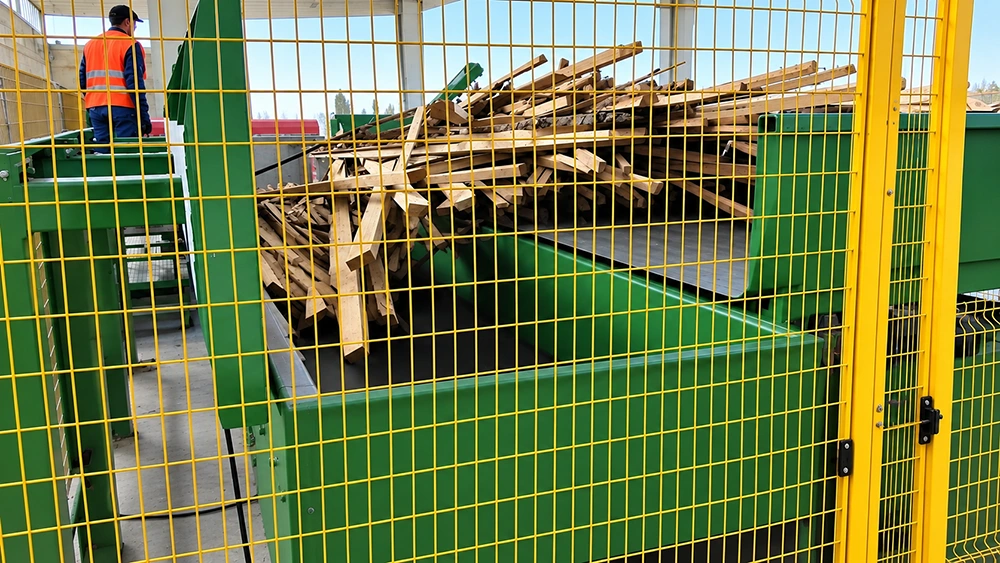
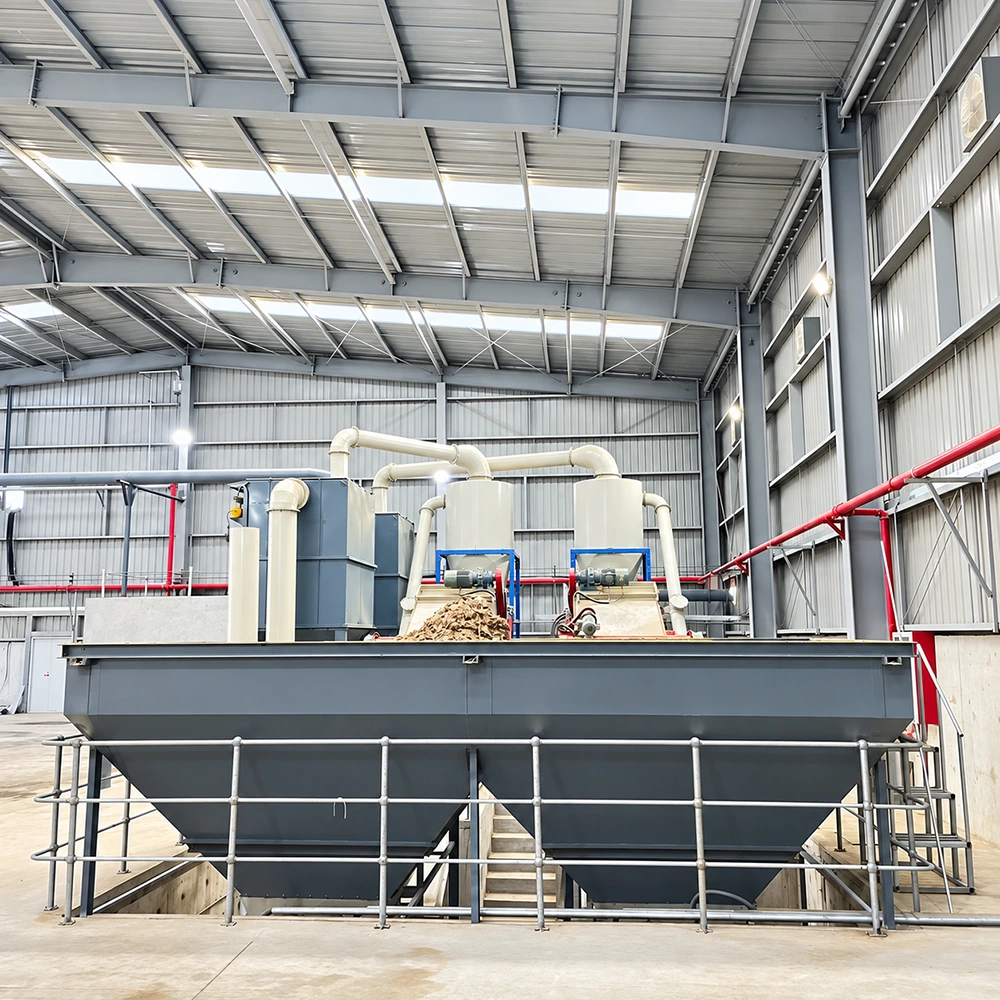
A drum chipper sets chip length by cutting, and the cutting is mechanical and visible. Material is forced into the housing by a hydraulic feeding system with an upper and a lower feed roller, the upper roller floating within a range so different thicknesses of branch, slab and offcut are held instead of bouncing. The knife roller then carries the fly knife, fixed with dedicated bolts and clamping blocks, and the counter knife or bed knife sets the cut that severs each piece to length. Because length comes from the cut rather than from a screen alone, chip length is adjustable and repeatable. Inside the housing a chip screen closes the loop: chips that pass fall through, and anything still oversize stays in the machine for another pass instead of leaving in the load. The published platform covers three sizes. The X-215 runs a 600 mm knife roller with a 400 x 180 mm feed inlet, a maximum feed diameter of 160 mm, a 45 kW main motor and 4 to 5 t/h. The X-216 runs a 650 mm knife roller with a 540 x 240 mm feed inlet, a maximum feed diameter of 200 mm, a 55 kW main motor and 6 to 8 t/h. The X-218 runs an 800 mm knife roller with a 680 x 310 mm feed inlet, a maximum feed diameter of 300 mm, a 110 kW main motor and 8 to 12 t/h. Knife roller speed is 590 rpm on the X-215 and X-216 and 650 rpm on the X-218, with feed motors of 2.2, 3 and 4 kW times two. The housing is a welded high-strength steel structure with a discharge screen and conveyor belt at the outlet. The electrical side is 380 V with a soft-start control cabinet, variable-frequency feed speed adjustment and wireless remote start and stop. Where EMP has no published test data, no figure is invented here, and the field photos support only what they show: the feed hopper and its safety guarding carrying a timber load, and the discharge side with its collection hoppers, ducting and guardrails.
What Changes at the Fuel Yard, and What Stays the Buyer's Decision
The result the fuel yard is buying is one stage that owns particle length. Instead of receiving whatever curve a yard happened to produce, the supplier cuts branches, slabs, offcuts and small diameter logs into a controllable first-stage chip of about 30 to 35 mm, which sits inside the 25 to 50 mm window a boiler fuel buyer specifies, and the oversize tail that used to reach the boiler is recirculated at the chip screen rather than shipped. Steady chip length means a steadier feed rate at the furnace, fewer firing rate corrections for the boiler operator, fewer complaints reaching the fuel supplier, and a renewal conversation that is about volume and price instead of about quality claims. Three tiers also mean the fuel yard does not have to over-buy to hold the window: the same wood chipper machine platform steps from 4 to 5 tph on the X-215 through 6 to 8 tph on the X-216 to 8 to 12 tph on the X-218, so a chipping plant can start at the tier its order book supports and add capacity in a second unit or a larger model later without changing the cutting principle or the chip window. Self-supplying chips from low-cost branch wood, slabs and used offcuts instead of buying chips in also moves the raw material margin back to the fuel supplier. Two boundaries belong in the same paragraph as the result. First, 30 to 35 mm is the first-stage chip leaving the drum chipper, and the final graded window is set by the customer's screening stage and by the boiler specification, so the specification of the finished fuel stays a joint decision rather than a single machine promise. Second, the platform is stated as uniform and controllable chip length, not as a guarantee of one fixed particle size. Capacity figures depend on wood species, moisture content, density, chip length and continuous feeding, and holding the window in service depends on knife condition and knife gap adjustment, which is why spare knives, commissioning and after-sales support belong in the same buying decision as the machine.
- Uses only EMP-published parameters for X-215, X-216 and X-218; no weight, dimension, noise, blade material or price figure is invented
- States 30 to 35 mm as first-stage chip length and leaves final grading to the customer's screening stage and boiler specification
- Makes no CE certification, metal removal, nail protection, no-foundation or fixed particle size guarantee claim
- Both images are EMP Shred designer-gallery assets used with their indexed English ALT text


