Multi-Plant Fleet Standard
The Setup Being Replaced: One Site at a Time
A fuel supplier that delivers into several plants does not buy one machine, it buys a repeatable one. When the group behind it is publicly listed, the chipping stage has to be standard across sites, maintainable by the local team, and recoverable from a spare part that reaches the plant in days rather than weeks. This page follows that requirement through an industrial wood chipper decision: a drum type wood chipper at 45 kW, 55 kW or 110 kW covering 4 to 5, 6 to 8 and 8 to 12 t/h, with a knife roller carrying bolt fixed fly knives, a chip screen inside the housing and a hydraulic feeding system, and it states plainly which parts of that standard the machine carries and which stay with the buyer.
Why a Drum Type Wood Chipper Fits a Multi-Plant Standard
A drum type wood chipper suits that requirement because the working parts are few and reachable. The cutting assembly is a knife roller carrying fly knives fixed with dedicated bolts and clamps. Feed is an upper and a lower feed roller driven in sync by chain and sprocket, with the upper roller floating within a range on the hydraulic feeding system, so changing material thickness does not stop the feed. Qualified chips pass the chip screen inside the housing and oversized pieces stay in the drum for another cut, which is why the output stream stays in a narrow band instead of drifting. The same platform is placed behind a biomass fuel preparation system, a wood chipper for pellet plant feedstock, or the first stage of a presswood pallet production line, so the internal standard does not change with the plant product. One platform covers three tiers, so a group can put 45 kW, 55 kW or 110 kW where the tonnage is and still keep one knife pattern, one screen specification and one spare list. The control cabinet is wired for linkage with the line PLC, so start and stop follow the same signal map as the chipper and hammer mill line, the drying stage and the press. That removes control points a person has to walk to; it does not remove the person.
Structure and Numbers on the Record
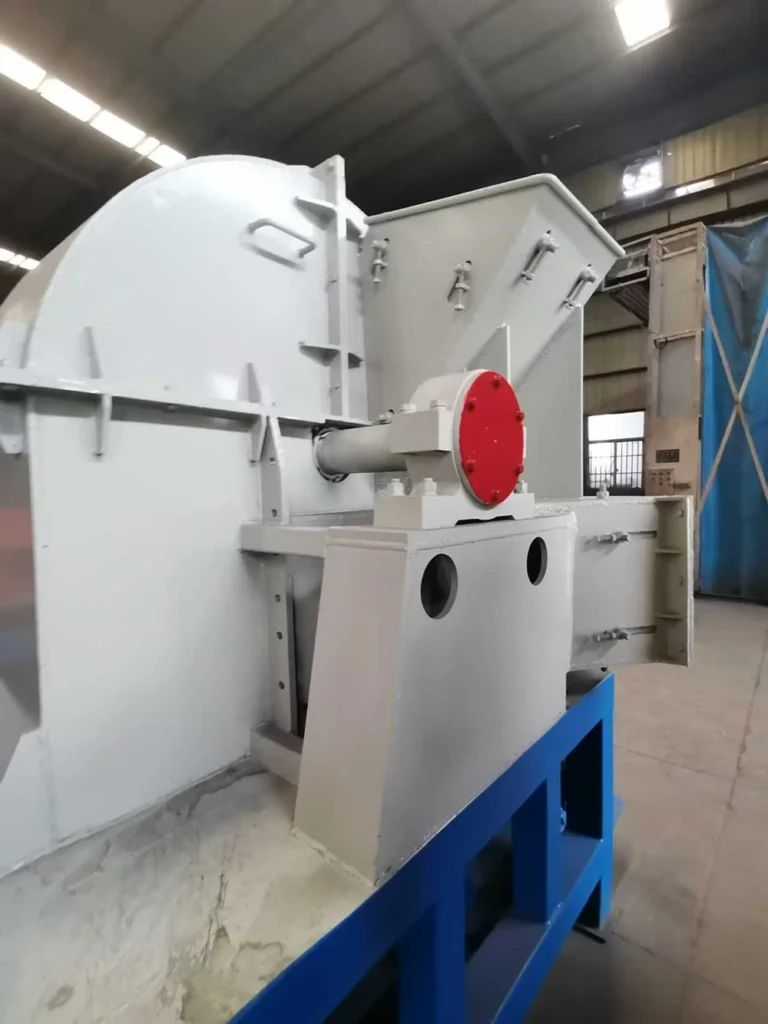
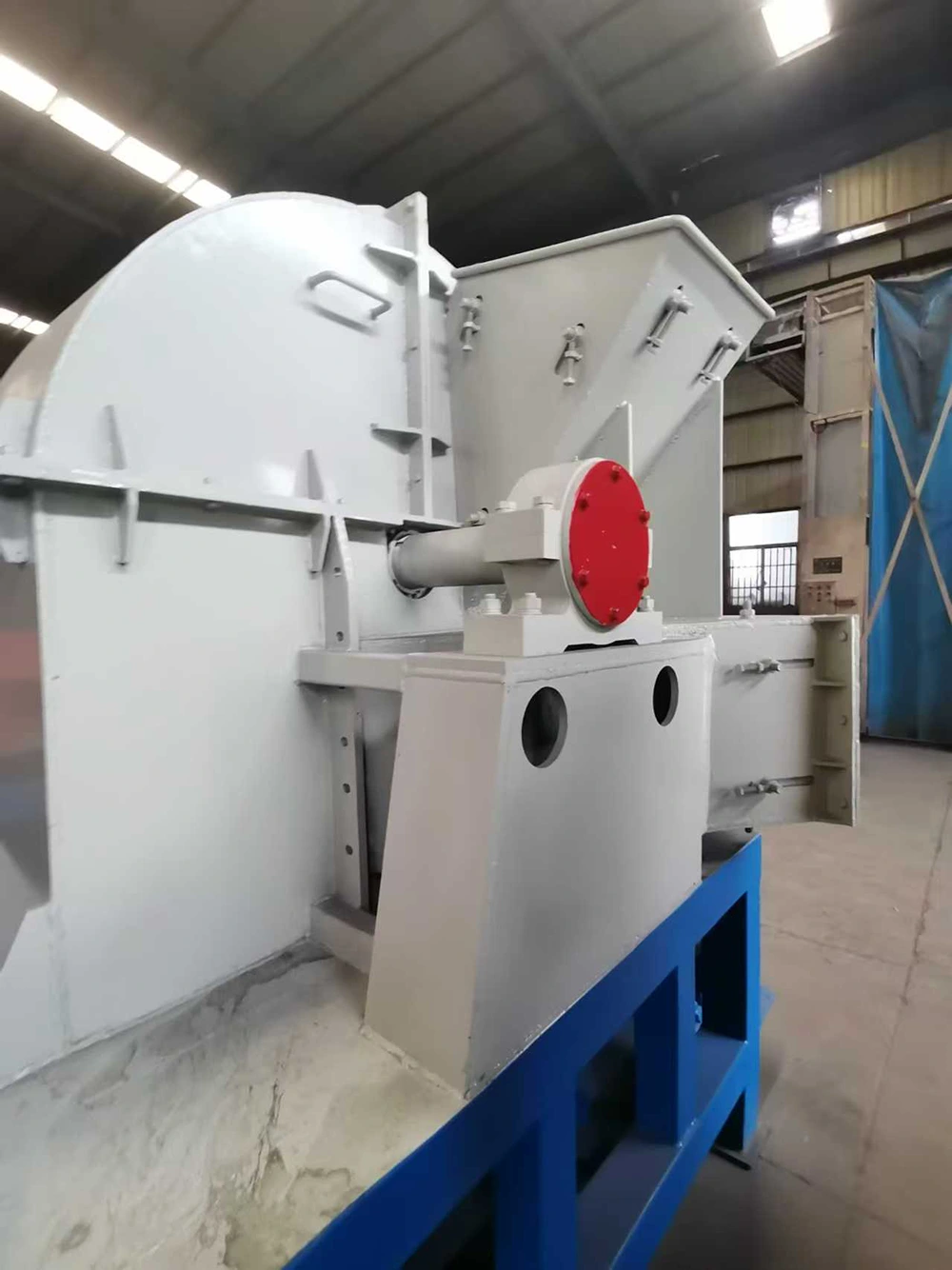
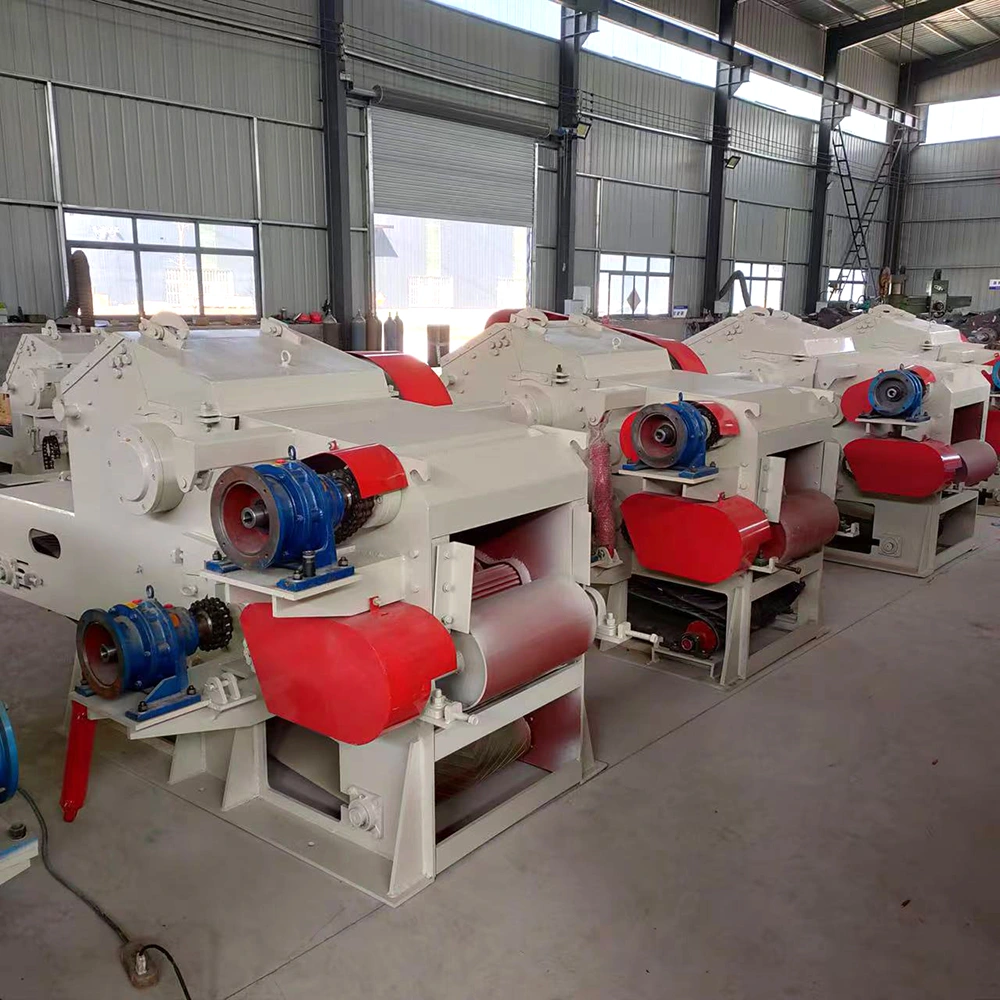
Published platform data: X-215 at 45 kW, feed opening 400 by 180 mm, maximum feed diameter 160 mm, 4 to 5 t/h. X-216 at 55 kW, feed opening 540 by 240 mm, maximum feed diameter 200 mm, 6 to 8 t/h. X-218 at 110 kW, feed opening 680 by 310 mm, maximum feed diameter 300 mm, 8 to 12 t/h. Listed total power is 49.4 kW, 61 kW and 118 kW, chip length is about 35 mm, the housing is a welded high strength steel structure, and the machine is supplied with a discharge screen and a conveyor. Both 30 to 35 mm chip length and the 4 to 5, 6 to 8 and 8 to 12 t/h figures are quoted on the platform's own basis and are not comparable across species, moisture, density or continuous feed conditions. The two photographs on this page are factory build photographs from the Shred programme: one shows machines built to the same pattern standing side by side, the other shows the hinged access panel and the drive end cover on the housing. Neither image confirms a model, a capacity or a knife specification. Still to be fixed by engineering before a purchase order: machine weight, overall dimensions, the full voltage and frequency schedule, hydraulic pump motor power, noise level, screen aperture, knife material and hardness, packing volume and container loading, and the test basis behind every capacity number.
What One Standard Delivers, and What It Does Not
What a single standard delivers is recovery speed. One knife pattern means one chipper knife sharpening routine and one knife gap adjustment procedure written into the operation manual. One chipper screen replacement part number and one bearing specification mean a drum chipper spare parts list that a plant can hold on site and a group can compare across sites, with fly knives, bearings and screens supplied by EMP. Wood chipper installation service and on site commissioning by overseas engineers take the first start up off the local maintenance team, and the manual carries the routine afterwards. Two boundaries stay on the buyer side. First, a drum chipper still needs inspection rounds: bearing temperature, knife condition, feed roller tracking and screen wear are still checked by a person on a schedule, and we do not claim an unmanned chipping stage. Second, a group level spare parts store across several plants is the customer's own operating decision; EMP supplies the list and the parts, not the warehouse policy. Used together, one knife standard, one screen number and one spare list are what turn a four plant fleet from four machine histories into one maintainable standard.
- Published parameters only: feed opening, maximum feed diameter, motor power and t/h tiers taken from the product record
- Wear and service path named without invention: fly knife, knife roller, chip screen, bearing, sharpening routine
- Boundaries stated: single machine still needs inspection rounds, no unmanned claim, no group spare store promised
- Scenario and structure terms placed in body copy: drum type wood chipper, hydraulic feeding system, knife roller, chip screen, biomass fuel preparation system, presswood pallet production line


