Per-ton processing cost against coal
A fuel supplier sells a per-ton number, not a machine specification
A biomass fuel plant competes against coal on one number: cost per ton delivered, and the chipping stage sets the first part of it. A drum wood chipper machine at 45, 55 or 110 kW, covering 4 to 5, 6 to 8 and 8 to 12 tonnes per hour, is the unit that turns low-cost branch wood, slabs and pallet residue into a controllable 30 to 35 mm chip, so the plant stops buying chips on the spot market and starts pricing its own feedstock. This page follows one per-ton cost argument through the machine structure, the published parameters, and the numbers EMP does not publish.
The old arrangement: buy chips on the spot market, or buy more line than the plant can sell
The default route for a fuel plant without a chipping stage is to buy wood chips from yards. It works until it does not. Chip length arrives in whatever grade the yard had that week, moisture varies lot to lot, and the price moves with the same market the plant is trying to sell into. The hammer mill downstream then absorbs the variance: harder material, more hours at the mill, more power per finished ton, and a reject rate that shows up in the boiler or the pellet press rather than in the chipper.
The opposite mistake is scale. A plant that buys a turnkey line sized for a much larger throughput carries depreciation and floor space it cannot fill, so cost per ton rises before the first chip is made. A plant that buys a machine too small runs the line below the tonnage it was sold on, and pays for the shortfall in overtime and in outside chips bought back at retail.
Why the Shred drum wood chipper machine fits the per-ton argument
The Shred platform is an electric, stationary drum wood chipper machine sold in three tiers: X-215 at 45 kW, X-216 at 55 kW and X-218 at 110 kW, covering 4 to 5, 6 to 8 and 8 to 12 tonnes per hour. Those are the two figures a cost per ton calculation actually needs, because tonnes per hour and installed kilowatts let a plant compute energy per ton on its own tariff instead of accepting someone else's estimate. The hydraulic feeding system and the feed roller keep the material moving continuously, so the drive works at its rated rate rather than stalling and restarting, and continuous cutting is what holds energy per ton down across a shift.
Chip quality is the second half of the argument. A knife roller with bolted fly knives and the chip screen inside the housing hold a controllable first-stage chip of about 30 to 35 mm. That matters twice: consistent chip length gives the hammer mill, dryer and press ahead of it a steadier load, which reduces the power and reject cost carried by every finished ton, and it reduces the unplanned stops that otherwise appear as lost tonnage in the monthly number. A wood chipper for a pellet plant or a biomass fuel preparation system is therefore a cost instrument, not just a size reduction step.
Structure and numbers a buyer can check, and the numbers EMP does not publish
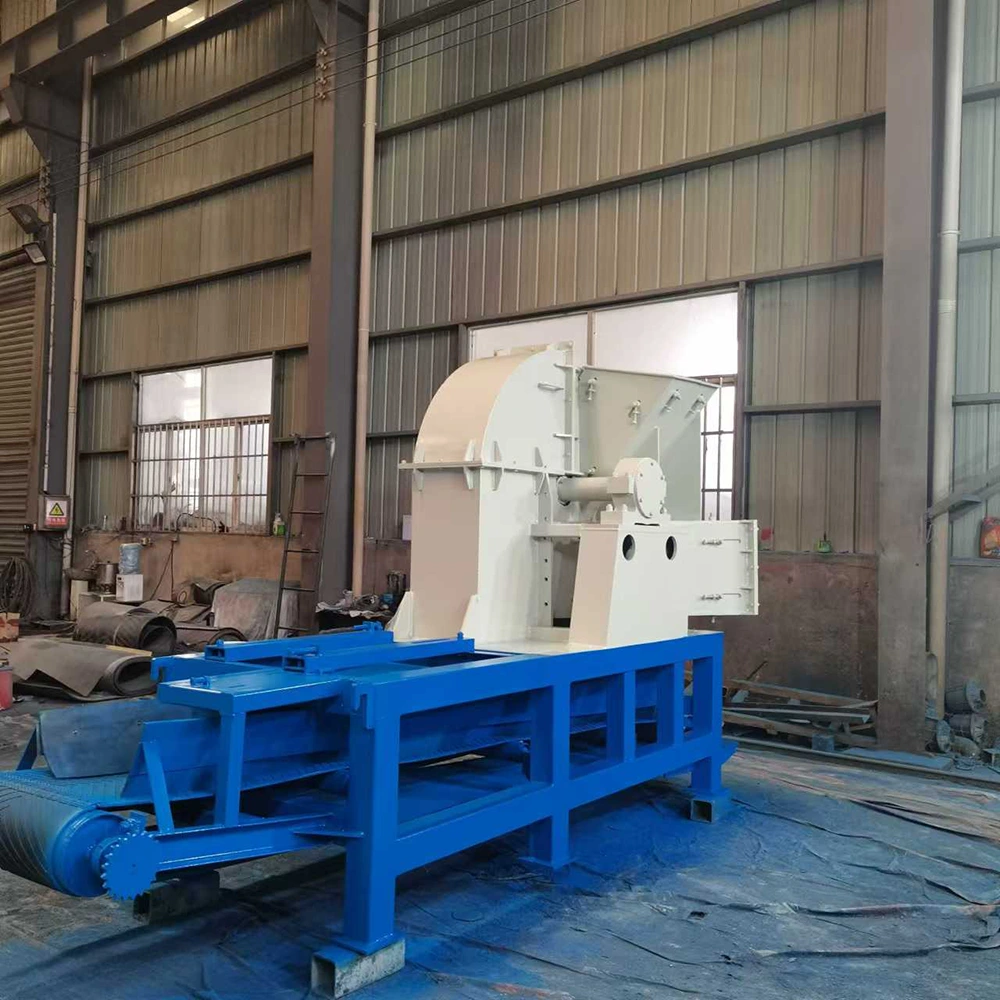
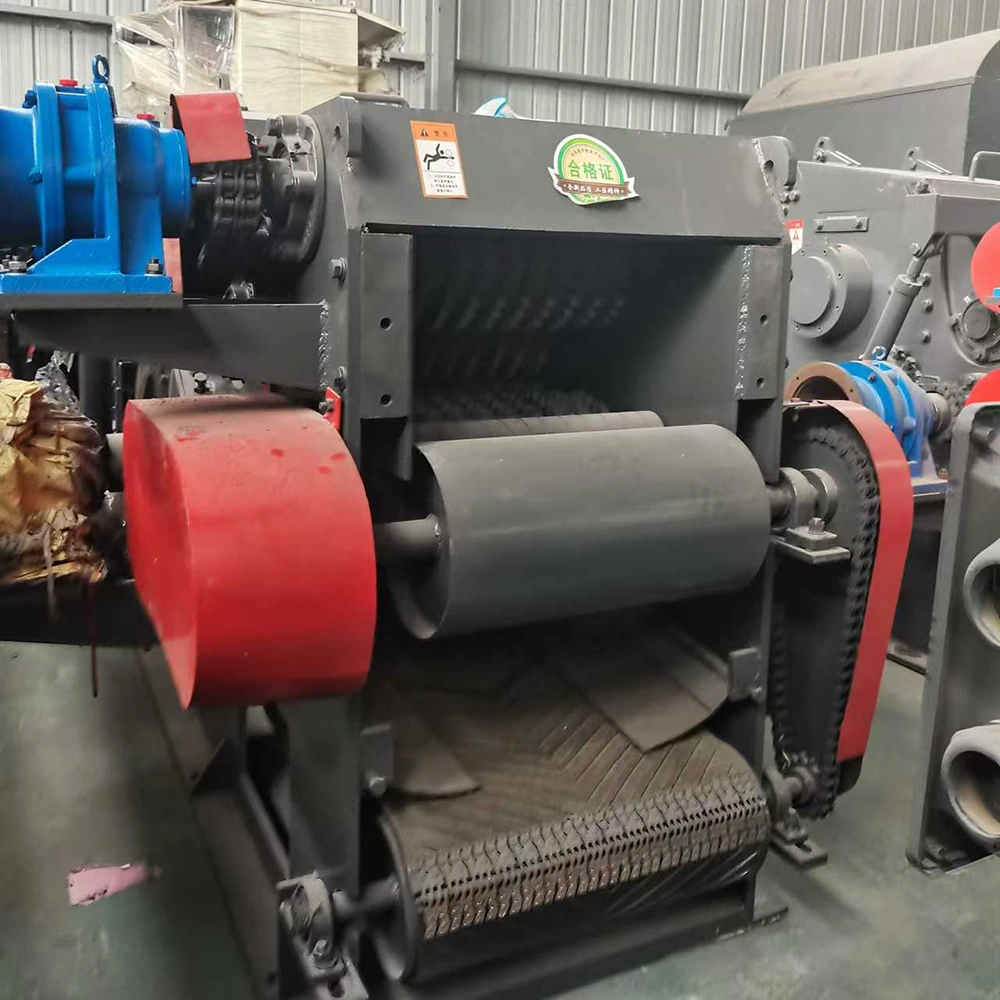
The images on this page show the parts that carry that duty: the enclosed welded housing over the working chamber, the horizontal roller and its drive sprocket on a welded support frame, and the working chamber with its chain drive, guards and discharge conveyor. These are the components that decide whether the machine holds tonnage across a shift, and they are the components the wear schedule is built around.
What EMP publishes is the platform: the three power tiers, the three capacity bands and the chip range, plus a spare parts route of fly knives, chip screen plates and bearings, and overseas engineer installation and commissioning. What EMP does not publish is a kilowatt-hour per ton test figure, and this page does not invent one. A plant should take the power rating and the tonnage band, apply its own tariff and its own feedstock, and compute its own number. Machine weight, overall dimensions, voltage and frequency, fly knife count, noise level and packing volume are also not published yet, so they sit on the engineering confirmation list. The result the buyer is entitled to expect is narrower than a marketing claim and more useful: chips produced at the plant gate from branch wood, slabs and residue, at a feedstock cost the plant controls, with a payback period it can calculate itself.
- Stated: the Shred drum wood chipper machine covers 45, 55 and 110 kW across the X-215, X-216 and X-218 tiers, with published capacity bands of 4 to 5, 6 to 8 and 8 to 12 tonnes per hour and a controllable first-stage chip of about 30 to 35 mm.
- Not stated: EMP publishes no kilowatt-hour per ton figure and no efficiency multiplier, so energy per ton and total processing cost per ton are calculated by the plant from its own power tariff, feedstock and shift pattern.
- Not stated: duty cycle, up-time, manning and knife life depend on feedstock, contamination and operating discipline, so they are confirmed case by case on the engineering list rather than presented as guaranteed values.
- Boundary: a loss in a biomass fuel business is also driven by feedstock price, inland freight and exchange rates, so the chipping stage is one contributor to cost per ton and not the single cause.


