ESG, ISO and FSC evidence at the chipping stage
The buying scene: a listed supplier carrying an ESG, ISO and FSC file
A publicly listed fuel supplier does not sell wood chips, it sells a disclosed tonnage, and the chipping stage is where that tonnage either gets an evidence trail or loses one. This page follows one such supplier, from chips bought on the spot market with no intake record, through the Shred drum wood chipper machine at 45, 55 or 110 kW covering 4 to 5, 6 to 8 and 8 to 12 tonnes per hour with a controllable 30 to 35 mm first-stage chip, to the boundary that has to be written down honestly: a stationary electric wood chipper can hold chip length and carry the machine documentation, while the ESG, ISO or FSC disclosure itself stays the customer's own work, and a CE certificate for Shred is not something EMP currently publishes.
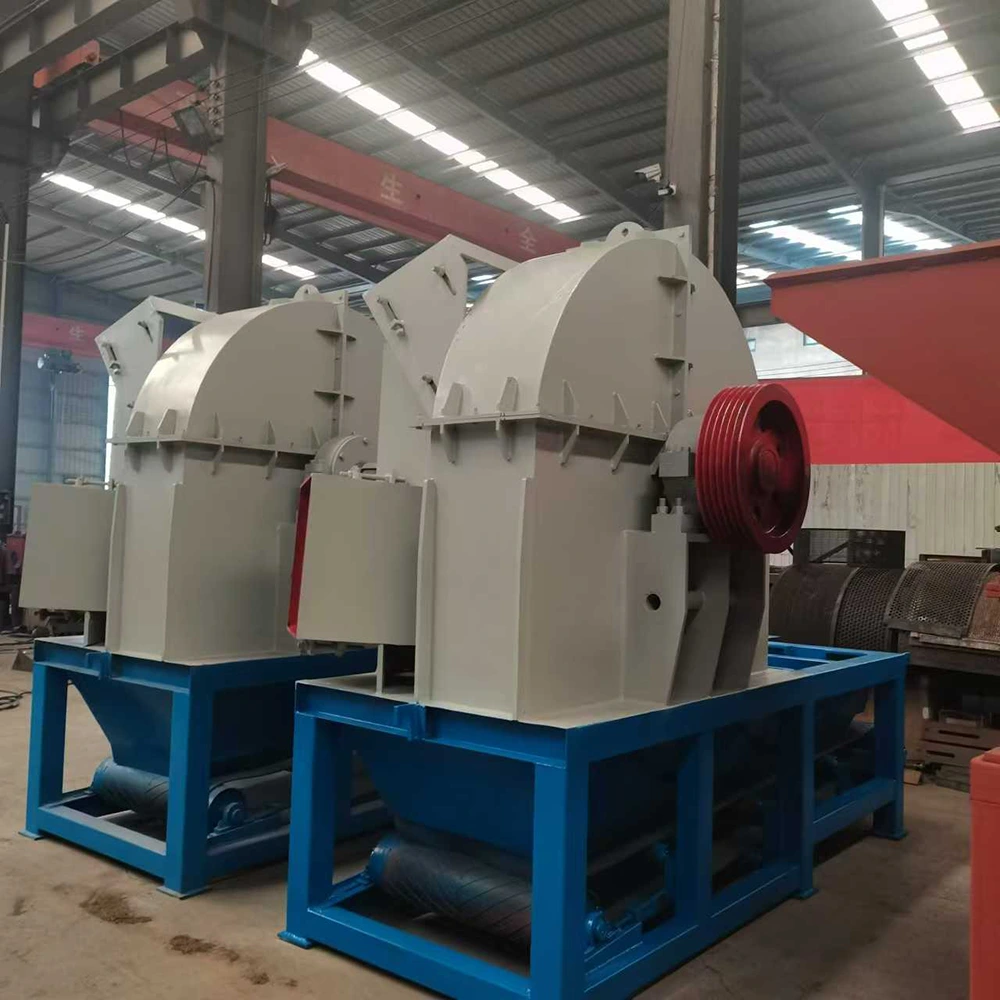
The legacy setup: bought chips and a hammer mill with nothing ahead of it
The legacy setup on most of these sites is bought chips plus a hammer mill with no chipping stage ahead of it, and it fails the file in three places. Chips arrive from several yards in different species, diameters and moisture levels, so size distribution moves between lots and the intake record at the plant gate cannot describe the material that was actually processed. With only a hammer mill in the line, the mill absorbs that variation: kWh per ton swings, screen and knife costs rise, and the drying stage in front of the press chases a moving moisture target. A mobile diesel chipper that moves between yards leaves a thin paper trail, because the machine is on site for a day and the tonnage is written down afterwards. None of this shows up as a machine fault. It shows up as an open audit question about the process, and open questions are what a disclosure file cannot carry.
Why a stationary drum wood chipper machine fits an evidence file
The Shred platform is a stationary electric drum wood chipper machine, and that is the whole reason it fits an evidence file. The X-215, X-216 and X-218 run 45 kW, 55 kW and 110 kW with feed inlets of 400 by 180 mm, 540 by 240 mm and 680 by 310 mm, maximum feed diameters of 160 mm, 200 mm and 300 mm, and rated output of 4 to 5, 6 to 8 and 8 to 12 tonnes per hour. Chip length is a controllable first-stage cut of roughly 30 to 35 mm, set by the knife roller and its bolted fly knives against the counter knife, with the in-housing chip screen returning oversize pieces to the cutting chamber through the hydraulic feeding system and its feed rollers. Because the machine is fixed, electrically driven and started from a soft-start panel, the settings that produced a lot can be written down, which is what an ISO or FSC reviewer reads. The boundary matters as much as the claim: the chipper sets particle length, not purity, so nails, staples, wire and grit still leave the discharge end inside the chips, and a separate upstream magnetic separation and destoning stage owns that part of the process. The machine ships with an operation manual and safety documentation that a buyer can attach to its own system.
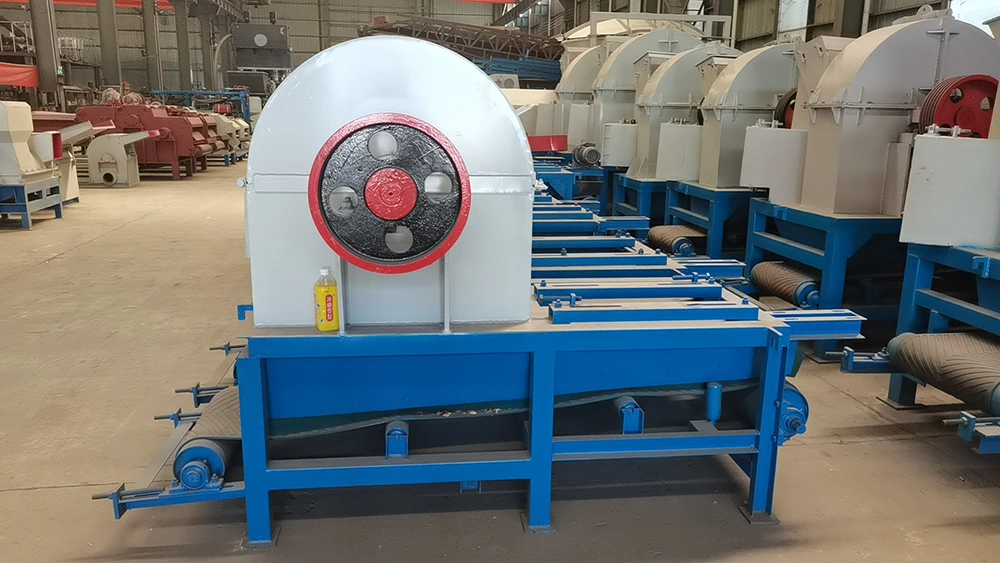
The result at the gate, and the honest line on CE and the 2027 EU rulebook
At the gate the result is a chipping stage the plant can describe: one machine type, one nominal chip length, one recorded setting per shift, and chips made from the branch wood, slabs and used formwork the plant already owns instead of a spot-market purchase. On the compliance side EMP stays deliberately narrow. The Thai and wider GCC route does not require CE, so a local buyer pays for capacity, uptime and delivery rather than for a marking. Where the fuel or the packaging enters the European Union the CE route applies, Machinery Directive 2006/42/EC is repealed on 20 January 2027 and replaced by Regulation (EU) 2023/1230, and EMP can support that documentation route and track the switch with the project. What EMP does not do is claim standing compliance: no CE certificate for Shred is published today, and whether EN 13525 covers a stationary mechanically fed machine of this class has to be confirmed by a compliance engineer on the project. The ESG, ISO and FSC disclosure remains the customer's own work; the equipment side carries stable chip output together with the guarding and the manual that go with it.
- Canonical product resolved as Shred and both images taken from the Shred designer gallery only
- Fixed renderer owns the section root, the emp-btn-primary CTA and the /contact/ link
- No CE certificate or standing compliance claim is made for Shred on this page
- Thai and GCC local routes are stated as not requiring CE, with the EU export and 2027 rulebook change kept separate


