Binder chemistry and compliance
Who is asking: a chemical, pharma or personal care shipper inside a customer sustainability assessment
A specialty chemical, pharmaceutical or personal care shipper that already runs REACH paperwork and answers a customer sustainability assessment does not buy a formaldehyde-free presswood pallet as a green gesture. It buys it because the pallet touches the cargo, and the binder inside the pallet is the one material nobody asks about until an audit does. This page follows that question from the shipper's loading bay to the actual resin, structure and document set behind the Ampallet molded wood pallet.
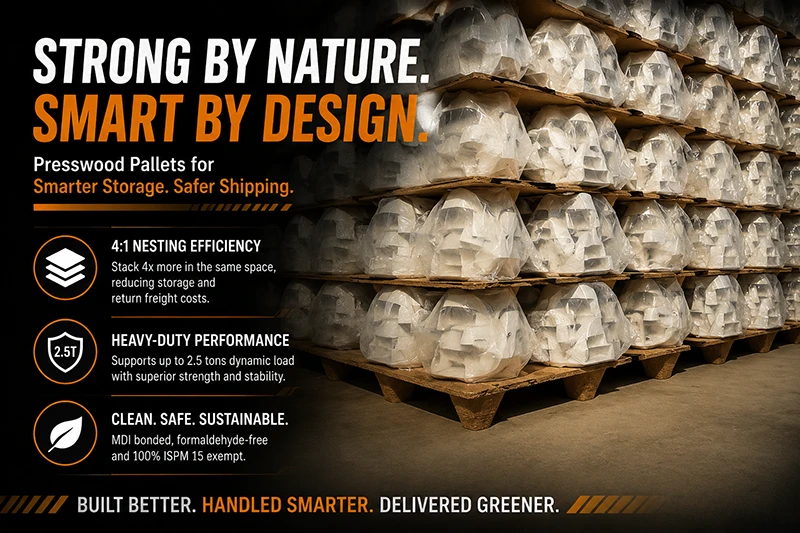
The pallet already on the spec sheet, and the two ways it fails the question
The incumbent is usually a heat treated solid wood pallet and its problem is procedural before it is chemical. ISPM 15 treatment, IPPC marking and the accompanying certificate stay attached to every consignment, and one missed mark is a detention, a re treatment or a rejection in the destination port. It is also physically rough: nails that lift, splinters, broken deck boards, a surface that scratches coated drums and snags FIBC fabric, which is why nail head and burr damage keeps coming back in drum and bulk bag claims. The second incumbent is worse because it hides: a pressed pallet made with a urea formaldehyde binder. A UF bonded board carries free formaldehyde that is commonly reported in the tens of milligrams per 100 g of board, it releases over time and faster in humid heat, and it swells and delaminates once it takes water. In a warehouse where customers handle cosmetic bases, pharmaceutical excipients and specialty chemicals, that pallet is a contamination path with a regulation attached to it. REACH restrictions and CARB limits on formaldehyde do not care that the pallet is cheap.
Why the binder decides the outcome, not the wood fibre
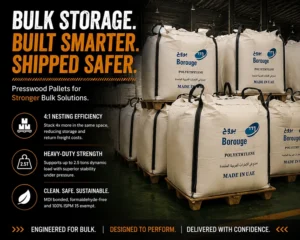
Ampallet molded wood pallets are bonded with MDI, a polyisocyanate adhesive, and the material sheet names that resin instead of a urea formaldehyde system. There is no formaldehyde in the binder to release, which is the mechanism behind the CARB NAF, no added formaldehyde, position the product is certified to, and it is why the pallet does not become a formaldehyde source in a closed container or a climate controlled store. MDI also cures by reacting with moisture rather than evaporating from it, so a pallet that takes water in a monsoon warehouse does not swell apart and does not start emitting later. For the shipper the practical result is a packaging line item that comes out of the assessment as documented material rather than an unknown: resin family stated, certification available on request, no fumigation treatment chemical on the pallet, and no formaldehyde pathway into the drum, the bulk bag or the carton sitting on the deck. The boundary is stated plainly: the pallet is not a substitute for the customer's own REACH registration and SDS obligations, and certification documents are supplied per product and plant as paperwork rather than implied by this page.
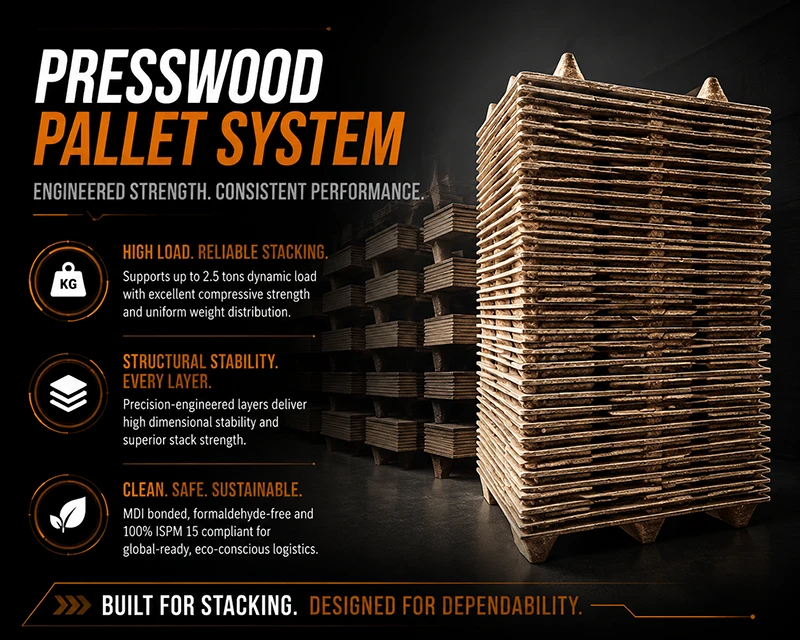
What the auditor can actually see: one piece deck, plus or minus 2 mm, four way entry, 4 to 1 nesting
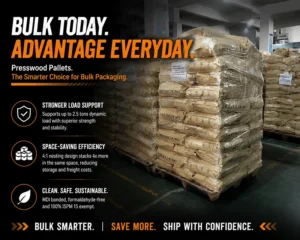
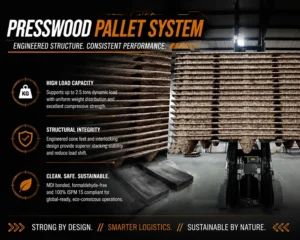
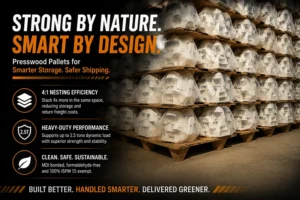
The resin answer survives only if the structure supports it, so the evidence sits in the mould. Wood fibre and MDI are pressed at 150 to 180 C on a 1600 ton hydraulic press into a one piece construction with no nails, no staples and no separate blocks, which is what makes a nail free deck possible in the first place. The moulded deck holds a flat contact plane to about plus or minus 2 mm, which matters for drum seating, for wrapping and for an AGV or palletising robot that reads a pallet by its edges. Load references are 2500 kg dynamic and 7000 kg static on the reference specification, in the 1200 x 1000 mm, 1200 x 800 mm and 1140 x 1140 mm formats, with four way entry, a nine leg base, guide slots for the forks and rounded corners that do not cut stretch film or FIBC webbing. Empty units nest at about 4 to 1 on a reference weight near 13 kg, so the same floor area holds roughly four times the pallets and the return load shrinks. Because the fibre is processed wood, the pallet is exempt from ISPM 15 marking, so the fumigation stage, the certificate and the port delay leave the shipment. That is the result the audit records: a nail free, formaldehyde free, fumigation free pallet under a regulated product, one piece from deck to foot, and a supplier who can answer the binder question with a document instead of a promise. Send the drum size, the load and the destination lane and the pallet specification is confirmed against them before anything is quoted.
- MDI binder named on the material sheet, with no urea formaldehyde resin in the pallet
- CARB NAF no added formaldehyde certification supplied as a document per product and plant
- Processed wood construction exempt from ISPM 15 treatment, marking and certification
- 2500 kg dynamic and 7000 kg static load references with a deck flatness of about plus or minus 2 mm on the reference specification