AutoML Molded Pallet Production Line
A Packaging Supplier With Steady Orders and No Press of Its Own
A packaging supplier can hold the customer relationship, the call-off schedule and the whole consumables basket and still hand the pallet line on every order to somebody else. This page follows that gap onto a presswood pallet machine: how an industrial pallet press machine turns bought-in pallet supply into in-house molded output, what a molded pallet production line actually contains from crushing and drying through glue mixing and hot pressing, and which demand, channel, utility and investment conditions a supplier should verify before quoting a molded pallet contract.
What Brokered Pallet Supply Costs Once the Order Gets Specific
The first cost of external supply is price exposure. A pallet resold from a yard carries that yard's lumber position, treatment booking and freight inside it, so a supplier quoting a twelve month programme is quoting a market rather than a cost. The second is specification control: a customer that wants a nail-free deck under bagged product, a nesting unit for an empty return leg, or a fumigation-free position for an export lane cannot be answered by a sawn timber line that has to be heat treated and stamped, and any change of size or load class becomes a re-quote rather than an adjustment. The third is capability: an order the outside plant cannot schedule in time is simply lost, and the pallet volume that was meant to widen the account ends up narrowing it.
Where a Molded Pallet Production Line Fits Beside the Existing Warehouse
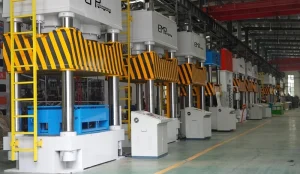
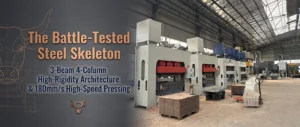
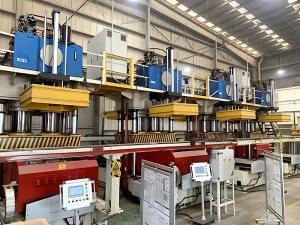
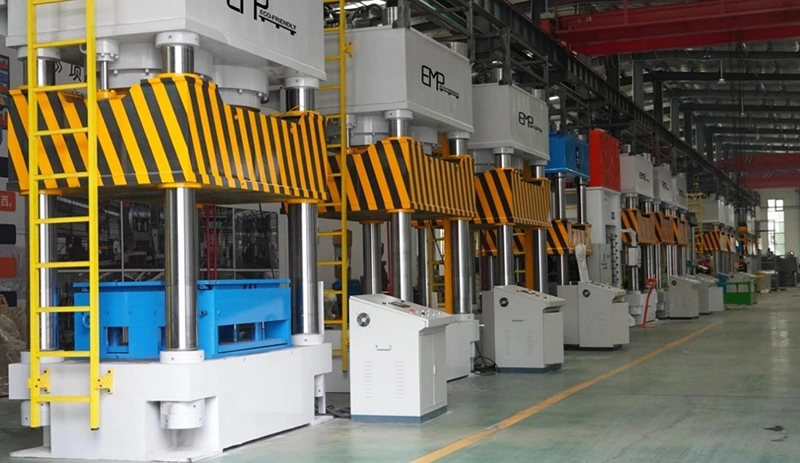
AutoML is a presswood pallet machine delivered as a project line, not a single press: crushing, drying, glue mixing, dosing and spreading, hot pressing, demolding and stacking engineered as one chain, and sold as a semi-automatic or a fully automatic configuration. That choice matters to a supplier because the automation boundary is the cost line: a semi-automatic line keeps the press and glue module and trims upstream and downstream handling in a lower labour cost market, while a fully automatic line moves spreading and take-out onto the line control. Reference project costing places a semi-automatic line near RMB 2 million and a fully automatic line near RMB 4 million, with press tonnage selected from 1200T, 1250T, 1600T, 1800T and 2200T tiers against pallet size, structure and load class.
What the Line Has to Prove Before the Supplier Quotes a Pallet Contract
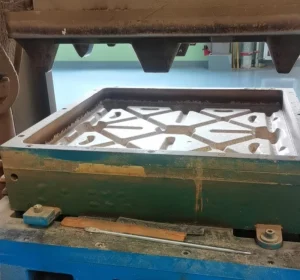
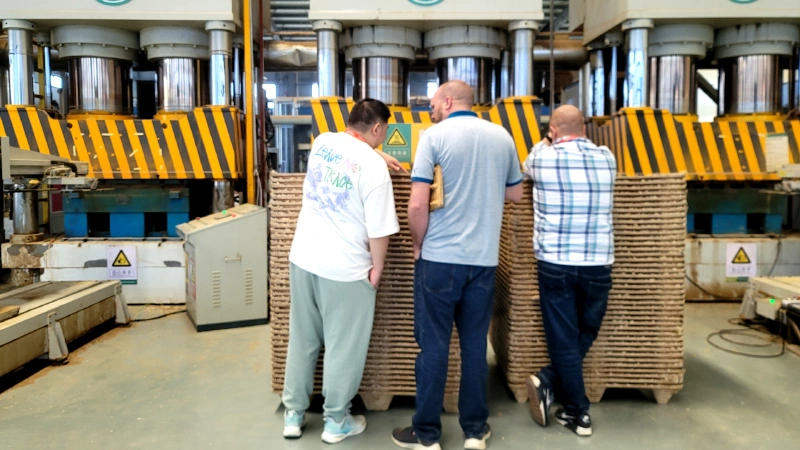
The evidence a supplier should read is on the line itself. Pressing runs at 150 to 180 degrees Celsius and 15 to 20 MPa on a cycle of about 180 to 240 seconds, raw material is prepared to roughly 5 to 30 mm length and 2 to 5 mm thickness, and finished density sits near 0.8 to 1.2 grams per cubic centimetre, which is what allows the same mold to deliver a repeatable one-piece body across a 1000 x 1000, 1100 x 1000, 1200 x 1000 or 1219 x 1016 footprint. The second image is the check that decides whether a pallet contract can be signed: a stack inspected for body tightness, edge burr and stack fit before units leave the plant. Four conditions still have to be verified on the supplier's own numbers: real pallet demand from existing accounts, a channel that can sell a molded unit, plant utilities and layout for a hot press line, and an investment case. Payback near 1.3 to 1.8 years appears in ideal project cases and extends toward three years, so it is a project calculation rather than a product claim. Moisture and glue ratio follow the chosen MDI, UF or PF system and trial data, load follows the confirmed mold specification, and a fumigation-free reading stays a destination rule and forwarder question. What the line changes, when those conditions hold, is the scope a supplier can offer: from packaging consumables only to a molded pallet it makes, quotes and delivers itself.
- Angle is a packaging supplier adding in-house molded pallet capability, not a repeat of the earlier make-or-buy price angle or the lightweight spec-change angle
- Every section body is plain text only, with no HTML tags, attributes, Markdown or angle brackets, and no H1 because the Neve post template owns it
- Both images come from the resolved AutoML designer gallery with image index alt text carrying the presswood pallet machine keyword, and the CTA points to /contact/ inside the emp-section emp-blog-p0 emp-blog-p0–tw-layout root
- Traffic profile terms are used naturally in the title, SEO title, slug, H1, summary and image alt: presswood pallet machine, industrial pallet press machine, molded pallet production line