Process control · AutoML
One Pallet Spec, Three Shifts, Three Different Batches
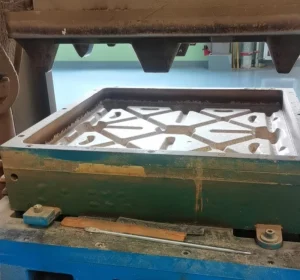
A plant that runs one fixed 1200 x 1000 nine-leg pallet, one mold and one recipe can still produce three different batches in three shifts: pallet mass drifts a few hundred grams each way, the leg walls thin out, deck corners read light and the stack that leaves the press is no longer the stack that left it at 06:00. On a presswood pallet machine line the tonnage and the tooling never moved, so the drift came from the two feeding actions a person still owns, the fibre load into the cavity and the glue charge in the mixer. AutoML is EMP's molded pallet production line, and its weighing and dosing spreader together with its metered glue mixing move those two actions from operator estimation to equipment control, on a 1600T class hot press at 150 to 180 degrees Celsius, 15 to 20 MPa and a 180 to 240 second cycle, with moisture, glue ratio and reject improvement confirmed per project against the customer's own trial data rather than assumed.
Why a Bigger Traditional Press Does Not Answer a Batching Problem
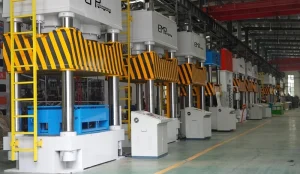
The instinct is to buy tonnage, and that is why so many plants already own a 1600T hydraulic press and still have the problem. The press does its job: 150 to 180 degrees Celsius of platen heat, 15 to 20 MPa of moulding pressure, 180 to 240 seconds of clamp time, finished density somewhere in 0.8 to 1.2 grams per cubic centimetre when the load and the moisture are right. But a press can only densify what it was given. If the mat arrived 10 percent heavy the same pressure window produces a different glue fraction per kilo of fibre, and if it arrived 10 percent light the mould closes on a starved cavity and the leg section does not fill. The neighbouring mistake is to treat the same problem with a nailing line or a hand-spreading bench and a clipboard: a traditional pallet nailing machine, a wooden stringer pallet build or a hand-spreading table all make the operator's estimate the process specification, so the line is only as repeatable as the most experienced person on the shift, and the day that person takes leave the reject bin tells you. Buying a used pallet press does not change that either, because the estimation step travels with the operator. The variable that actually has to move is not pressure, it is how much fibre and how much resin enter the tool on each cycle, and whether that quantity is measured or guessed.
Where AutoML Puts Weighing and Dosing Under Equipment Control
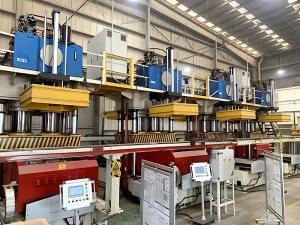
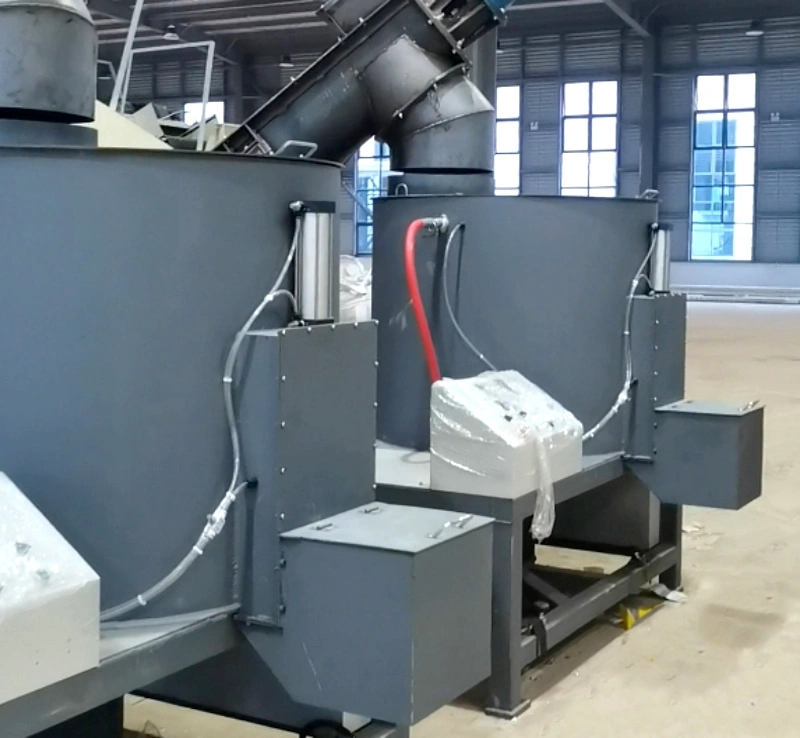
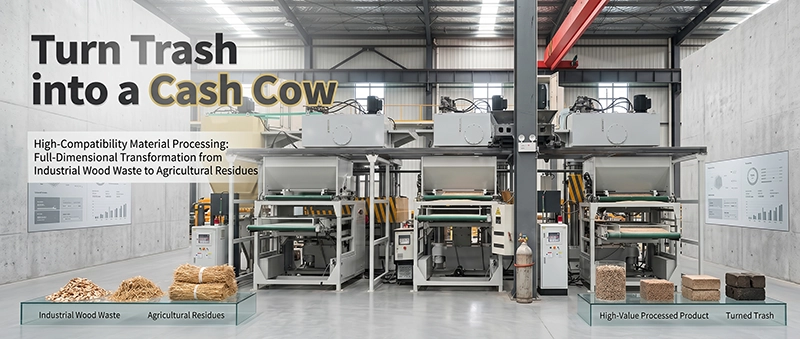
AutoML is a full chain rather than a single machine: wood waste crushing, drying, glue mixing, dosing and spreading, hot pressing, demolding and stacking, configured as a semi automatic pallet line or as an automated pallet manufacturing line depending on labour cost, layout, power capacity and target output. The two modules that answer this pain point sit at the mixer and above the mould. The glue stage is a metered mixer with pneumatic discharge gates and dosing screw conveyors, so the resin charge is a set quantity per batch instead of a visual judgement of how wet the fibre looks. The spreader stage is a rail mounted weighing and dosing spreader with belt feeders and hoppers, so the fibre load per cavity is delivered as a weighed quantity and laid out by the machine rather than tipped in by shovel. On the fully automatic configuration the line control owns the sequence from dosing through spreading, pressing, demolding and take-out, and the operator's role shifts to oversight, sampling and changeover. On the semi automatic configuration the core press and the glue module stay identical while part of the upstream and downstream handling is deliberately left manual, which is the honest configuration for a low labour cost market that cannot justify full automation. Either way, the two actions that cause batch drift are no longer estimates: they are setpoints that stay the same at 06:00 and at 22:00, and they are written down in the line control rather than in a shift handover note.
The Evidence on the Line, and the Limits That Must Be Measured on Your Own Site
The evidence to ask for is process evidence, not a sales sentence. On this line it shows up as a PLC interface at the press carrying temperature and displacement parameters, a pressing force and displacement curve recorded per cycle, steam release at mould hold and pressure release, a dosing and spreading group with visible weighing feeders, and a finished stack inspection where leg fill, burr control and stacking fit are checked on the pallet itself. Read together, those records let a plant manager trace a suspect batch back to a cycle instead of blaming a shift, which is the practical version of wood waste to pallet conversion at industrial scale. The limits have to be stated plainly, because a process claim without them is a promise. Moisture still has to be matched to the glue system from trial data rather than copied from a datasheet, so the brief cites the ranges as references, MDI commonly around 8 to 10 percent and UF or PF around 10 to 12 percent, both confirmed in the technical agreement. Press tonnage, mould design and cycle time are fixed per project against pallet size, structure and load class, across the 1200T, 1250T, 1600T, 1800T and 2200T tiers. Finished density at 0.8 to 1.2 grams per cubic centimetre is a target window, not a guarantee carved on the frame. Servo hydraulic energy saving of 25 to 55 percent stays a file claim to be validated on your utility meter. And the number buyers most want, the reject and rework reduction, is not a published constant: it has to be measured on the customer's own fibre, moisture, mould and crew over a defined trial period, because dosing control removes one documented source of variation and cannot remove wet raw material, wrong particle size or a poorly maintained mould. What the line does deliver is narrower and defensible: a nail free wooden pallet process in which the key feeding actions are repeatable by design, so the same pallet can be made again tomorrow without depending on who is standing at the spreader, and so a rework argument becomes a setpoint discussion with a force curve on screen.
- Weighing, dosing and glue metering are described as equipment-controlled setpoints, not operator estimates
- Moisture, glue ratio, tonnage, mould and cycle are stated as references confirmed per project in the technical agreement
- No reject rate, payback or output guarantee is claimed; improvement must be measured on the customer's own trial data
- Semi automatic versus fully automatic boundary is stated plainly against labour cost and budget reality