Pallet supply planning
Temporary Volume Arrives as a Date, Not as a Quantity
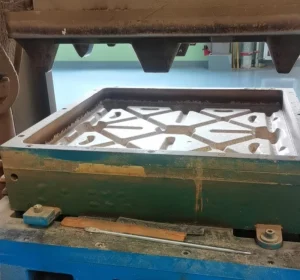
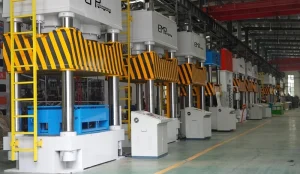
A customer calls with a pallet volume that was never in the forecast, and the answer sits in someone else's order book: the outside plant offers a slot, the slot moves with its own regular accounts, and a delivery date becomes a negotiation instead of a plan. This page follows that month onto an AutoML presswood pallet machine run as a molded pallet production line, where crushing, drying, glue mixing, weighing and dosing, hot pressing at 150 to 180 degrees Celsius and 15 to 20 MPa on a 180 to 240 second cycle, demolding and conveyor stacking all sit inside the plant's own shift plan, on press tiers from 1200T to 2200T with a 1600T class unit as the common reference. The limit is stated plainly: owning part of the output buys control over supply and over production sequence, while whether lead time actually shortens still has to be counted on fibre on hand, crew, order book and press hours per week.
What the Outside Plant Cannot Sell You: Priority
An external molded pallet or nailed wood pallet supplier can quote a piece price, a pallet specification and a rough lead time, but it cannot hand over its scheduling priority. When a short-notice request overlaps that plant's regular accounts, your tonnage is the order that moves, and it moves quietly: the slot slides a week, the reorder comes out with a deck that sits a millimetre or two differently from the approved sample, the heat treatment booking for a nailed wood consignment pushes the pickup, and the fumigation or ISPM-15 paperwork follows the chamber queue rather than your vessel. A buyer also inherits an uptime it cannot see, a rejects discussion it did not instrument, and a price that is renegotiated at every surge because the supplier knows the date is now urgent. Sales commitments then get written with a buffer the plant adds itself, and the buffer is paid for in stock, in expedited freight and in customers who learned not to trust the date.
Where a Presswood Pallet Machine Takes the Sequence Back
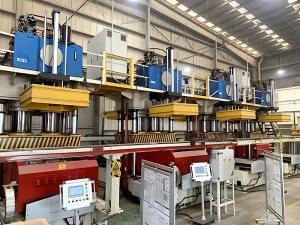
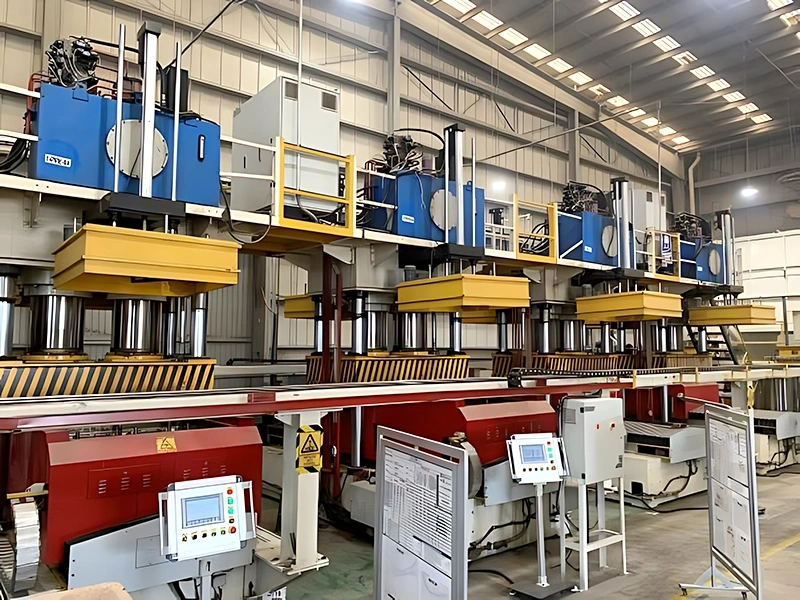
AutoML is configured as a molded pallet production line rather than a single press, so the stages that decide an output date are inside the plant's own plan: residue is crushed to a particle band of roughly 5 to 30 mm length and 2 to 5 mm thickness, dried, then metered into a glue mixer where MDI commonly runs around 8 to 10 percent and UF or PF around 10 to 12 percent, fed by a rail-mounted weighing and dosing spreader with belt feeders instead of a shovel and a mark on the floor, hot pressed at 150 to 180 degrees Celsius and 15 to 20 MPa on a 180 to 240 second cycle, demolded by a take-out arm and stacked on a powered conveyor. That is the wood waste to pallet conversion path this line owns end to end, and it is what turns an own sawdust, shaving or offcut stream into a pallet supply item that can be scheduled like any other production order. The automation boundary stays a decision rather than a package: a semi-automatic line keeps more manual handling and a lower entry cost, a fully automatic line carries dosing, take-out and stacking, and the correct split follows local labour cost, plant layout, electrical capacity and the order book the plant actually has.
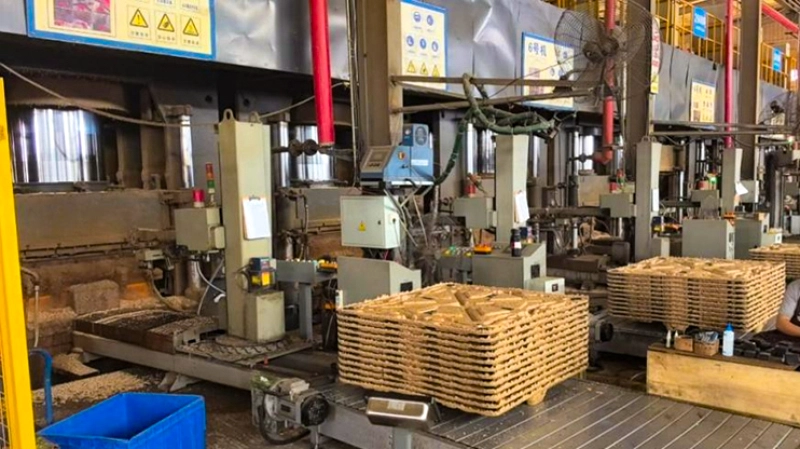
What the Plant Still Has to Count Before It Promises a Date
The honest part of the case is arithmetic. Press tiers run from 1200T through 1250T, 1600T, 1800T and 2200T, the 1600T class body is a three-beam four-column frame, formed density sits in a 0.8 to 1.2 grams per cubic centimetre band, and one fully automatic press at roughly 12 pallets per hour has been used as a planning reference for a stated configuration rather than as a delivery promise written on any project. Real output moves with fibre quality, moisture matched to the glue system from trial data, mold geometry, cycle and uptime, which is why a plant that wants to answer a surge has to count four things first: fibre actually on hand and not promised elsewhere, crew available on the shift pattern it can staff, where the surge sits against its own regular accounts, and press hours per week left after the base load. Do that sum and the answer is usually a partial one, and a partial answer is the point: a share of the pallet program produced in house, a share still bought in as top-up, stock planned for the moulded unit instead of guessed, and a date quoted from a press the plant can switch on. Supply arrangements stop being dictated by an external schedule and start being chosen, which is the difference between reacting to a short-notice order and pricing it.
- Confirm press tonnage tier, mold footprint and cycle for the pallet size actually sold before any delivery date is quoted.
- Size available press hours per week against fibre on hand, crew on shift and the plant's own base-load orders.
- Match raw material moisture to the glue system from trial data instead of carrying one universal figure into the quotation.
- Treat the fumigation-free and ISPM-15 exempt reading as a destination rule and forwarder question rather than a supplier certificate.