DUAL-PRESS LINE ECONOMICS
Why a Dual-Press Line Doubles the Take-Out Operator Bill
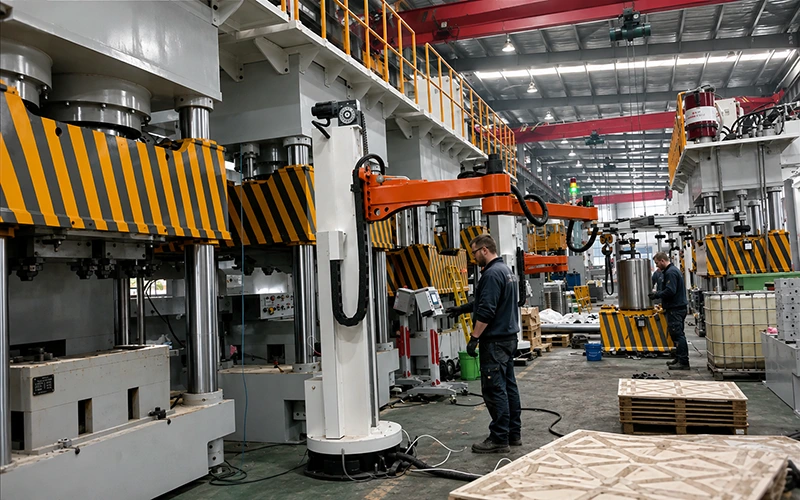
Two 1250 to 1600 ton hydraulic presses have always been the bottleneck math for a molded pallet main base. With manual take-out, that math means two operators in the press danger zone per shift, the same headcount duplicated across second and third shifts, and overtime when one of them calls in sick. AutoG is the automatic pallet take-out robot from EMP that lifts the freshly pressed pallet at roughly 80 degrees Celsius with a multi-suction vacuum end effector and alternates between two presses on a single arm. One robot, two presses, two take-out operators removed from the line, and the per-press labor cost stops stacking linearly for the first time on a fully automatic presswood pallet production line.
Where Manual Take-Out Breaks a Dual-Press Takt
On a 4 to 5 minute MDI press cycle, each press wants the next pallet loaded and the previous pallet removed inside the open-mold window, but a human operator can only physically attend one press at a time. With two presses running side by side, the second press idles while the operator unloads and stacks the first, so the combined line runs at the speed of one human covering two machines. Add the cool-down wait before the operator reaches into the 80 degrees Celsius mold, the secondary carry from press to stacking position, and the manual stack pattern, and a real dual-press line often delivers less than the rated output of a single press. The cycle the press was sold on is no longer the cycle the line is running, and the second press becomes a depreciation line that is paid for but not fully used. The classic symptom is that the plant adds a press to chase output and still does not reach the rated tonnage.
One Arm, Two Presses: How AutoG Robotic Offloading Stops the Linear Stacking
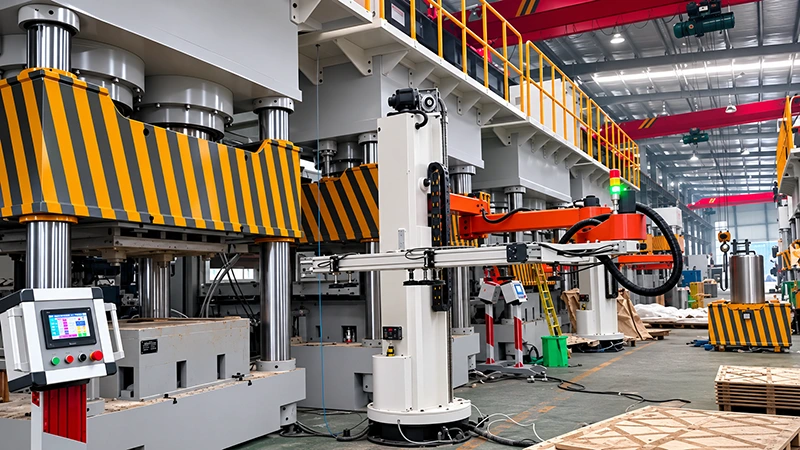
AutoG is the automatic pallet take-out robot from EMP, designed specifically for the take-out side of a fully automatic presswood pallet production line. The articulated arm uses a multi-suction vacuum end effector to grip the freshly pressed pallet directly inside the open mold, lift it at roughly 80 degrees Celsius, transfer it to the stacking position, and lay it down in one continuous motion that does not require a secondary manual carry. The architectural choice that targets the dual-press labor problem is the one-arm-two-presses layout: a single AutoG installation alternates between two 1250 to 1600 ton hydraulic presses, waiting at press A while the cure is finishing, taking the pallet out at the press open signal, then rotating to press B while press A reloads. From a capital-efficiency angle, the math is one AutoG unit covering two presses and substituting two take-out operators per shift, a different per-press labor story than the one-arm-one-press robotic offloading quote most plants see first. The robot also synchronizes with the press open-close signal through the line PLC, so both presses keep running at the open-mold speed the line was engineered for instead of waiting for a human to finish the previous unload.
What Changes on the Dual-Press Line
With AutoG running the take-out station across both presses, the press danger zone no longer needs a standing operator, and the worker is removed from the 80 degrees Celsius hot pallet and from the MDI vapor that releases during the cure. Both presses can now run at the open-mold speed the line was engineered for, because the arm alternates between them instead of one operator queueing the work. The pallet arrives at the stacking position already laid down by the vacuum end effector, so the secondary manual carry and the manual stack pattern disappear with it, and downstream handling starts from a clean, single-piece stack instead of a half-finished human arrangement. For a dual-press plant, the recurring saving is two take-out operator shifts per line per day, while the capital story is one robotic offloading unit standing in for two workstations that the line used to need staffed. That is why a dual-press molded pallet main base quotes AutoG differently from a single-press line: the labor math is the headline, and the per-press cost is no longer scaling with the press count.
- title and intro frame the dual-press one-arm-two-operators labor math
- section 3 names one arm two presses, capital efficiency, and the 80 degrees Celsius vacuum take-out
- both image alts reference robotic offloading, vacuum suction, and the presswood pallet line
- the body closes with a /contact/ CTA pointing to the EMP sales team