BIOMASS PELLET PRODUCTION LINE | WOOD PULVERIZER MACHINE
Why Feed Particle Size Matters Before Pelletizing
A biomass pellet production line cannot compensate for uncontrolled feed preparation. The Pulvz Wood Pulverizer Machine uses replaceable screen control to prepare ≤5mm uniform particles for the sawdust preparation section, giving the pellet mill a more consistent material stream and a clearer path toward stable forming, mechanical durability, and controlled energy use.
What the Old Preparation Methods Leave Uncontrolled
Many plants begin with manual wood splitting by axe or saw, buy ready-made sawdust, or use a wood shredder and wood chipper without a downstream particle-size control step. These methods can create coarse pieces, mixed fractions, or a material stream that changes with each batch. A wood chip crusher or coarse shredder may reduce volume, but it does not automatically deliver the uniform feed required by a pellet mill. Buying ready-made sawdust can reduce equipment work, yet it also reduces control over incoming size and supply consistency. The result is more screening, recirculation, and adjustments at the pelletizing stage.
Why a Screen-Controlled Wood Pulverizer Fits the Line
Pulvz is positioned as a Wood Waste Recycling Crushing unit at the front of a biomass pellet production line. Its high hardness replaceable screen supports particle size control by screen, while the adjustable screen configuration allows the preparation target to be matched to the feedstock and downstream process. The product range is listed at 1-8 t/h, with F-series configurations including 45 kW, 75 kW, and 110 kW power options; actual selection depends on required capacity and material. Belt conveyor feeding can support continuous input, and the hydraulic open cover system simplifies access for inspection and hammer plate set maintenance. Cyclone separation or dust collection can be specified as part of the material-handling arrangement.
From ≤5mm Particles to More Stable Pellet Production
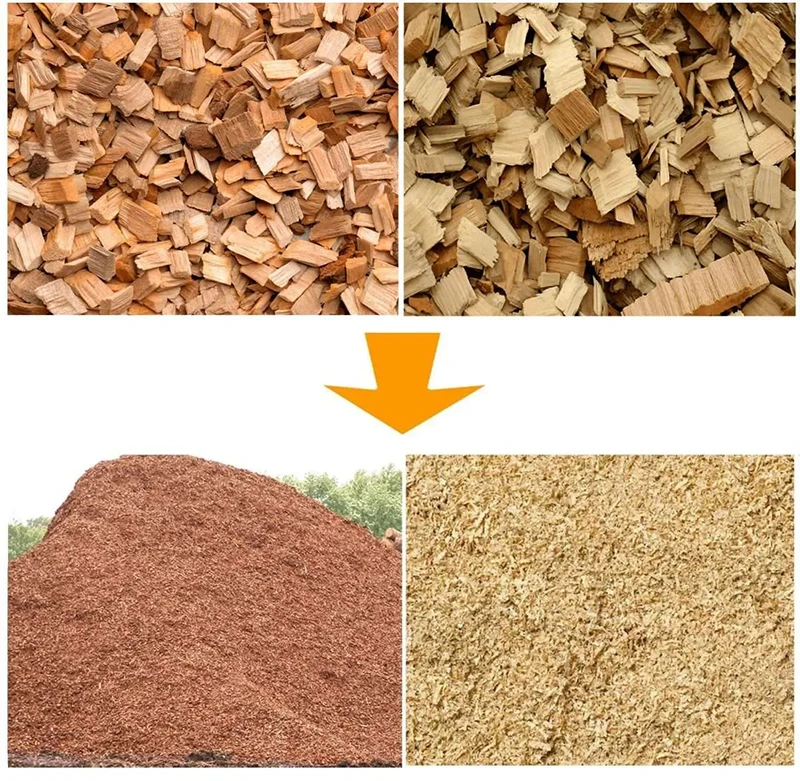
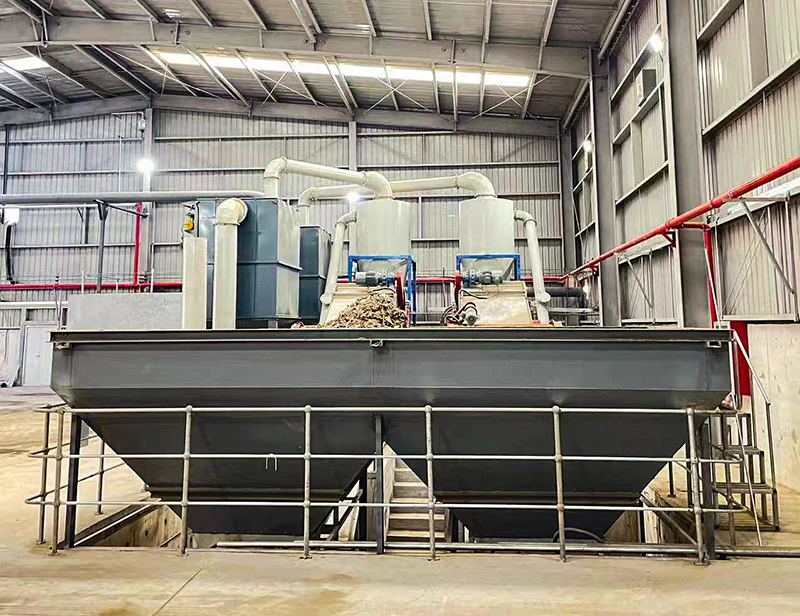
The first image provides a direct material comparison: coarse wood chips are shown against finer shredded biomass, making the size-reduction objective visible before the pellet mill. The second image shows an industrial dual-hopper dust-handling unit with ducted filter housings and twin feed assemblies, illustrating the type of controlled receiving and separation arrangement used around a preparation line. In operation, the target is ≤5mm uniform particles rather than simply smaller pieces. A more consistent feed can improve pellet forming stability and support mechanical durability, while reducing conditions that drive unnecessary ring die wear and high energy per tonne. Final results still depend on feedstock, moisture, formulation, pellet mill settings, and testing, so capacity, screen opening, separation, and dust collection should be confirmed for the project.
- Explain the biomass pellet production line scenario and why inconsistent feed particles affect pelletizing
- Use the Wood Pulverizer Machine keyword with biomass pellet production line and sawdust preparation section naturally
- Present replaceable screen control and ≤5mm uniform particles as process evidence without guaranteeing ENplus A1 results
- Use both selected Pulvz gallery images as evidence and include a contact CTA in the rendered body


