Pellet Plant Drying Heat-Load Control
Pellet plant reality: the 10 percent moisture window and where drying carries the bill
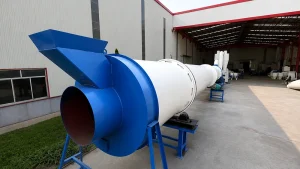
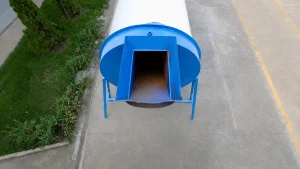
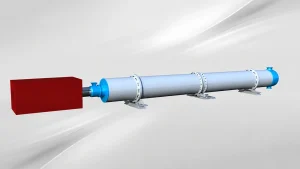
Pellet plants running agricultural residue face a tight moisture window before the pellet press, and drying absorbs the largest share of plant thermal and electrical budget. A BX215 drum wood chipper sized at 45 kW and 4 to 5 t/h sits ahead of the rotary drum dryer as the upstream lever on chip consistency, feed porosity, and per-ton drying heat load.
What the old setup costs: outsourced chips, open-air pre-drying, and the supply ceiling
Most binder-free pellet plants do not start with an in-house chipper. They buy chips or sawdust from regional suppliers, store it under a roof, and let it sit or run it through an open-air pre-drying floor before the rotary drum dryer sees it. Three problems follow. First, purchased chips arrive with moisture the plant cannot control, so the drum dryer is sized to the wettest incoming batch instead of the average. Second, the chip length coming in is whatever the supplier happened to run, so the chip bed inside the rotary drum has mixed porosity and uneven heat transfer. Some particles dry fast, others hold residual moisture through the drum and arrive at the press above the 10 percent line. Third, in-house pre-drying capacity is weather dependent; in rainy-season operations the line stalls waiting for the pre-drying floor to catch up. The result is a dryer that runs longer, hotter, and on more tonnes than the press actually consumes, and the plant pays that extra thermal load on every utility bill.
Why a drum wood chipper upstream of the rotary drum dryer changes the heat-load math
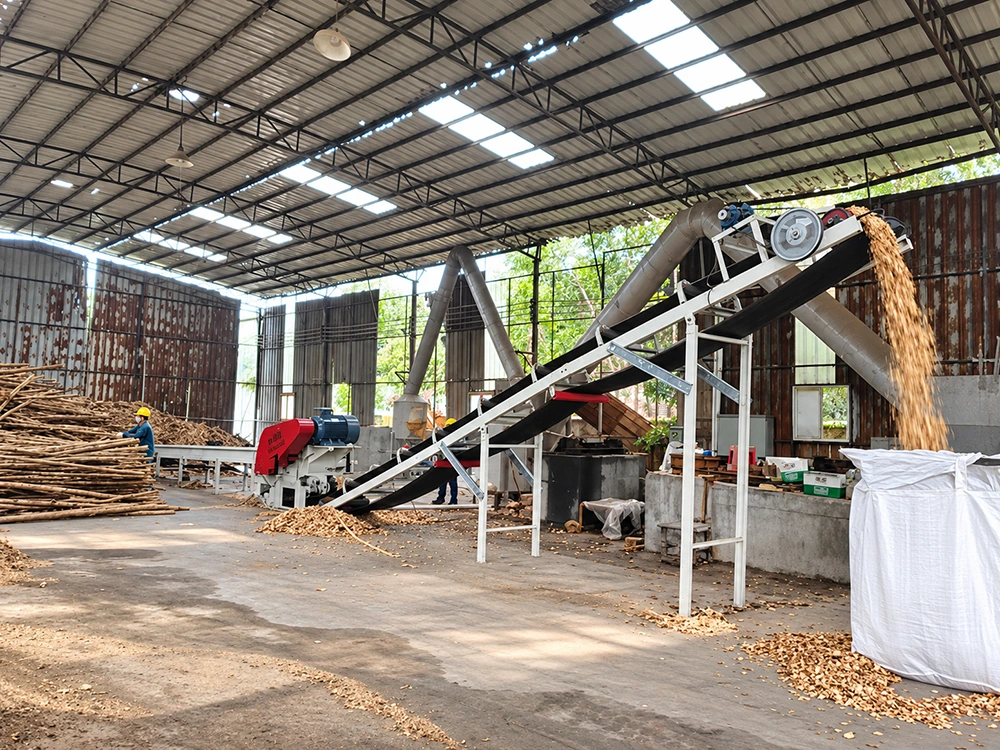
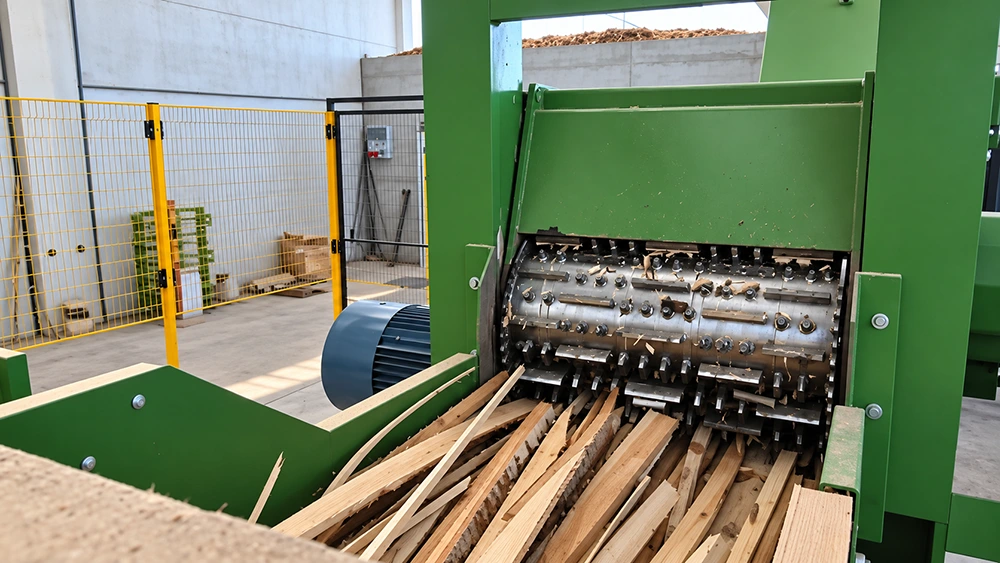
A drum wood chipper placed ahead of the rotary drum dryer is the upstream lever that controls all three of the problems above. The BX215 class drum wood chipper is sized for the 4 to 5 t/h pellet plant band. A 45 kW main motor, a 600 mm knife roller, a 400 by 180 mm feed opening, and a 160 mm maximum feed diameter cover the branches, slab wood, and small-diameter wood waste that arrive at the plant gate. Inside the machine, the chipping drum and the sizing screen together produce chips in the 30 to 35 mm range with consistent length, instead of the mixed particle shape that arrives when chips are purchased. The hydraulic feeding system floats the upper feed roller against the incoming log thickness and prevents the wood from jumping under the rotor, which is what gives a stable feed rate and a stable chip flow into the dryer. The fly knife on the knife rotor cuts, the sizing screen calibrates the chip length, and oversize material stays inside the chamber and is re-cut until it passes the screen. None of this is a marketing claim; it is the mechanical chain that produces the chip specification the rotary drum dryer needs in order to operate at its rated evaporation rate. With consistent 30 to 35 mm chips and a consistent feed rate, the dryer sees a chip bed with predictable porosity, predictable residence time, and a predictable evaporation curve. The drum does not have to be over-sized for the wettest batch, and the press does not have to absorb moisture drift. Per ton of finished pellets, the drying stage runs closer to its design heat-load number, and the gap between design energy and actual energy narrows.
Where the lines connect: chip spec, dryer setpoint, and the pellet press window
The connection point is the chip specification, not the chipper itself. The rotary drum dryer in step 03 is calibrated to a chip length range, a chip bulk density, and a moisture window; the pellet press that follows is calibrated to a moisture window and a particle size after grinding. A drum wood chipper that holds 30 to 35 mm chips and stable feed gives the dryer a steady input that its calibration assumes. The dryer operates at its rated evaporation rate, the chip bed moves through the drum without pockets of overwet material, and the downstream grinding stage receives a chip stream that breaks down predictably into the sawdust the press needs. The pellet press window, the 8 to 10 percent moisture band where binder-free pellets hold durability, becomes easier to hit, and the rejects and fines rate drops. For a pellet plant running agricultural residue, the cost case is not the chipper alone; it is the chipper plus the dryer plus the press as a calibrated line. The chipper is the cheapest place in that line to control the variable that the dryer and the press both need to see: a consistent chip. Because EMP builds both the chipping section and the drying section as part of the same biomass and pallet equipment line, the drying parameters can be calibrated to the pellet forming process rather than to a generic wood chip specification, and the moisture setpoint can be locked into the process window that the press actually requires. Set the chip specification first, and the heat-load number on the utility bill follows.
- emp-section class present
- emp-btn-primary class present
- /contact/ CTA present
- tw-layout root present