INDUSTRIAL SAWDUST DRYING | DUST CONTROL FOR CHARCOAL BRIQUETTE LINES
Why Dust Control Starts Before Carbonization
For charcoal briquette plants in East Africa, dust control must cover crushing, drying, conveying, and carbonization, not only the final stack. A Dryr continuous sawdust dryer combines a rotary drum drying path with a standard conical cyclone dust collector, optional baghouse filter, blower ducting that can also support cooling, and seal monitoring to help reduce fugitive dust. The result is a more controlled biomass material drying line for plants facing tighter environmental and clean cooking requirements.
The Limits of Open Air and Small Airflow Drying
Natural sun drying and manual open air drying leave material exposed to wind, rain, and uncontrolled handling. A small airflow dryer or sawdust flash dryer may be considered for a lower initial investment, but the choice depends on feed particle size, starting moisture, required output, heat source, and dust collection design. An isolated dryer cannot control dust created at crushing or conveying points, so the plant must specify the complete extraction and transfer arrangement.
Why a Rotary Sawdust Dryer Fits the Line
Dryr is a rotary sawdust dryer for continuous pre treatment before charcoal briquette or molded wood pallet production, and it can also serve wood pellet lines, MDF or particleboard projects, and organic fertilizer plants after material validation. Hot air from the furnace enters the rotating drum while lifting plates raise and disperse the feed, creating contact between the material curtain and hot air. A sealed process path, cyclone dust collector, optional baghouse filter, and monitored seals address the dust control requirement at the drying unit rather than treating it as an afterthought.
Structure, Capacity, and Dust Collection Evidence
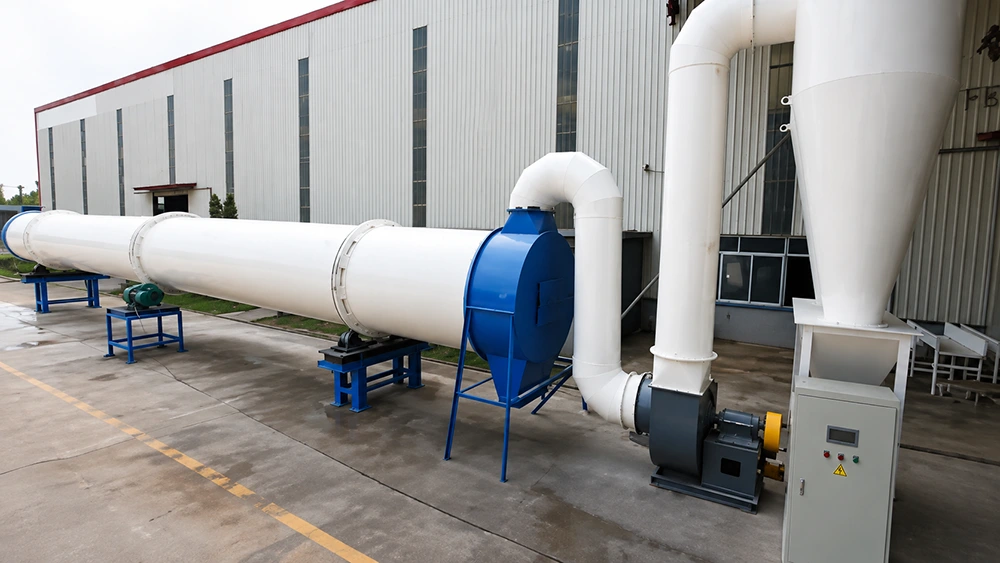
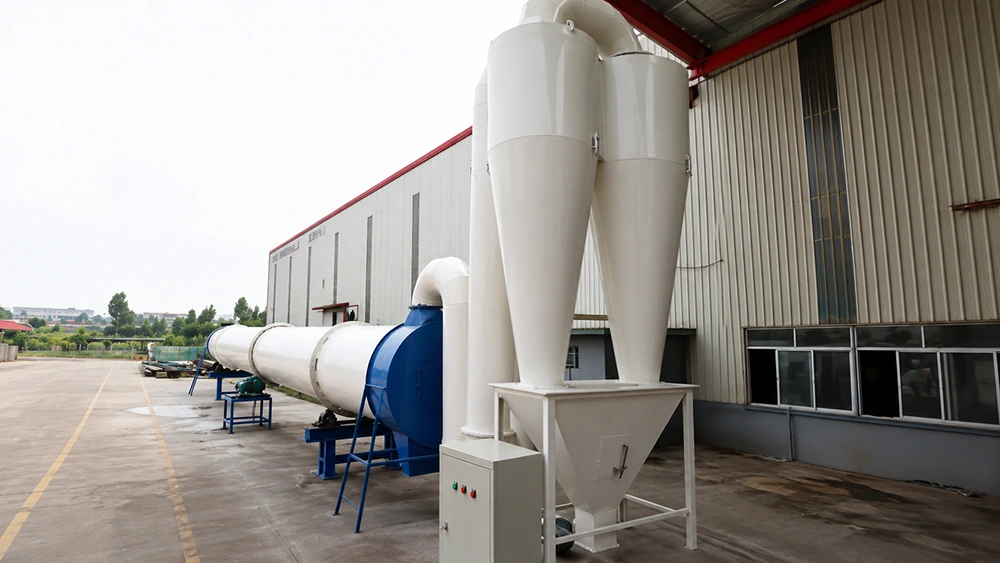
The Dryr gallery shows the equipment arrangement rather than claiming an emission test: the system image includes the rotary drum, process ducting, centrifugal blower, cyclone separator, steel supports, and control cabinet. A second view shows twin cyclone separators and conical collection hoppers. The documented model range covers about 0.8 to 2 t/h: H-1010 is listed at 0.8 to 1 t/h with a 1000 mm drum, H-1212 at 1 to 1.2 t/h with 1200 mm, H-1512 at 1.2 to 1.5 t/h with 1500 mm, and H-1815 at 1.5 to 2 t/h with 1800 mm. Main motor and induced draft fan ratings vary by model from 4 to 11 kW and 7.5 to 15 kW. Confirm feed moisture, particle size, fuel, local emission requirements, and whether a baghouse is required before final selection.
- root=section.emp-section.emp-blog-p0.emp-blog-p0–tw-layout
- markers=emp-section, emp-btn-primary, href=/contact/
- body logic=customer scene to legacy method problem to product fit to structure parameter image evidence to result
- all copy is English and uses the supplied sawdust dryer traffic terms naturally


