Fuel cost / furnace flexibility
Where the Small Organic Fertilizer Plant's Fuel Bill Actually Sits
On a small or mid-scale organic fertilizer line, the drying stage is the largest fuel line item on the monthly bill, and a coal-only furnace locks the plant into one fuel market. A DRYR multi-fuel sawdust dryer with a refractory brick-lined combustion chamber and a self-insulation shell burns coal, oil, natural gas, or on-site agricultural waste to hold coal spend under 8 kg per ton of dried material, and switches between fuels on the same drum without a rebuild.
Why a Coal-Only Furnace Locks the Plant Into One Fuel Market
Most small organic fertilizer plants inherited a coal-fired hot-air furnace from an older airflow dryer or a hand-welded low-end drum machine, and that furnace was designed for one fuel grade and one combustion profile. When the operator tries to push sawdust, rice husk, or straw through it, the flame goes unstable, the refractory cracks, and the drying line trips. The plant is then forced back to buying coal at the spot price, even though the yard is sitting on tonnes of dry agricultural waste that could otherwise feed the furnace. A coal-only furnace is not a fuel problem — it is a fuel-lock-in problem.
How the DRYR Refractory-Brick Furnace and Multi-Fuel Combustion Chamber Hold 8 kg of Coal per Ton
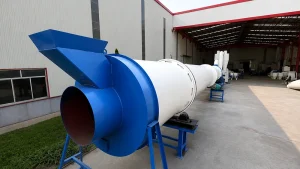
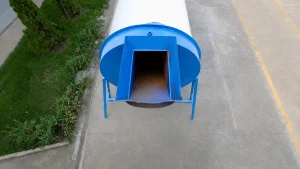
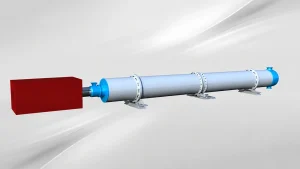
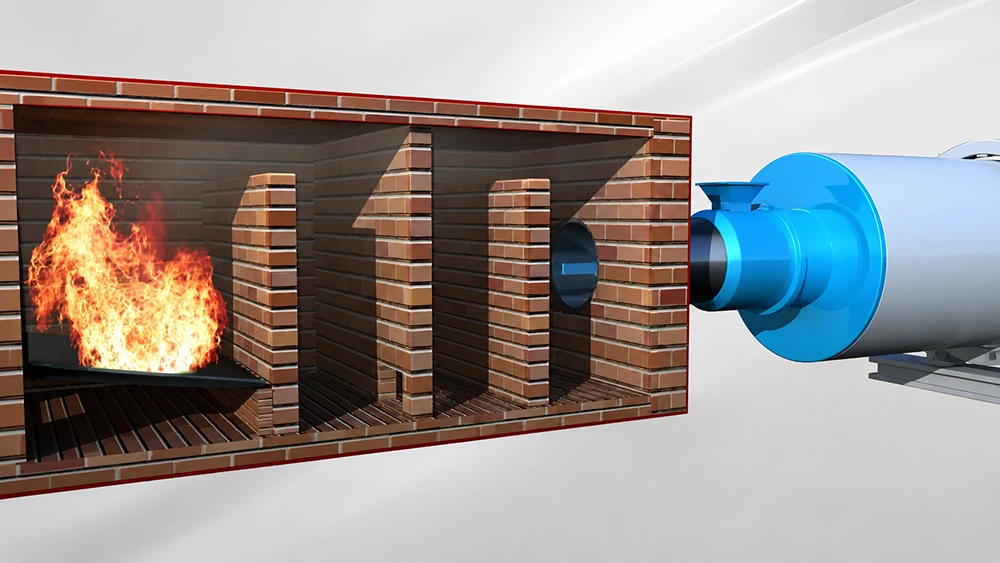
A DRYR multi-fuel sawdust dryer ships with a refractory brick-lined combustion chamber and an external hot-air furnace sized for the H-1010 to H-1815 four-model range, covering 0.8 to 2 tonnes per hour of continuous output. The brick lining and the multi-baffle internal geometry let the same furnace burn coal, oil, natural gas, or dried biomass powder without a rebuild. The self-insulation shell holds thermal efficiency above 80 percent, and on the coal-only duty cycle the furnace holds coal spend under 8 kg per ton of dried material. Output moisture lands below 10 percent at the drum exit, so the granulator infeed stays inside the 20 to 25 percent wet-granulation window the disc and drum granulators are calibrated for.
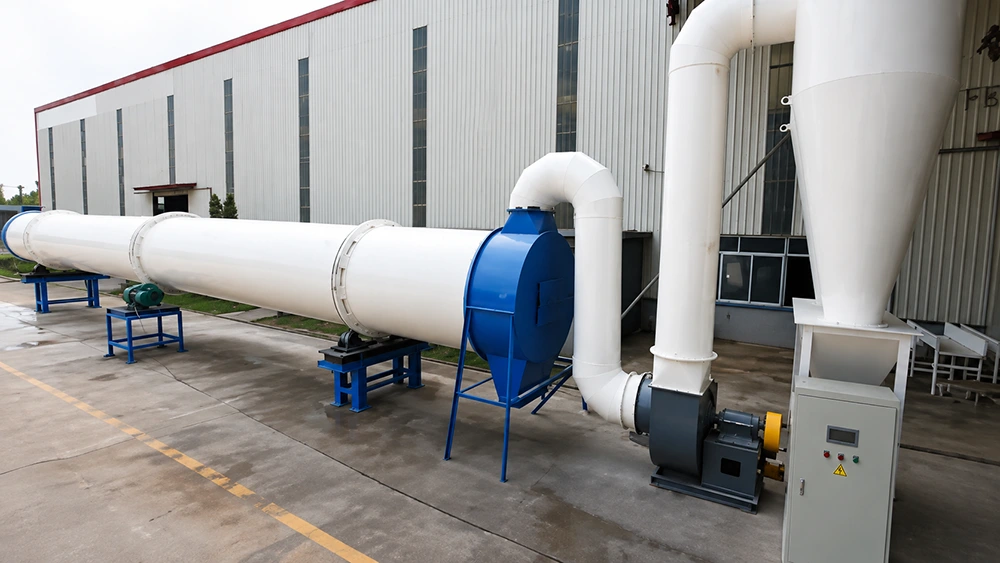
The Closed-Loop Energy Math: From On-Site Agricultural Waste to Drying Heat
Once the furnace can take on-site biomass powder, the drying line's fuel cost is no longer a coal market price — it is the cost of moving sawdust, rice husk, or straw from the yard to the furnace hopper. The plant burns the same agricultural waste it would otherwise have to dispose of, and the 8 kg coal per ton number becomes a ceiling rather than a floor. On a 1 tonne per hour line running two shifts, that is the difference between a fuel line item that tracks the coal spot price and a fuel line item that is paid for out of the waste-handling budget. For a small organic fertilizer plant with thin margins, that switch is what makes the drying stage stop being the line item that decides the month's P&L.
- Output moisture lands below 10 percent at the drum exit and holds the granulator infeed inside the 20 to 25 percent wet-granulation window.
- The refractory brick-lined multi-fuel furnace burns coal, oil, natural gas, or dried biomass powder on the same drum without a rebuild.
- The self-insulation shell holds thermal efficiency above 80 percent and coal spend under 8 kg per ton of dried material.
- The H-1010 to H-1815 four-model range runs continuous output at 0.8 to 2 tonnes per hour on the DRYR rotary sawdust dryer platform.