Pulvz F-series wood pulverizer machine – screen bands for different buyers
Three buyers, three input standards, one unsorted pile at the gate
A sawmill does not lose money on its residue because the wood is bad. It loses money because the pile leaves the gate as one unsorted tonnage: slabs, edgings, trimmings, sawdust and shavings mixed together, sold at a residual price to whoever will take it. Board lines, MDF refiners, pellet mills, presswood pallet lines and biomass boilers each buy on a different measured band of particle size, moisture and cleanliness, and a sawmill that cannot state one of those bands cannot quote into the higher paying ones. This page follows one graded-output decision on a Pulvz wood pulverizer machine: F-800 to F-1500 on 45 kW, 55 kW, 75 kW and 110 kW drives covering a nominal 1 to 8 t/h, replaceable 780 to 1480 mm screens as the grading element, infeed openings from 680 x 380 mm to 1350 x 450 mm, belt conveyor feeding for an unsorted pile, manganese steel hammer plates and a one-piece liner, and a hydraulic open cover for hammer and screen access. The limits are stated plainly: nominal tonnage moves with species, moisture, infeed evenness and screen condition, the 5 mm figure is a screen-set target band rather than a guarantee, and magnetic separation is a project-confirmed stage, not a standard item on every unit.
Why one fixed screen setting leaves the higher bands unquoted
The usual equipment answer is one size reduction machine with one screen fitted, and the pile coming out of it sits in a single band whatever the buyer needs. A drum or disc chipper is worse for this problem, not better: it cuts chips, and a chip is not the 5 mm-and-finer fibre that board refiners and pallet presses ask for. A shredder reduces volume without holding a band at all. So the plant drifts into two behaviours. It sells everything coarse, by the ton, and watches the fine-fibre buyers buy elsewhere. Or it buys ready-made sawdust to satisfy the one fine-band customer, which puts a purchased cost line in front of a material the plant already owns. Running a single band also means the machine is only ever set for the worst case in the pile: oversize slabs and edgings force a setting that over-crushes the sawdust and shavings arriving in the same load. Nothing is wrong with the machine in that picture. What is missing is a grading stage, and on this class of equipment the grading stage is the screen: qualified particles pass through and leave the chamber, oversize stays in until it is small enough. One screen equals one band. A replaceable screen equals a band you can change.
Replaceable screens as the grading stage: F-800 to F-1500 at 1 to 8 t/h
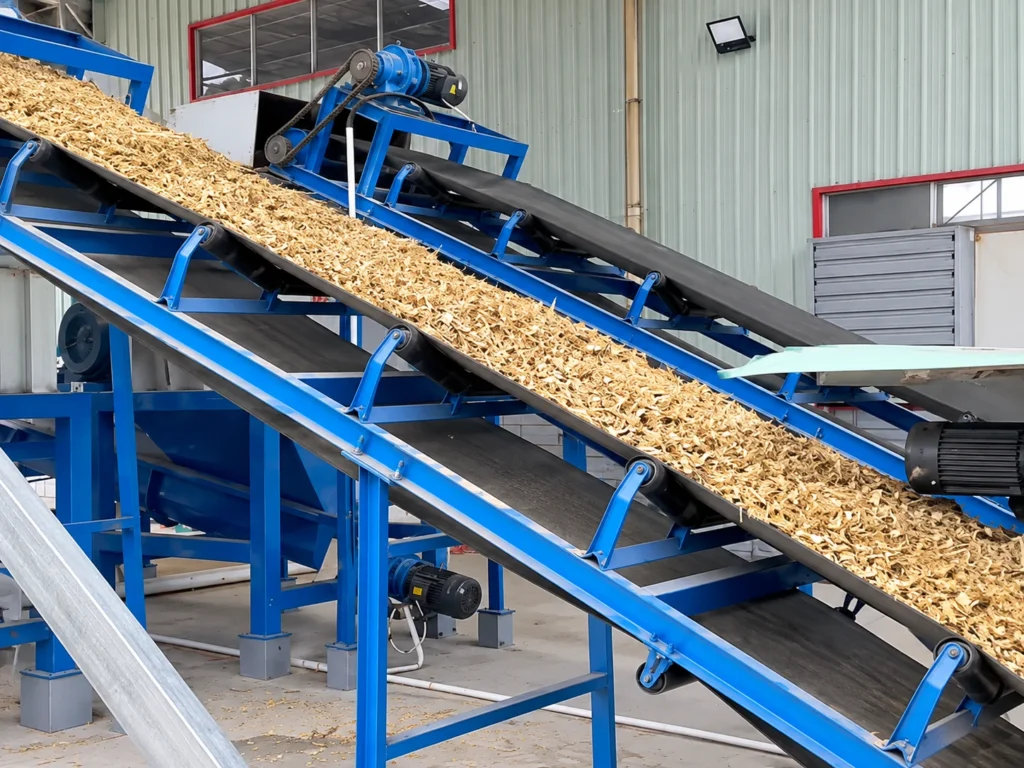
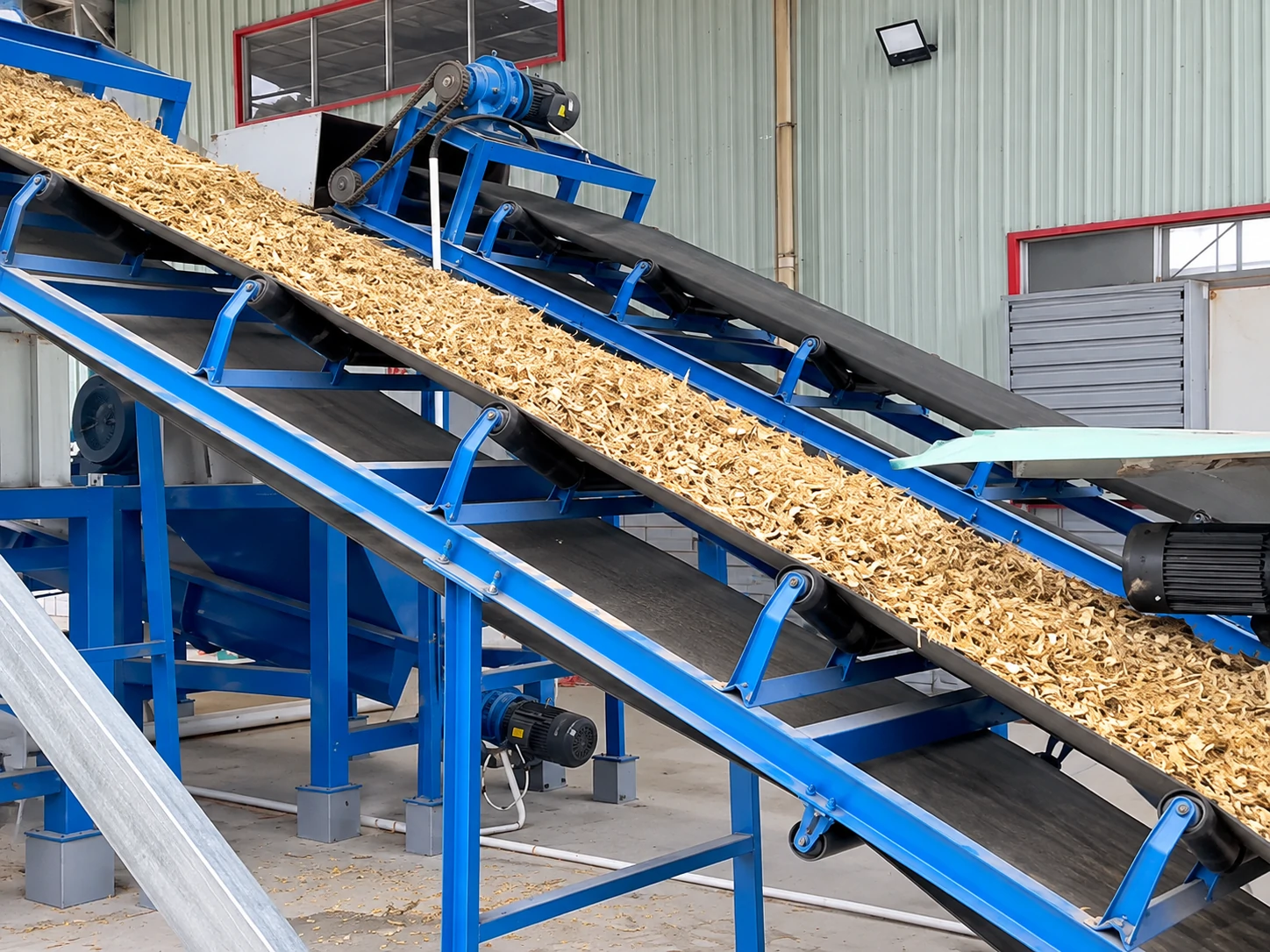
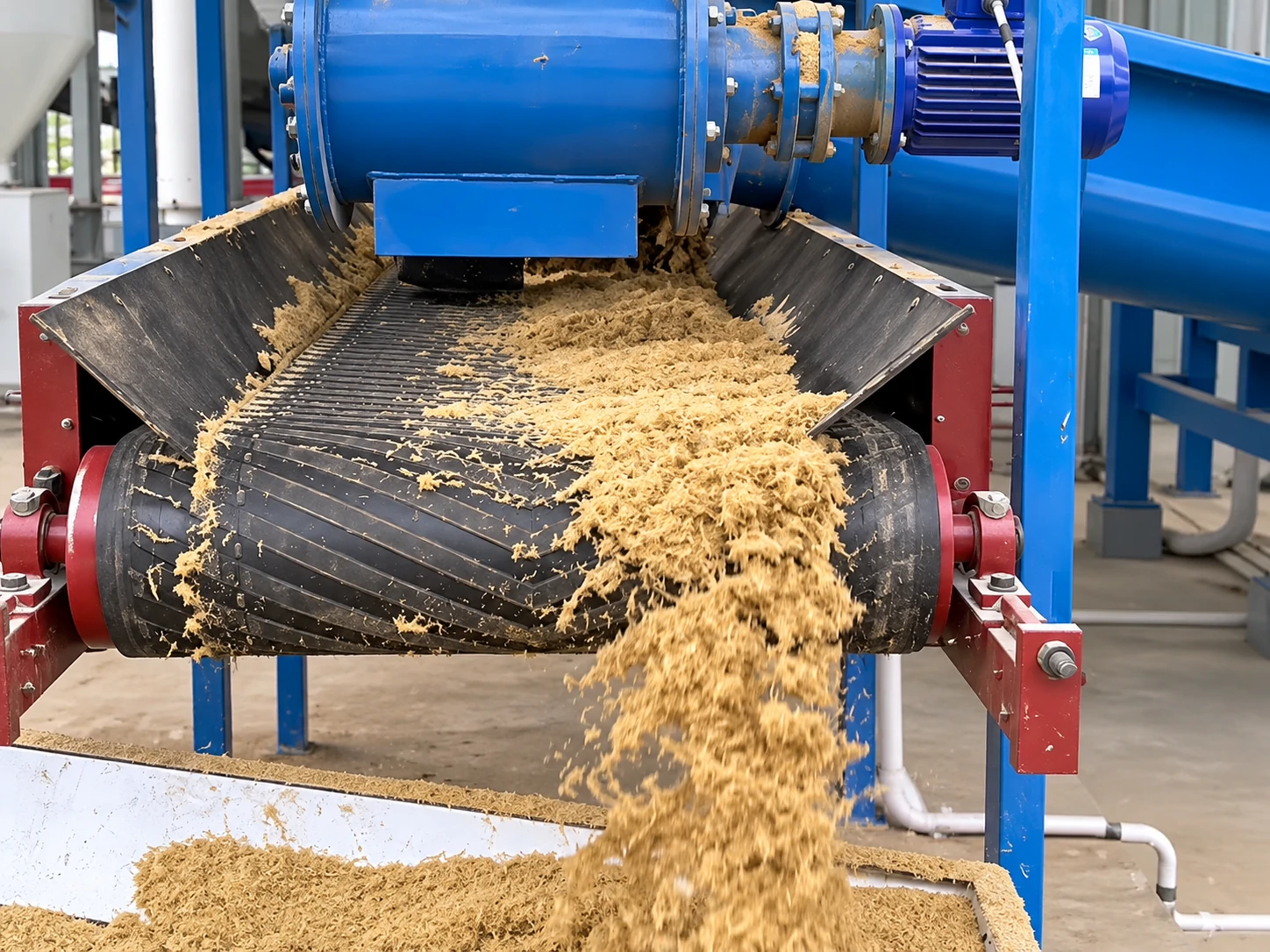
The Pulvz F-series is built around that screen as the control point. F-800 carries a 780 mm screen on a 45 kW drive with a 680 x 380 mm infeed opening and a nominal 1 to 2 t/h. F-1000 steps to a 980 mm screen, 55 kW, an 880 x 400 mm opening and 2 to 3 t/h. F-1200 runs a 1180 mm screen on 75 kW, a 1050 x 420 mm opening and 3 to 5 t/h. F-1500 runs a 1480 mm screen on a 110 kW drive, a 1350 x 450 mm infeed that takes whole slabs and pallet parts without pre-cutting, and a nominal 5 to 8 t/h. Roller speeds run 1200 to 2600 rpm across the four models. The grading window is set by swapping the mesh: a coarser screen pushes the discharge toward the fibre band a particleboard line can take, a finer screen tightens the discharge toward the band a refiner, pellet mill or presswood pallet line asks for, and the same machine covers all of it because the chamber and drive do not change. Wear parts matter more once screens are being changed on a production rhythm: thickened manganese steel hammer plates and a one-piece manganese steel liner carry the abrasive load of demolition timber and nail-bearing offcuts, high-hardness alloy screen holds its aperture as it wears, and dynamic balancing technology keeps the rotor stable in continuous running. A hydraulic open cover is the practical piece in a graded operation, because screen and hammer access is exactly what a plant doing band changes several times a month needs to be short. Feeding is a belt conveyor for the unsorted pile, and the discharge route can run to a cyclone separator for dust collection and air-material separation before the graded fibre lands on the next conveyor. The two images on this page show that material path: crushed wood chips riding an inclined belt conveyor into the front of the line, and the pulverizer discharging fibrous material onto a cleated take-away conveyor where it stops being one pile and becomes a stream that can be sampled.
What the graded output is worth, and what you still have to verify
The commercial result is not a bigger machine, it is a different sales position. One residue stream, screened into two or three stated bands, sells into two or three buyer lists instead of one: coarse fibre to a board line, a tighter band to a refiner, pellet mill or presswood pallet line, and whatever falls outside both to the fuel market that always was there. The plant can then quote a particle band and a moisture figure instead of a tonnage of unknown mix, which is what turns a residual price into a contracted one, and it can choose how much tonnage to route into the higher paying band each month. The machine cost does not change with the number of bands: it changes with the screen sets and the hours spent changing them, which is why hydraulic cover access and a replaceable mesh are the specification lines to argue over. The boundaries are as important as the capability. The 1 to 8 t/h figures are nominal and move with species, moisture, infeed evenness and screen condition, so sizing has to be done against the actual residue mix and the largest blocks in it, not against a catalogue number. The 5 mm figure is a screen-set target band, not a guarantee on every load, and the aperture-to-band relationship for your species and moisture has to be proven on your own material. Moisture is a separate stage: the presswood pallet route dries to roughly 8 to 12 percent downstream of crushing, and no screen setting changes that. Contamination is a separate stage too: nails, staples, wire, grit and stones have to be magnetically separated and destoned upstream, and magnetic separation appears on the equipment centre page as a project-confirmed stage rather than a listed standard item on every unit. Dust and material handling have to be decided with the cyclone route and the take-away conveyors in the same layout drawing. Get those four items pinned down and the pulverizer stops being the machine that makes a pile smaller and becomes the machine that lets a sawmill sell the same residue more than once.
- Get each buyer's particle band, moisture and contamination spec in writing before a screen set is committed to a residue stream.
- Trial the actual residue mix on the sized model: the 1 to 8 t/h figures are nominal across F-800 to F-1500 and move with species, moisture, infeed evenness and screen condition.
- Prove the screen aperture to particle band mapping on your own material, because the 5 mm figure is a screen-set target band and not a guarantee on every load.
- Confirm whether magnetic separation and destoning are in your project scope, since separation is a project-confirmed upstream stage rather than a listed standard item on every unit.