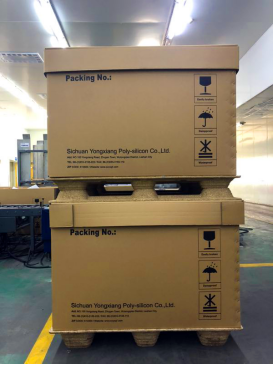
Transportation is the most critical link in any supply chain, and in cross-border logistics, every minute and dollar counts. Traditional wooden and plastic pallets often add unnecessary weight and take up valuable space, directly increasing transportation costs. In contrast, molded wood pallets offer a lightweight design and efficient stacking capabilities, allowing you to load more goods without increasing freight costs and significantly improving overall transport efficiency.
1. Reduce Transportation Costs and Time
The lightweight and space-saving design of molded pallets translates directly into cost savings and faster transit times.
- Lightweight Design: These pallets are significantly lighter than their traditional wood and plastic counterparts. This weight reduction lowers fuel consumption during transport and reduces your carbon footprint.
- Optimized Stacking: Molded pallets have a nestable design that allows them to be stacked more compactly, minimizing wasted space in trucks and shipping containers. This means you can fit more products into a single shipment, reducing transport frequency and costs.
- Four-Way Entry: The four-way forklift access improves loading and unloading efficiency, saving valuable time at the warehouse and distribution center.
Case Study: A U.S. logistics company needs to ship 10,000 pallets. Traditional wooden pallets at 44 lbs (20kg) each result in a total shipping weight of 440,000 lbs (200,000 kg). By switching to molded wood pallets at just 33 lbs (15kg) each, the total weight drops to 330,000 lbs (150,000 kg), a saving of 110,000 lbs. At an average shipping cost of $50 per ton, this weight reduction saves the company $2,750 on a single shipment.
2. Improve Storage Efficiency and Save Space
Warehousing is another critical area where molded pallets offer significant advantages. Efficient use of storage space directly impacts operational costs, especially for businesses with large inventories.
- Improved Space Utilization: The nestable design of molded pallets means they take up much less space when empty compared to traditional pallets. This frees up valuable warehouse floor space for other uses.
- Reduced Storage Pressure: By storing more pallets in a smaller footprint, companies can reduce their overall storage area requirements, leading to lower rent and overhead costs.
- Faster Put-Away and Retrieval: The standardized design and easy handling of molded pallets allow warehouse staff to store and retrieve goods more quickly, boosting operational efficiency.
Case Study: A warehouse stores 10,000 traditional wooden pallets, each taking up approximately 1 cubic meter of space. By switching to molded pallets, the stacking efficiency increases by 50%, allowing 15,000 pallets to be stored in the same area. This saves 5,000 cubic meters of storage space. At a cost of $20 per cubic meter, the company saves $100,000 annually in storage costs.
3. Enhance Supply Chain Responsiveness
In today’s competitive market, a responsive supply chain is a key advantage. Molded wood pallets help accelerate logistics processes, ensuring a faster flow of goods and improving your ability to meet customer demands.
- Quick Loading and Unloading: The four-way entry design allows for faster and more flexible handling, dramatically reducing the time it takes to load and unload shipments.
- Efficient Inventory Management: The standardized and consistent shape of molded pallets makes them easier to manage in automated and manual warehousing systems, reducing inventory backlogs.
- Fewer Transportation Delays: By speeding up handling times and improving transport efficiency, these pallets help minimize delays and the associated costs.
By optimizing every stage of the supply chain—from transportation and warehousing to handling and inventory management—molded wood pallets help companies improve overall logistics efficiency, reduce costs, and maintain a competitive edge in a fast-paced global market.