Sawdust Dryer · Wood-Based Panel
Why drying sits on the front of every panel plant's fuel bill
Drying is the largest fuel line item on a wood-based panel or particleboard plant. A multi-fuel rotary sawdust dryer with a self-insulation shell and a refractory-lined combustion chamber lets the plant run coal, oil, natural gas, or on-site wood waste through the same furnace, holding hot-air fuel spend below 8 kg of coal per ton of dried material.
Why natural sun drying and single-fuel furnaces cannot hold the line
Natural sun drying on a concrete pad is still the cheapest thermal option, but it loses to weather, monsoon seasons, and the plant's footprint. A 1.5 t/h line needs roughly 60 to 80 tonnes of dry-storage capacity to ride out a week of wet days, and most wood-based panel sites cannot free that much land inside the gate. Small airflow dryers and low-cost hand-welded drum units try to fill that gap, but they typically run on a single fuel, lose 25 to 35 percent of the heat through the shell, and cannot switch when fuel prices change. The binding moisture window for MDI or UF resin is narrow, so the dryer must hold output moisture close to 10 percent on every shift, not just on days when the fuel is cheap. A furnace that only takes coal, or only takes diesel, locks the plant into one fuel index and one permit category, and gives no room to burn the sawdust and off-cuts the line already produces.
Why a self-insulated multi-fuel rotary drum dryer fits the energy mix
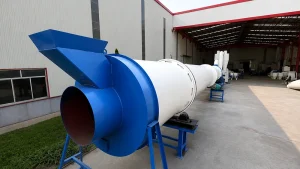
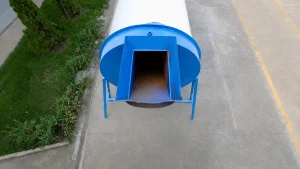
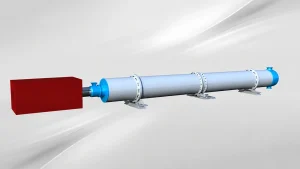
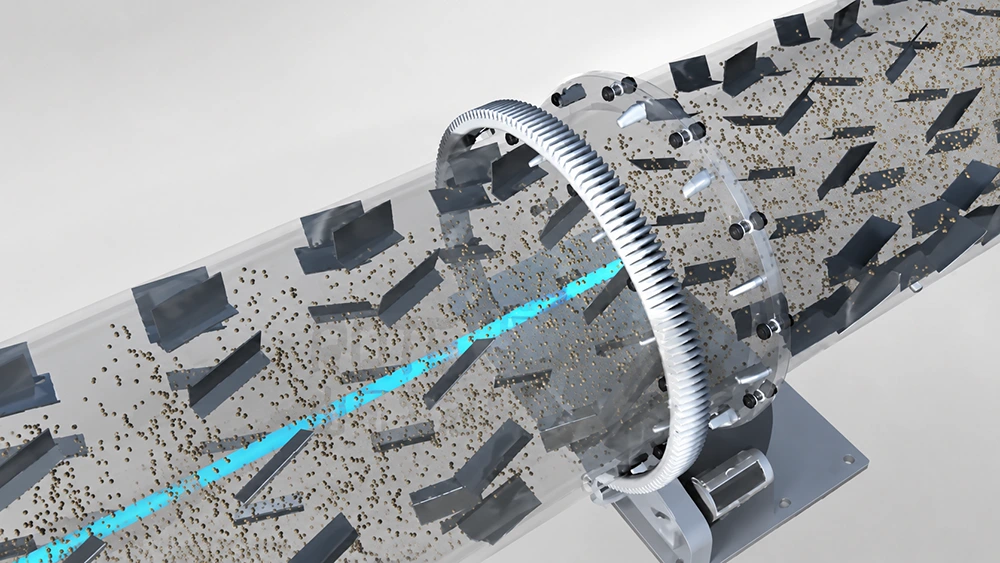
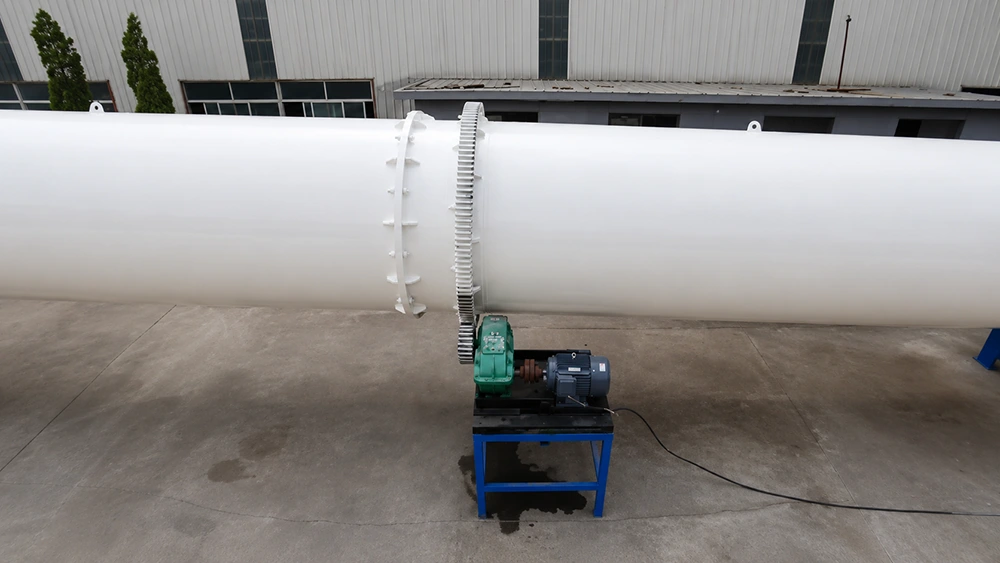
Dryr is a rotary drum dryer built around three-pass lifting flights, an external girth-gear and pinion drive, and a self-insulation shell that holds thermal efficiency above 80 percent on the published parameter set. The hot-air side uses a refractory brick-lined combustion chamber that accepts coal, oil, natural gas, or dry solid, granular and powder biomass as fuel, so the same furnace can be switched by project without changing the drum. On a wood-based panel site that already generates sawdust, sander dust, shavings and off-cuts, the furnace can burn those residues directly as the heat source, which closes the loop between the raw-material side and the energy side of the line. PLC-based continuous feed and temperature monitoring keep the inlet and outlet stable, while a screw conveyor at the inlet and a cyclone or baghouse dust collector at the outlet handle the material and emission side of the operation.
What the parameter table says about hot-air fuel spend on this line
The Dryr range covers 0.8 to 2 t/h of wet sawdust in four drum sizes. The H-1010 uses a 1000 mm drum with a 4 kW main motor and a 7.5 kW induced-draft fan for 0.8 to 1 t/h; the H-1212 uses a 1200 mm drum with a 5.5 kW motor and a 7.5 kW fan for 1 to 1.2 t/h; the H-1512 steps to a 1500 mm drum with a 7.5 kW motor and an 11 kW fan for 1.2 to 1.5 t/h; the H-1815 uses an 1800 mm drum with an 11 kW motor and a 15 kW fan for 1.5 to 2 t/h. In published conditions, the dryer holds drum temperatures of 200 to 500 degrees Celsius, brings output sawdust moisture below 10 percent, and uses less than 8 kg of coal to evaporate the water in one tonne of dried material, which is the hot-air fuel reference number a panel plant procurement team can put against its current gas or oil bill. Continuous PLC operation reduces the operator headcount on the drying step, and the on-site biomass option turns the plant's own residues into the heat source, so the same line can ride out a fuel-price spike instead of being held hostage by it.
- Multi-fuel combustion chamber accepts coal, oil, natural gas, and on-site biomass powder through the same refractory-lined furnace.
- Self-insulation drum shell and three-pass lifting flights keep thermal efficiency above 80 percent on the published parameter set.
- Four drum sizes cover 0.8 to 2 t/h of wet sawdust with motor and induced-draft fan ratings matched to each diameter.
- On-site wood residues can be burned directly as the heat source, so a panel plant can ride out gas and oil price spikes.